
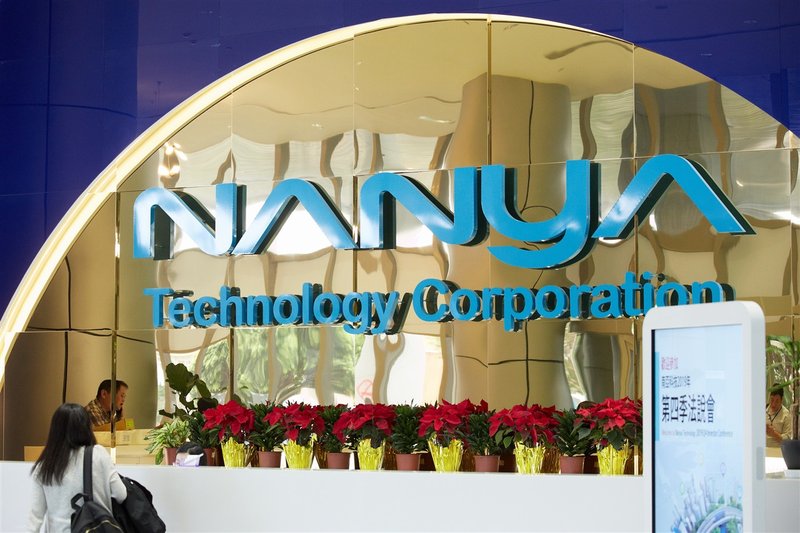
The news, as dry as a balance sheet, says that Taiwan’s memory sector revenue nearly quadrupled in June compared to the previous year, pulled by artificial intelligence demand. A figure that might seem just another gold-rush indicator, but through the lens of those designing on-premise infrastructure for Large Language Models it takes on more ambivalent contours. Because while it confirms market acceleration, it also lays bare a structural bottleneck: high-bandwidth memory, essential for the most powerful GPUs, is becoming the supply chain’s most contested resource.
That near-quadrupling is not a linear increase: it signals demand that far outstrips immediate production capacity, with cascading effects on the availability and pricing of HBM2e and HBM3 modules, used for example in NVIDIA H100 and upcoming B200 cards. For companies evaluating self-hosted LLM deployments—where every video card must be purchased, configured and maintained—the signal is clear: hardware costs risk rising and lead times lengthening, making predictable TCO harder to build.
It’s not just about more expensive servers. Memory strain can shift incentives for those developing inference pipelines or fine-tuning. In a context where VRAM availability becomes uncertain, interest grows in aggressive quantization techniques (INT8, FP8) and in frameworks that optimize memory usage, such as vLLM or llama.cpp. At the same time, the role of hybrid architectures strengthens, where models are served locally but RAG (Retrieval-Augmented Generation) techniques are used to contain the footprint, or a multi-cluster approach is adopted that accepts latency trade-offs rather than depending on scarce single hardware components.
A second effect lies in the geography of control. Taiwan is the world’s heartland for advanced semiconductor production, but dependency on a single hub brings well-known vulnerabilities. At a time when data sovereignty pushes toward on-premise architectures (even for GDPR or sector-specific compliance), the supply chain remains anchored to a physical and geopolitical choke point. The quadrupling of Taiwanese memory revenue mirrors this contradiction: the race for autonomous AI depends on a concentrated supply ecosystem, with long reaction times compared to the speed of model evolution.
The financial dimension also matters. The revenue surge signals that memory producers are capturing a growing share of the value generated by AI, possibly to the detriment of other links in the chain. For those rolling out on-premise installations, this means a resource transfer toward basic components, with potential markups on final prices of GPUs and complete systems. The TCO of a self-managed cluster, already pressured by energy consumption and maintenance, now incorporates a new variable of component-side volatility.
Finally, the structural lesson: it is no longer enough to look at GPU compute power or NVLink interlink bandwidth. The next frontier for on-premise infrastructure will be the dynamic management of memory procurement, with multi-year pre-order strategies, evaluation of alternative suppliers, and design of software stacks capable of adapting to variable hardware configurations. In other words, memory becomes the independent variable of AI computing, no longer a passive component. And this Taiwanese summer, with its soaring revenues, offers the clearest confirmation.








💬 Comments (0)
🔒 Log in or register to comment on articles.
No comments yet. Be the first to comment!