
Elon Musk's Ambition for the AI6 Chip
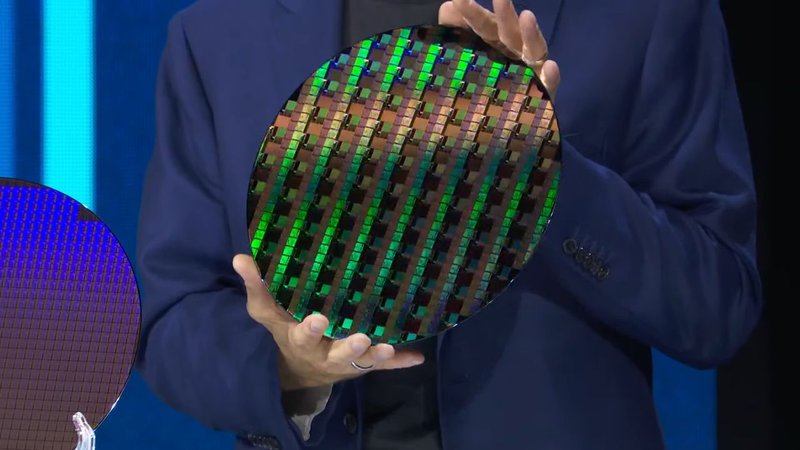
Elon Musk has outlined an ambitious goal for his upcoming AI6 chip: to achieve a record in terms of "maximum usable compute per wafer." This statement underscores a clear strategic direction in the landscape of artificial intelligence hardware, where efficiency and compute density per unit of silicon are becoming increasingly critical factors. The pursuit of greater processing power within a single wafer is not just an engineering challenge but also a key element for the evolution of AI systems, particularly for intensive workloads related to Large Language Models (LLM).
Optimizing compute per wafer aims to maximize the number of functional processing units that can be produced from a single silicon disk, reducing waste and increasing effective yield. This approach is fundamental for lowering production costs and improving the overall performance of chips, aspects that directly translate into benefits for data center operators and those managing large-scale AI infrastructures.
The Technological Context of Compute Density
"Maximum usable compute per wafer" is a metric that reflects the efficiency with which silicon is converted into processing power. To achieve such a goal, chip designers must address complex challenges that go beyond simple transistor miniaturization. Among these, thermal management is crucial: concentrating more computing power in a smaller space generates significant heat that must be dissipated effectively to ensure chip stability and longevity.
Furthermore, manufacturing yield plays a fundamental role. A wafer can contain dozens or hundreds of individual chips; maximizing the percentage of perfectly functional chips is essential for the economic sustainability of the project. The interconnection between various computing elements on the wafer, fault tolerance, and the overall chip architecture are all factors that contribute to determining the amount of compute that is actually "usable." Innovation in these areas is what distinguishes industry leaders and allows for pushing the limits of current capabilities.
Implications for On-Premise Deployments
For enterprises considering on-premise deployments of AI workloads, Musk's goal for the AI6 chip has significant implications. Higher compute density per wafer translates into greater processing power per unit of physical space in the data center. This can lead to an improved Total Cost of Ownership (TCO), reducing rack space requirements, power consumption per unit of compute, and potentially cooling costs.
The availability of more powerful and efficient hardware on-premise strengthens organizations' ability to maintain data sovereignty and complete control over their models and infrastructure. In air-gapped environments or those with stringent compliance requirements, having chips that maximize throughput and reduce latency within one's own perimeter is a competitive advantage. For those evaluating self-hosted alternatives to the cloud, the evolution of hardware towards greater efficiency and density is a decisive factor in assessing the trade-offs between CapEx and OpEx, and in optimizing Inference and Fine-tuning pipelines.
Future Outlook and Industry Challenges
The race to maximize compute density is a central theme in the AI semiconductor industry. Companies like NVIDIA, AMD, and Intel, along with numerous developers of custom ASICs, are investing heavily in innovative architectures and advanced manufacturing processes. Musk's objective fits into this context of fierce competition, where every improvement in silicon efficiency can translate into significant performance and economic advantages.
However, considerable challenges remain. The complexity of design, research and development costs, and the need to ensure large-scale production with high yields are obstacles that require substantial investment and specialized expertise. For CTOs and infrastructure architects, monitoring these developments is crucial for making informed decisions about future hardware investments, balancing the promises of performance with the realities of long-term deployment and management costs.





💬 Comments (0)
🔒 Log in or register to comment on articles.
No comments yet. Be the first to comment!