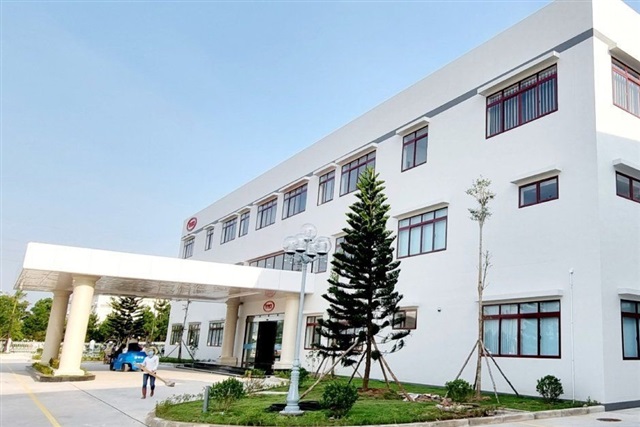
Eurocharm, a Taiwanese company known for precision components in the powersports sector, is looking to 2026 as a peak year. The push comes from three directions: the recovery of the North American motorcycle and off-road market, the manufacturing shift in Vietnam toward electric vehicles, and—significantly—the entry into the server rack business.
The announcement, sparse in detail, signals a move beyond core business consolidation. Southeast Asia’s industrial powers are redrawing the supply chain for data center components, and Eurocharm’s leap from vehicle chassis to server enclosures isn’t a shot in the dark: skills in sheet metal processing, tolerance management, and global supply chains transfer almost naturally from automotive to IT.
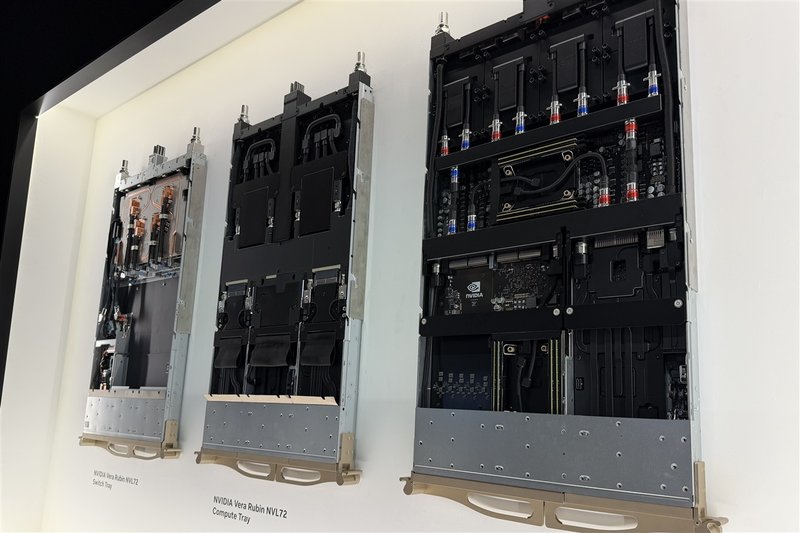
Racks are as mundane as they are strategic. Without them, GPUs, compute nodes, and storage remain loose hardware. Anyone running on-premise infrastructure knows that cabinet choice affects density, cooling, and maintainability. With the explosion of local inference for Large Language Models, demand for high-capacity racks—often customized for extreme power dissipation—is steadily rising.
Looking at the market, a new player’s entry can put pressure on prices, currently dominated by a few specialized manufacturers. We’re not talking about simple metal cages: modern racks integrate power distribution, airflow management, and increasingly, liquid cooling circuits. For those evaluating on-premise deployments, a lower per-unit rack cost translates into a more sustainable Total Cost of Ownership, especially when designing clusters with dozens of nodes.
The Vietnamese context adds another piece. Eurocharm already has factories in the country, and the expansion into EV components creates economies of scale that could lower production costs for racks as well. At a time when geopolitical tensions push many companies to diversify supply beyond China, an alternative source in Southeast Asia becomes interesting for system integrators.
Of course, questions remain about quality and the certifications required for data-center-grade racks. Vibration testing, electromagnetic compatibility, and thermal dissipation tests are stringent. Flexible production lines aren’t enough: a cultural leap toward IT standards is needed, and Eurocharm will have to prove it can make it.
For the on-premise AI ecosystem, this news is a small signal of a broader shift. The hardware supply chain for inference and training is widening, involving non-traditional players driven by saturation in other markets. When a powersports component maker decides that its future also lies in racks, it means that AI infrastructure is turning into a volume game—with all the price and availability implications that brings.




💬 Comments (0)
🔒 Log in or register to comment on articles.
No comments yet. Be the first to comment!