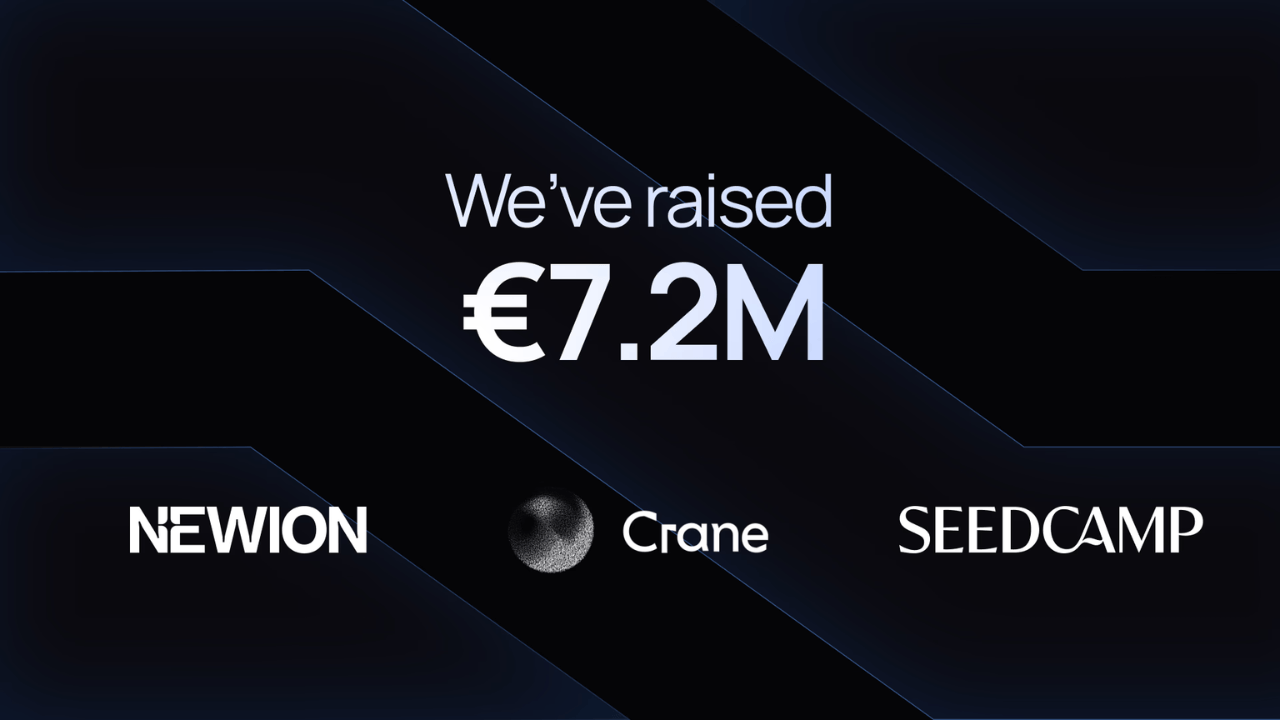
Launching a payment method is just the beginning; making it perform at scale is a different challenge entirely. Konstantin Surkov and Nick Ryabov know this well, having spent years at Netflix squeezing every conversion percentage point from global payment systems. Now, with their startup Nopan, they have raised €7.2 million to bring that performance obsession to account and wallet payments—a fast-growing segment still lacking the optimization layer that card payments have enjoyed for decades.
The round, led by Newion with participation from Crane, Seedcamp, and a group of angel investors, signals rising interest in infrastructure that treats payment methods not as simple toggles but as engineering assets. Nopan’s thesis is clear: while cards have benefited from decades of reliability investments, account-based payments (instant transfers, direct debits, wallets like Wero or local schemes) remain fragmented and often unpredictable. Yet they account for an increasing share of European digital transactions, driven by regulation, consumer preferences, and lower interchange costs.
The startup’s infrastructure goes beyond connecting merchants and PSPs to existing rails; it adds an optimization layer that addresses conversion rates, operational costs, and overall maturity. Essentially, it translates the chaos of banking behaviors, processing windows, and cross-market differences into a predictable experience for digital businesses. Surkov and Ryabov call this a “merchant-side” perspective: success is measured by how much each transaction contributes to the client’s bottom line, not just by connectivity.
Behind the deal lies a structural shift in the payments world. In the past, digital companies added a wallet or a bank transfer almost out of obligation, accepting higher failure rates. Today, with maturing standards like European instant payments and the emergence of Wero, those methods are becoming primary channels, and their performance directly impacts revenue and retention. Nopan is stepping into this transition with a team that has already lived the problem from the merchant’s side, in a context—Netflix—where every millisecond of latency or declined payment translates into lost subscriptions.
For those observing the landscape from a software architecture standpoint, the parallel is intriguing. The quest for deterministic performance on distributed systems, the need to handle latency and failures gracefully, and the obsession with operational cost reduction are familiar dynamics to anyone designing inference infrastructure for Large Language Models. In both cases, the goal is to create intelligent middleware that hides underlying complexity and delivers reliable service to upstream consumers. It is no surprise, then, that capital is rewarding teams that bring this engineering rigor to a previously overlooked domain.
The funding will support expansion of payment method coverage across Europe, further development of optimization capabilities, and a stronger commercial presence among digital businesses and fintechs. Nopan is already live with initial customers and reports positive feedback and growing commercial interest. The race is now to turn a technical niche into a market category, where payments are no longer a commodity but a measurable competitive advantage.








💬 Comments (0)
🔒 Log in or register to comment on articles.
No comments yet. Be the first to comment!