
Fitbit Air: Hardware Minimalism and AI Pervasiveness
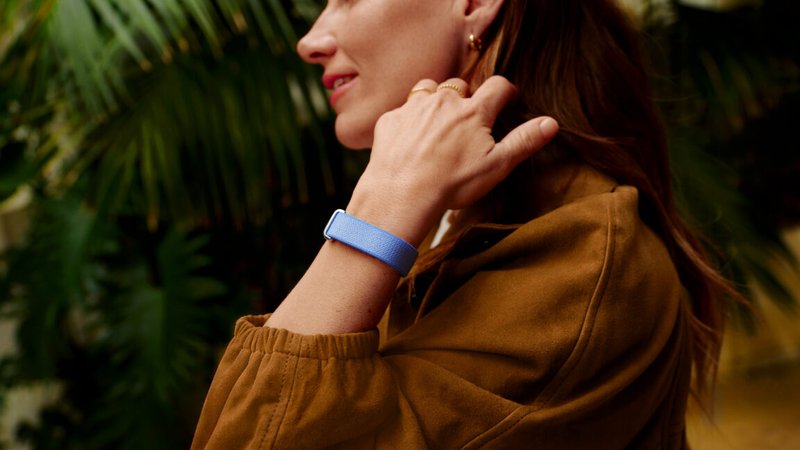
In the current landscape of wearable devices, where multifunctional smartwatches dominate the market, the Fitbit Air stands out with a radically minimalist approach. Priced at around $100, this activity tracker completely foregoes screens and buttons, elements now ubiquitous on users' wrists. The goal is to offer a discreet device, a small 'puck' of health sensors that users can easily forget they're wearing, focusing exclusively on monitoring vital data.
This design choice, which prioritizes simplicity and lightness, however, clashes with a user experience heavily influenced by artificial intelligence. Google's health platform, on which the Fitbit Air is based, is designed around AI, introducing an element of complexity and interaction that contrasts with the hardware's sobriety. This raises interesting questions about the balance between essential physical design and the increasingly deep integration of AI functionalities.
Technical Details and Device Design
The Fitbit Air's hardware is deliberately spartan. The device does not include a speaker and features a single side LED, whose function is to indicate the battery level. To check its status, a double-tap on the tracker is sufficient. Beyond this minimal interaction, on-device features are extremely limited: the vibration motor is used exclusively for alarms and cannot be synchronized with notifications from the smartphone. This absence of visual or audible feedback for notifications is a direct consequence of the lack of a screen, making any vibration related to phone messages or alerts superfluous.
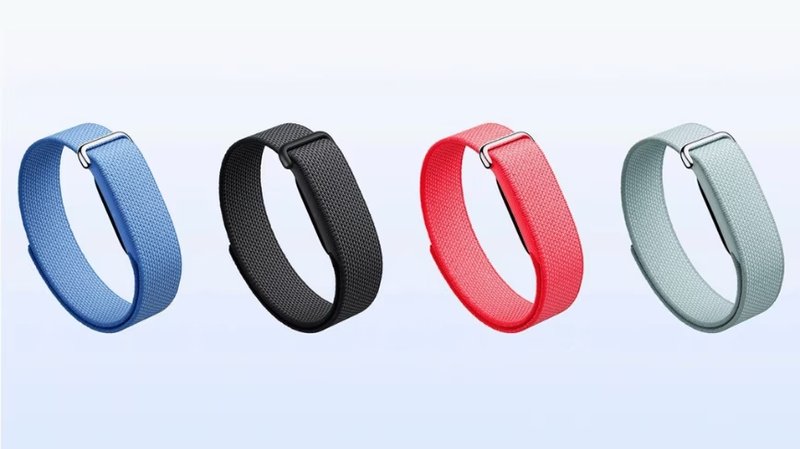
Regarding materials, the Fitbit Air comes with a standard Performance Band, made of smooth polyester yarn, featuring small velcro pads and a metal loop. Although durable, this band tends to absorb moisture. For activities like swimming or intense workouts, it is advisable to opt for the silicio active band, which not only offers greater water resistance but also hides the Fitbit Air 'puck' more effectively, giving it a sportier and more integrated look.
The AI as a 'Coach': Implications and Context
Despite its minimalist nature, the experience with the Fitbit Air is significantly defined by Google's health platform, which integrates AI functionalities. The source describes a particularly 'chatty' AI 'coach,' suggesting significant voice or textual interaction that guides the user. This raises questions, although not specified by the source for this device, about how such AI systems are processed. Are they based on lightweight models run directly on the device (edge AI) or do they rely on cloud infrastructures for processing more complex Large Language Models (LLM)? For those evaluating AI solutions, even in non-enterprise contexts, the choice between on-device and cloud processing involves trade-offs in terms of latency, energy consumption, and, crucially, data sovereignty. Although the Fitbit Air does not provide details on these aspects, its existence highlights the growing pervasiveness of AI in every market segment, from consumer devices to enterprise infrastructure.
The presence of an AI 'coach' in a device without a speaker and screen implies that interaction primarily occurs via a smartphone application, where the AI can communicate its suggestions and analyses. This hybrid model, combining essential hardware with more complex computational intelligence managed elsewhere, is an example of how companies are seeking to integrate AI in innovative ways, while keeping the costs and complexity of the final device at a low level. For those involved in AI solution deployment, understanding these interaction models and underlying architectures is fundamental for optimizing performance and user experience.
Future Prospects and Balancing Hardware and Software
The Fitbit Air represents an interesting case study in the wearable device sector. Its strength lies in its discretion and hardware simplicity, making it an almost invisible health tracker. However, its experience is inextricably linked to artificial intelligence that, while not physically residing interactively within the device, guides its use and data interpretation. This creates a paradox: hardware that one wants to forget, but software that makes its presence felt distinctly.
This approach highlights a broader trend in the technology sector: the increasing abstraction of intelligence from physical devices. While hardware becomes more compact and specialized, the intelligence that powers it often resides in broader software ecosystems, frequently cloud-based. For tech decision-makers, this scenario underscores the importance of evaluating not only hardware specifications but also the overall architecture of the AI system, including deployment models and implications for data management. The Fitbit Air, despite being a consumer product, offers food for thought on how AI is redefining human-machine interaction, even in the most unexpected contexts.







💬 Comments (0)
🔒 Log in or register to comment on articles.
No comments yet. Be the first to comment!