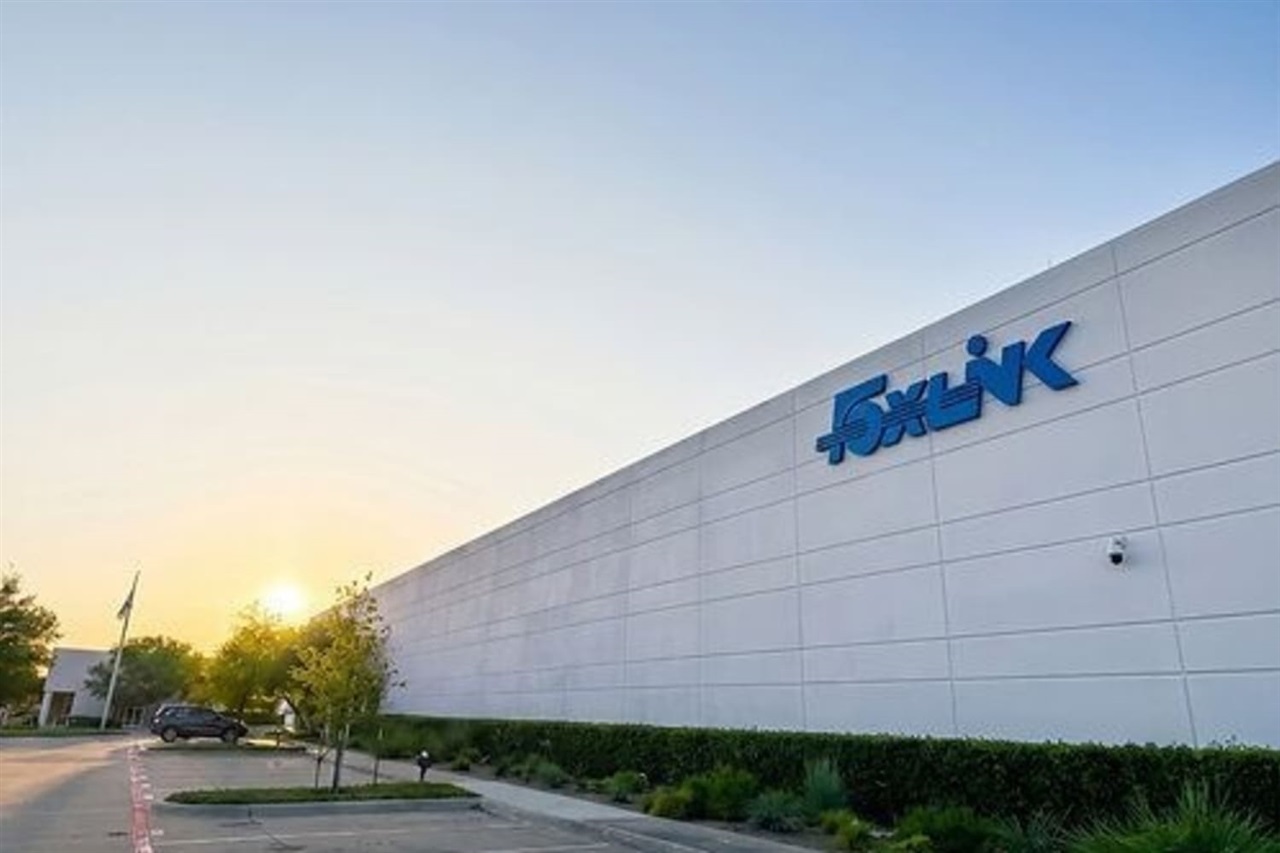
Foxlink’s opening of an AI-focused demonstration factory in Texas might seem like a routine commercial move. But for a major Asian component and systems supplier, planting a physical flag in the United States — the epicenter of enterprise and government AI demand — is far more than a showroom. It’s a structural signal pointing to shorter supply chains, mounting data sovereignty pressures, and a customer base that no longer accepts ordering racks from a cloud catalog.
Foxlink, known for decades as a manufacturer of cables and connectors for consumer electronics (often within the Foxconn orbit), is evidently expanding its scope into AI system integration. An on-site “demonstration” facility is not a high-volume assembly line; it’s a controlled environment where buyers can physically inspect hardware, verify performance under real-world conditions, and discuss customizations. For organizations evaluating on-premise stacks for LLM inference or training, this is critical: the technical validation phase often demands testing specific GPU, memory, and networking combinations, and being able to do so without shipping sensitive data overseas or relying on generic reference architectures fundamentally changes the quality of the decision.
Supply chains at the service of localization
The facility’s opening fits into a broader trend: the deliberate fragmentation of high-tech supply chains. After years of near-total dependence on Asian manufacturing hubs, U.S. enterprises and federal agencies are pushing for closer suppliers capable of rapid deliveries, on-site support, and — crucially — the ability to inspect hardware before it goes live. This isn’t just about logistics; it involves compliance (GDPR, sectoral regulations), supply chain security, and the desire to avoid geopolitical bottlenecks.
For Foxlink, opening in Texas means positioning itself as a preferred partner in a market where the Total Cost of Ownership (TCO) of an on-premise deployment is increasingly weighed against recurring cloud bills. Demonstrating multi-node configurations, cooling solutions, and low-latency networking in real time shortens the sales cycle and allows the offering to adapt to stringent regulatory requirements. It’s a card that cloud-only vendors cannot play with the same effectiveness.
Winners and losers in the AI hardware equilibrium
The arrival of a player with Foxlink’s manufacturing DNA on the American continent is not neutral. For organizations seeking granular infrastructure control — hospitals, financial institutions, defense departments — local presence reduces perceived risk and can accelerate the adoption of self-hosted models. The ecosystem of local system integrators also gains, finding a partner that can supply components and pre-assemblies without transpacific logistics delays.
Conversely, hyperscalers that built their advantage on the global reach of their data centers see part of the convenience narrative erode. When a customer can visit a factory, assemble a tailored cluster, and have it operational within a few hours’ flight, cloud lock-in starts to feel heavier. Traditional server manufacturers (Dell, HPE, Lenovo) face a competitor that blends Asian production scale with a local commercial and technical foothold.
What this means for on-premise deployment evaluation
This news isn’t an isolated snapshot. It ties into an acceleration toward real hybrid architectures, where the boundary between owning hardware and renting compute capacity becomes increasingly negotiable. Foxlink’s demonstration factory is a tangible sign that the “try before you buy” phase is becoming strategic even for heavier AI infrastructure. You’re no longer just purchasing a spec sheet; you’re buying the ability to verify it in the same time zone and under the same legal framework as your own data.
For technology procurement leaders, this move is an incentive to rethink roadmaps. If Asian suppliers are physically moving closer to the end customer, evaluations should include metrics like supply chain latency, replacement lead times, on-site acceptance testing availability, and, not least, full-fabrication transparency. Over the long term, these variables weigh on TCO as heavily as cost-per-FLOP.








💬 Comments (0)
🔒 Log in or register to comment on articles.
No comments yet. Be the first to comment!