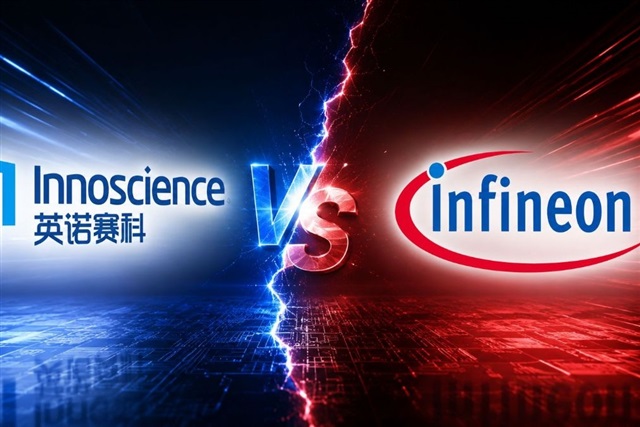
The dispute between China's Innoscience and Germany's Infineon has all the makings of a classic commercial clash, except for one detail: the courts of the People's Republic are emerging as a competitive lever, not just neutral arbiters. According to analysis circulated by multiple sources and reviewed by AI-RADAR, the legal tussle over gallium nitride (GaN) is no longer a simple patent war, but a symptom of a global race in which the law is bent to serve technological supremacy.
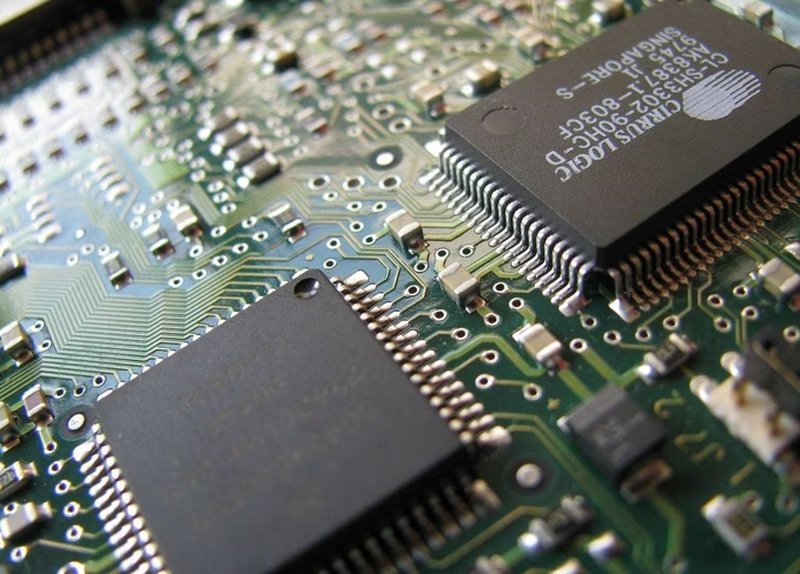
GaN is a wide-bandgap semiconductor that enables more efficient power supplies, capable of handling higher frequencies and temperatures than traditional silicon. For those running compute infrastructure, the difference is tangible: less thermal dissipation, denser racks, and a reduced energy bill. In a data center hosting thousands of GPUs for training and inference, every percentage point of power conversion efficiency translates into significant cumulative TCO savings.
When Infineon accuses Innoscience of violating core patents, it doesn’t just threaten a competitor: it undermines the predictability of the supply chain. If Chinese courts grant injunctions that block exports or production, server makers and system integrators sourcing GaN modules could face component shortages or sudden price hikes. For anyone evaluating an on-premise deployment of LLMs, where each node is sized to last for years, legal uncertainty becomes a risk factor on par with the choice between cloud and bare metal.
From a technological sovereignty perspective, the GaN chess match fits into an already complex mosaic. Adopting GaN power supplies in local inference servers is no longer a niche hypothesis: the advantages in heat reduction and footprint allow organizations to squeeze more compute power into the same square meters, a critical factor for labs and SMEs building self-hosted clusters in constrained spaces. But if access to this technology hinges on litigation driven by geopolitical motives, make-or-buy decisions become far murkier.
Market observers know that friction between the West and China over advanced semiconductors already affects high-end GPUs. With GaN, the game extends to a component that seems ancillary but is essential: power delivery. It’s no longer enough to invest in the best card with dozens of gigabytes of VRAM; one must consider the entire chain, including regulatory risks that can strike unseen upstream links.
The Innoscience-Infineon affair, then, is not a footnote for industry insiders. It’s a warning sign for anyone planning compute infrastructure meant to stay under their own control, far from public clouds. The open question is not who will win the lawsuit, but whether the industry can diversify GaN sources enough before the legal battle becomes a bottleneck.





💬 Comments (0)
🔒 Log in or register to comment on articles.
No comments yet. Be the first to comment!