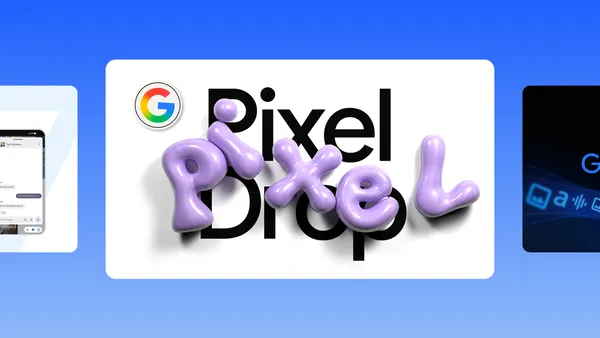
The press release is sparse, almost ritualistic: “Here are Google’s latest AI updates from June 2026.” Every June, the Mountain View company lifts the veil on a wave of innovations that feed the AI ecosystem, from foundational models to developer tooling. But for those who don’t live exclusively on the cloud and have on-premise servers to manage, the immediate question is: how much of this can land on an enterprise rack, far from Google’s datacenters?
The calendar that sets directions
June has long been the month when the American giant updates its AI roadmap, often coinciding with developer conferences or Vertex platform refreshes. It’s rarely a single product – rather a mosaic of improvements: updated Gemini versions, extensions for BigQuery, new inference APIs, and, periodically, the arrival of open models from the Gemma family. This regular appointment functions as a barometer: the vendor’s technological priorities quickly become the coordinates along which startups, integrators, and large enterprises move.
Open models and the on-premise worksite
The most tangible news for local infrastructure is always tied to models Google decides to release under permissive licenses. The Gemma line, for instance, has historically served as the bridge between cloud and self-hosted execution. When a new checkpoint appears, on-premise teams rush to evaluate quantization, compatibility with popular runtimes – vLLM, llama.cpp, TGI – and above all VRAM requirements. A 7-billion-parameter model quantized to 4-bit can run on consumer GPUs with 8–10 GB of memory, a profile that appeals to mid-sized enterprises; moving to 30 billion parameters shifts the conversation to multi-GPU servers and higher capital costs. The real headline is never just the model’s weight, but the equilibrium between efficiency and inference quality.
The silent efficiency workshop
Beyond model architectures, June almost always brings tweaks to serving pipelines and inference modes: attention throughput, latency, and long-context support. For self-hosting practitioners, these improvements translate into lower energy consumption and more predictable TCO. Shaving a few milliseconds per token, multiplied over millions of daily requests, affects the electricity bill and the operational lifespan of hardware. Google doesn’t always publish efficiency benchmarks outside its cloud environment, but architectural patterns trickle into open-source inference engines, and from there onto on-premise machines.
An AI-RADAR lens on the announcements
Anyone following AI-RADAR evaluations of cloud versus on-premise knows that every announcement must be read through a precise grid: required VRAM, memory bandwidth, quantization constraints, enterprise license compatibility, and data residency compliance. It’s not about deciding whether a new release is “better,” but about understanding if it lowers the friction of bringing AI capabilities close to sensitive data. Behind the short June update lie questions every CTO and IT architect should pose: are we ready to host this generation of models without ceding control? Can existing hardware sustain the load? Is the marginal cost of an upgrade sustainable? Ultimately, Google’s silences matter as much as its words: the absence or presence of a Gemma 3, a local serving toolkit, or an optimized compiler for non-NVIDIA GPUs become signals for those building infrastructures that refuse to be mere cloud mirrors.







💬 Comments (0)
🔒 Log in or register to comment on articles.
No comments yet. Be the first to comment!