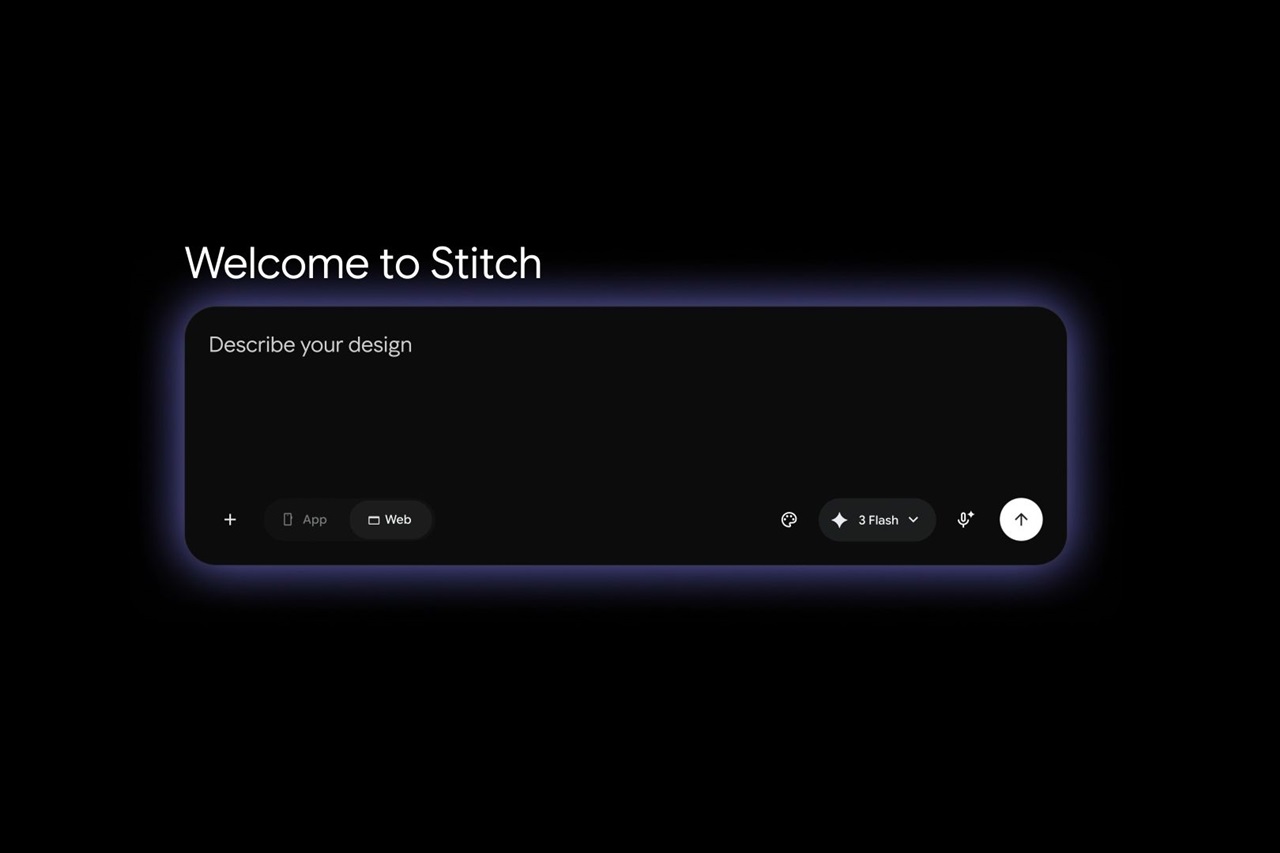
Google I/O 2026: Stitch Redefines AI Development
During the annual Google I/O conference, held in May 2026, attention focused on "Stitch," a new initiative that, according to the company's statements, is set to revolutionize AI design and development workflows. The announcement, although lacking specific technical details, suggests a significant evolution in how AI system developers and architects conceive, create, and implement their solutions.
In a technology landscape increasingly dominated by Large Language Models (LLM) and complex AI systems, efficiency and consistency in development processes have become absolute priorities. Tools like Stitch could represent a crucial step forward in addressing the challenges related to scalability, resource management, and the integration of AI components into existing architectures.
The Impact on Design and Development Workflows
The promise to "shake up workflows" implies that Stitch could introduce new methodologies or a unified Framework for managing the AI project lifecycle. This might include tools for rapid prototyping, model versioning, test automation, and optimization for various deployment targets. For enterprises, this translates into the potential to accelerate innovation and reduce the Total Cost of Ownership (TCO) associated with developing and maintaining AI applications.
The current complexity of AI projects, which often involves various stages such as data collection, training, Fine-tuning, and Inference, requires a systematic approach. A Framework like Stitch could standardize these Pipelines, facilitating collaboration among multidisciplinary teams and ensuring greater reproducibility of results. The ultimate goal is likely to democratize access to advanced AI techniques, making them more manageable even for organizations with limited resources.
Implications for On-Premise Deployments and Data Sovereignty
For the AI-RADAR audience, which focuses on on-premise LLM, local stacks, and data sovereignty, the introduction of a Framework like Stitch raises important questions. If Stitch offers greater control over development processes and deployment configurations, it could potentially simplify the adoption of self-hosted solutions. The ability to precisely define how models are designed and released can be crucial for companies operating in air-gapped environments or with stringent compliance requirements.
The choice between cloud and on-premise deployment is often dictated by a delicate balance of costs, performance, and control. A Framework that improves development and release efficiency could tip the scales in favor of local solutions, reducing technical and operational barriers. The ability to manage the entire AI lifecycle within one's own infrastructure, maintaining sovereignty over data and models, represents significant added value for sectors such as finance, healthcare, and public administration. For those evaluating on-premise deployments, trade-offs exist that AI-RADAR explores with analytical frameworks on /llm-onpremise.
Future Prospects and the Evolution of the AI Ecosystem
The announcement of Stitch at Google I/O 2026, while still in the early stages of disclosure, highlights a clear trend in the industry: the need for more sophisticated tools to manage the growing complexity of AI. The focus is shifting not only to computational power or model size but also to the efficiency of the processes that bring these models from ideation to operational deployment.
The success of initiatives like Stitch will depend on their ability to integrate with existing hardware, from bare metal servers to the latest generation GPUs, and to support various deployment strategies. For companies seeking to maximize control and minimize TCO, a Framework that promises to simplify and optimize the entire AI development workflow represents an evolution to monitor closely. It remains to be seen how Stitch will position itself against other Frameworks and Open Source tools, and what specific technical details will be revealed in the future.






💬 Comments (0)
🔒 Log in or register to comment on articles.
No comments yet. Be the first to comment!