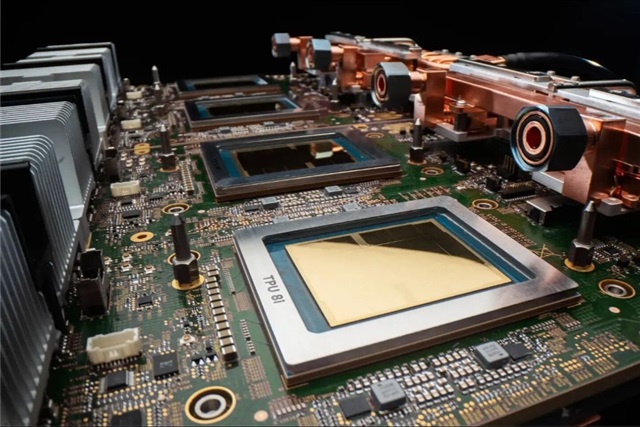
Google Specializes TPU Chips for AI Training and Inference
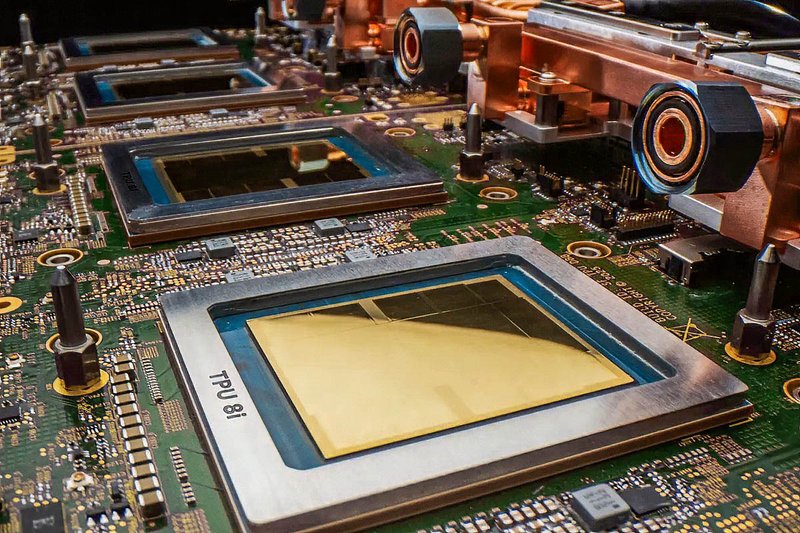
Google has announced a significant evolution in its artificial intelligence strategy, introducing a clear distinction in its Tensor Processing Unit (TPU) chips. The company is now developing specialized versions of these accelerators, optimized respectively for the training and inference phases of Large Language Models (LLM) and other AI workloads. This move underscores a growing trend in the industry towards increasingly targeted AI infrastructures, designed to maximize efficiency and performance based on specific computational needs.
Google's decision reflects a deep understanding of the different demands that training and inference place on hardware. While in the past there was a tendency to use more general-purpose architectures, the complexity and scale of current LLMs make specialization a fundamental lever for optimizing resources and costs. This approach has direct implications for companies evaluating AI deployment strategies, both in the cloud and on-premise, influencing the Total Cost of Ownership (TCO) and operational capabilities.
The Differences Between Training and Inference and Hardware Requirements
The distinction between training and inference is not purely conceptual; it translates into profoundly different hardware requirements. AI model training, particularly for LLMs, is an extremely intensive process that demands massive computational power, high memory bandwidth (VRAM), and the ability to handle higher-precision floating-point operations (such as FP16 or BF16). The primary goal is throughput, meaning the ability to process enormous amounts of data in the shortest possible time to train the model. This often involves distributed architectures with hundreds or thousands of accelerators working in parallel.
Inference, on the other hand, involves applying an already trained model to generate predictions or responses. Here, the priority often shifts to low latency and energy efficiency per individual request. While computational power is still important, inference can benefit from lower precisions (such as INT8 or even INT4 through Quantization) to reduce memory requirements and increase throughput for small batch sizes. The VRAM needed can vary significantly depending on the model size and context window, but inference optimization aims to serve as many requests as possible with the least resource consumption.
Implications for On-Premise Deployment and TCO
The specialization of AI hardware directly impacts deployment decisions for enterprises. For those evaluating on-premise solutions, the choice between chips optimized for training or inference becomes crucial for TCO management. The acquisition of extremely expensive training hardware might only be justified for continuous workloads or the need to maintain data sovereignty over sensitive datasets. However, once initial training is complete, these resources could remain underutilized.
Conversely, hardware optimized for inference can offer a better cost-effectiveness ratio for production workloads, where scalability and latency are critical factors. Companies wishing to maintain full control over their data and models, operating in air-gapped environments or with stringent compliance requirements, will find in hardware specialization an opportunity to build more efficient self-hosted infrastructures. The ability to precisely size resources for inference, reducing energy consumption and maximizing throughput per token, is a key factor in optimizing long-term operational costs.
The Future of Specialized AI Infrastructure
Google's move with its TPUs reflects a broader trend in the tech industry: the increasing fragmentation and specialization of hardware for AI. Other players are exploring similar solutions, from low-power edge chips for inference to specific accelerators for particular machine learning workloads. This evolution presents new challenges and opportunities for CTOs, DevOps leads, and infrastructure architects.
The need to balance performance, costs, flexibility, and data sovereignty requirements is becoming increasingly complex. Choosing the right hardware is no longer a “one-size-fits-all” matter but requires a detailed analysis of anticipated workloads, models to deploy, and business objectives. Adopting a specialized AI infrastructure, whether on-premise or hybrid, will demand careful planning and a deep understanding of technological and economic trade-offs to ensure long-term success.




💬 Comments (0)
🔒 Log in or register to comment on articles.
No comments yet. Be the first to comment!