
Google and the Evolution of AI Hardware
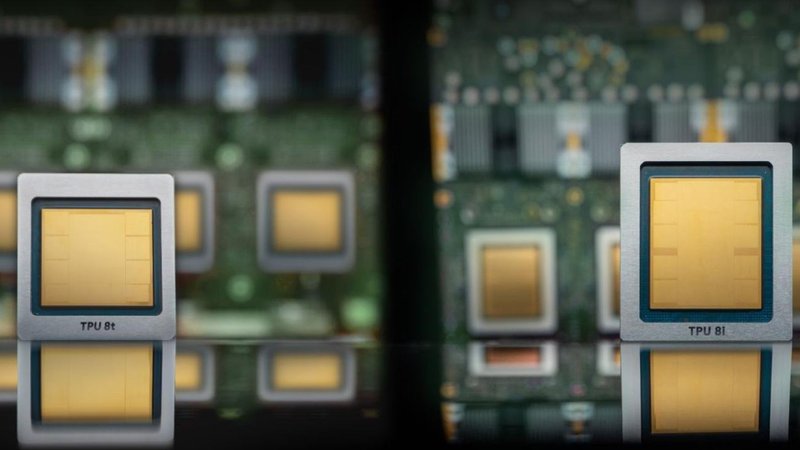
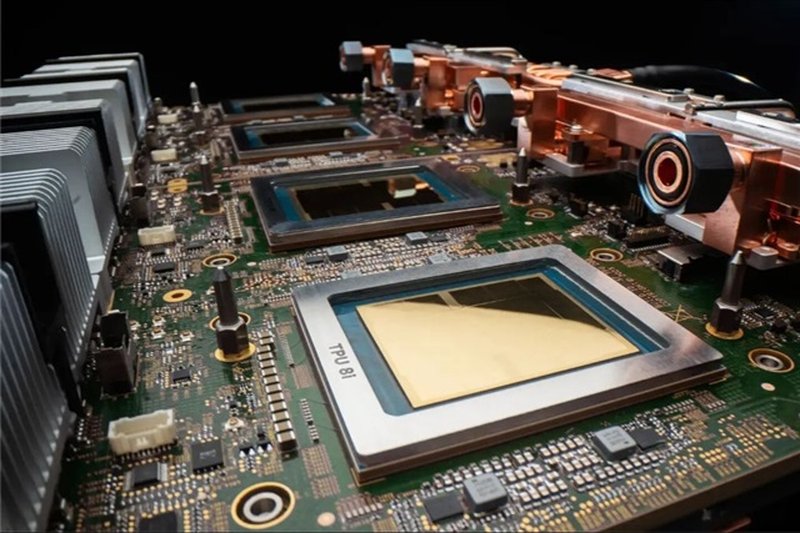
Google has announced the eighth generation of its Tensor Processing Units (TPUs), a significant move in the landscape of dedicated artificial intelligence hardware. This new iteration introduces two specialized chips, designed to power what the company refers to as the 'agentic era' of AI. The introduction of such targeted hardware underscores the rapid evolution of computational demands posed by Large Language Models (LLMs) and more advanced AI systems.
For companies operating with intensive AI workloads, the availability of optimized silicio is a decisive factor. Whether it's training complex models or performing large-scale Inference, hardware choice directly impacts performance, energy efficiency, and ultimately, the overall Total Cost of Ownership (TCO) of an AI infrastructure. Google's focus on specialized chips reflects a broader market trend where hardware customization becomes a key element to unlock new AI capabilities.
Specialized Chip Architecture and the Agentic Era
Google's two new eighth-generation TPU chips have been designed with a specific focus on the demands of agentic AI. This 'era' is characterized by AI systems capable of multi-step reasoning, autonomous planning, and complex interaction with their environment, often requiring iterative, low-latency Inference cycles. Specialized hardware architecture can offer significant advantages in these scenarios, optimizing fundamental operations for LLMs, such as matrix multiplication and memory management.
Efficiency in throughput and latency reduction are critical parameters for agentic systems. Purpose-built chips can integrate specific accelerators for these operations, ensuring that models can process tokens more quickly and with greater energy efficiency. This is particularly relevant for AI pipelines that require real-time or near real-time responses, where even small fractions of a second can make a difference in user experience or the effectiveness of an autonomous agent.
Implications for On-Premise Deployment and Data Sovereignty
While Google's TPUs are traditionally offered as a cloud service, innovation in specialized silicio also has profound implications for on-premise deployment strategies. Organizations choosing to keep their AI workloads in self-hosted or air-gapped environments often do so for reasons related to data sovereignty, regulatory compliance, or the desire for granular control over infrastructure.
The availability of increasingly performant and specialized hardware on the market, even outside of large hyperscalers, offers new opportunities to build robust local stacks. Evaluating the TCO of an on-premise deployment requires a thorough analysis that includes not only the initial hardware cost (CapEx) but also operational costs (OpEx) related to power, cooling, and maintenance. The choice between cloud and on-premise solutions thus becomes a balance between flexibility, scalability, costs, and specific security and data governance requirements. For those evaluating on-premise deployments, AI-RADAR offers analytical frameworks on /llm-onpremise to assess these trade-offs in an informed manner.
Future Prospects and Strategic Decisions
Google's introduction of the eighth generation of TPUs is a clear indicator of the direction the AI industry is heading: towards greater hardware specialization to address increasingly complex computational challenges. For CTOs, DevOps leads, and infrastructure architects, understanding these trends is crucial for making informed strategic decisions.
The ability to execute LLMs and agentic AI systems efficiently, securely, and in compliance with data sovereignty requirements will be a key differentiator. Whether opting for cloud solutions, on-premise, or a hybrid model, the choice of hardware and deployment architecture must align with business objectives and operational constraints. Silicio innovation will continue to push the boundaries of what is possible with AI, making infrastructure selection a critical component of strategic success.




💬 Comments (0)
🔒 Log in or register to comment on articles.
No comments yet. Be the first to comment!