
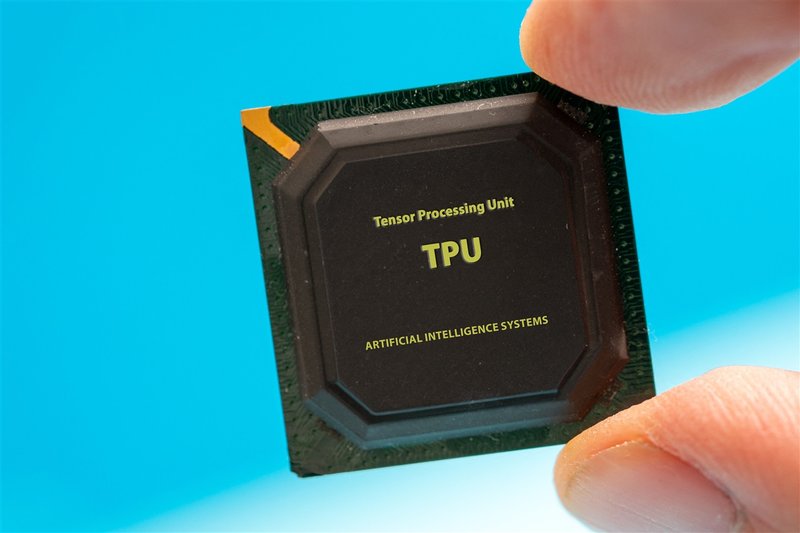
Google’s aggressive TPU production ramp and Meta’s relentless datacenter buildout are not just a headline for financial analysts. The DIGITIMES report — now circulating through Asian supply chains — signals a custom-silicon push that goes far beyond seasonal datacenter refreshes. Google is tightening the screws on its Tensor Processing Unit output, while Meta is driving infrastructure investments well past already-record levels. This capex wave does more than fatten the balance sheets of cloud providers: it rewrites the incentives for anyone designing stacks for Large Language Models, inside or outside the cloud.
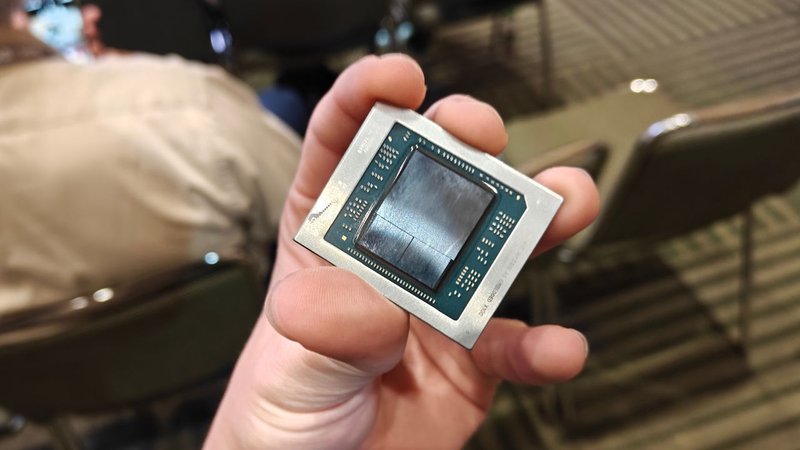
For the major cloud service providers, the arithmetic is clear. The explosion of LLM-based applications turns hardware efficiency into a direct competitive advantage. In-house designed chips — Google’s TPUs, AWS’s Trainium, or future accelerators from Microsoft — reduce reliance on NVIDIA and, at least in theory, cut inference costs. But there is a flip side: every generation of proprietary silicon makes the cloud ecosystem more closed. Moving a model trained on TPU v5 outside Google Cloud is not just complex; it is often uneconomical. Lock-in shifts from the software layer to the silicon itself, and it becomes much harder to circumvent.
The immediate losers are not only direct competitors. What suffers is workload portability, and with it the ability of organizations to maintain genuine control over their infrastructure. As CSPs pump billions into custom hardware, an enterprise that today chooses the cloud for convenience could tomorrow face rising operational costs with no easy exit. It is no coincidence that conversations about on-premise LLM deployment — once confined to regulated niches — are expanding into manufacturing, financial, and healthcare organizations of all sizes.
A second-order effect deserves attention. The fragmentation of AI hardware, fueled precisely by this investment race, makes the development of open or standardized alternatives for local inference more urgent. On one side, NVIDIA continues to dominate with GPUs that work everywhere, offering an escape route from proprietary lock-in. On the other, initiatives based on RISC-V architectures or ecosystems like the Open Compute Project are starting to bite, promising disaggregated, on-prem-manageable AI hardware. The real stakes are not technological: they are data sovereignty and predictable total cost of ownership (TCO).
The capex wave flagged by DIGITIMES, in short, is not just an indicator of cloud confidence. It is a structural signal: the era of custom AI silicon is accelerating the divorce between public infrastructure and private control. For those evaluating local deployments, the message is twofold. The cloud will not disappear, but its proprietary drift could inflate exit costs just as AI becomes mission-critical. Conversely, investing in self-hosted stacks based on more generic hardware — and on serving frameworks that abstract the underlying silicon — becomes a choice that concerns not only privacy, but long-term economic sustainability.
AI-RADAR, at /llm-onpremise, offers analytical tools to measure these trade-offs, never prescribing a single path. The only certainty today is that the map of AI hardware is being redrawn faster than most CIOs can track.





💬 Comments (0)
🔒 Log in or register to comment on articles.
No comments yet. Be the first to comment!