
The signal is not the silicon, it is the boundary of control
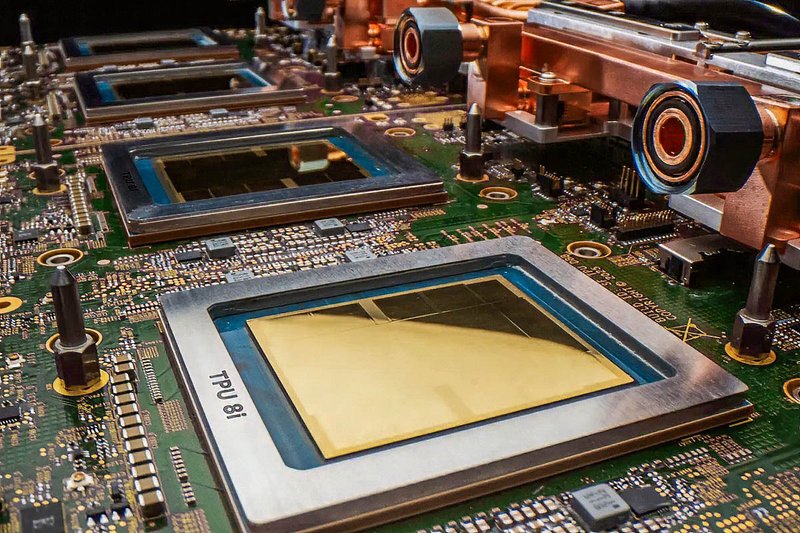
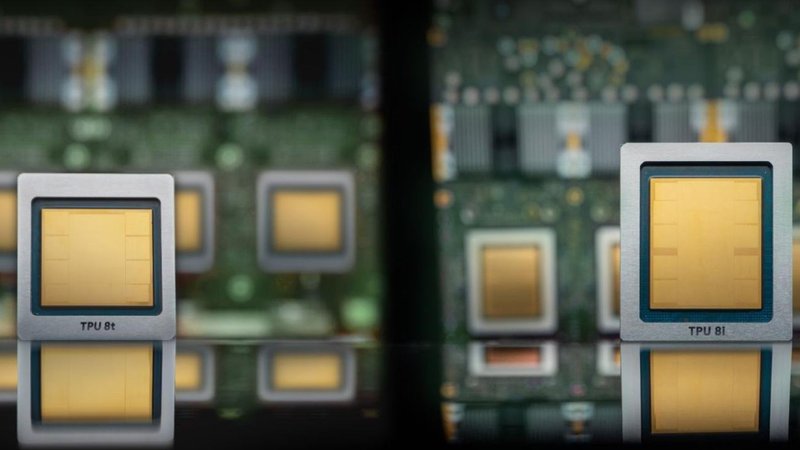
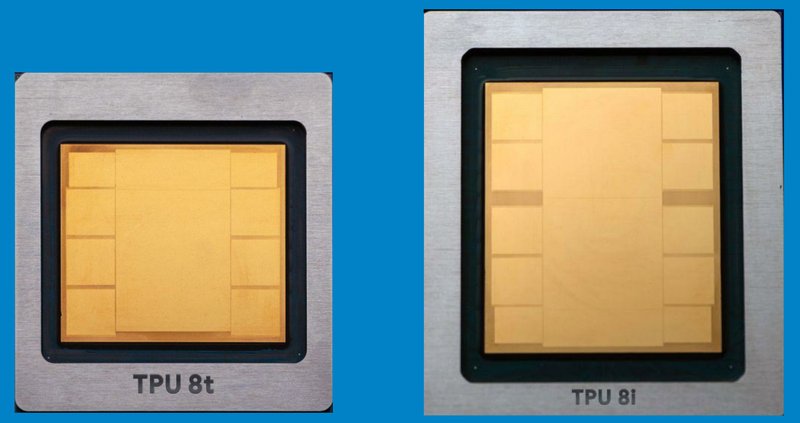
The news is technically thin but strategically significant. Google has chosen AMD EPYC Turin hosts for the new TPU 8tx and integrated confidential computing capabilities; in parallel, the TPU 8i Max variant doubles memory bandwidth intended for inference. This is not a simple hardware refresh. It is a way to redraw the boundaries between what cloud infrastructure can offer and what an organization can bring into its own data centers.
The first clear signal is that silicon specialization does not eliminate the role of general-purpose processors. A custom accelerator like the TPU needs a host capable of managing orchestration, I/O, security, and part of the data pipeline. The choice of AMD, rather than a proprietary processor or a default partner, indicates that Google treats the host CPU as a strategic component, not as a detail left to third-party suppliers.
For those watching the AI infrastructure market, the message is broader. Innovation is not played only on accelerators, but on integration among specialized compute, memory, networking, and protection mechanisms. The TPU 8tx and the 8i Max are not simple chips: they are elements of a cloud platform that Google controls from the host to security. This integration is exactly what makes TPUs difficult to replicate in on-premise contexts.
AI-Radar follows this news with a precise filter. Hardware news announced for a cloud service does not translate into an option for those managing local LLMs. But the way Google moves its pieces helps understand where the confrontation between high-performance cloud and local control is heading.
Inference and memory bandwidth: the hidden variable of TCO
For those working with large language models, the doubling of memory bandwidth on the TPU 8i Max is the detail that weighs most. Inference on LLMs is often limited by the ability to move weights and model state between memory and compute units, not by the maximum power of the accelerator. Increasing bandwidth without changing the compute architecture is a direct intervention on that bottleneck.
This has immediate consequences for the sustainability of services that generate tokens in real time. When a model must produce tokens in sequence, each step requires rereading significant parts of the model. Greater bandwidth allows keeping latency low without forcing the system toward more expensive configurations or toward aggressive optimizations such as quantization. In a cloud context, this reflects on TCO: operational costs related to inference are becoming the dominant item for many LLM-based services.
The reasoning also applies to those evaluating local hardware. In self-hosted systems, VRAM and its bandwidth are among the factors that determine the quality and cost of inference. An accelerator with the maximum number of cores is not useful if the memory cannot feed it. Google's move on the 8i Max confirms that the market is shifting attention from peak compute to the sustainability of sustained inference.
There is, however, a fundamental difference. Google can optimize memory bandwidth within a proprietary ecosystem, with aligned TPUs, hosts, and software. Those building an on-premise deployment must deal with heterogeneous components, drivers, and software stacks. The doubling announced by Google is not a card that can be installed in a local rack, but a signal of where improvements in next accelerators will concentrate.
Confidential computing: security in use is not sovereignty
The introduction of confidential computing on the TPU 8tx shifts the confrontation from performance to security of data in use. It is a relevant step: it protects data during processing, reducing exposure to those managing cloud infrastructure. For LLM workloads handled in shared environments, this has growing weight, especially when prompts and contextual data contain sensitive information.
But confidential computing is not equivalent to data sovereignty. Protecting data while it is processed does not change the fact that those data reside in a data center managed by third parties and that access to the infrastructure remains outside the organization's control. For those subject to European regulations, the distinction between protection in use and physical control is often more relevant than raw compute power.
This tension is central for AI-Radar. Confidential computing raises the bar of the cloud offering and can make acceptable scenarios that were previously excluded. But it does not remove the structural constraint: if a datum cannot leave a defined physical perimeter, no level of software or hardware security in the cloud solves the problem. The answer for these cases remains self-hosted deployment or a combination of certified perimeters.
There is another consideration. Confidential computing requires trust in the platform provider and in security attestations. Organizations must verify how keys are managed, how environment integrity is attested, and which contractual guarantees accompany the protection. It is not a function activated with a switch, but a verification process that impacts how cloud providers are evaluated.
AMD enters through the service door, Intel watches from the back
The choice of AMD as host for the TPU 8tx has a second-order effect on the server processor market. AMD enters a top-tier AI infrastructure not with a GPU, but with the host CPU. This detail matters: it shows that a supplier's value in the modern data center is not measured only on accelerators, but on the ability to offer reliable, efficient CPUs that can integrate with custom silicon.
For Intel, which is trying to regain ground in server CPUs, the message is clear. Hyperscaler customers no longer take the host processor choice for granted, even when the accelerator is proprietary. A hyperscaler like Google can decide to diversify suppliers, evaluate per-socket efficiency, and reward those offering a combination of performance, thermal management, and software support. The choice of AMD signals that competition on host CPUs remains open.
The immediate impact for LLM users should not be overstated. The host CPU is not the main bottleneck for inference on large models. But in a cloud platform, the host CPU manages critical parts of the pipeline, from data preparation to security, and an inefficient host can erode the accelerator's benefits. The choice of AMD can therefore contribute to the overall sustainability of Google's offering.
Looking ahead, this signal could push both CPU makers to specialize their solutions for AI workloads. Being a good general-purpose processor is no longer enough: careful design for interactions with accelerators, memory, and security functions is needed. The AI infrastructure game is widening, and AMD has shown it can be part of the design even without having the dominant GPU.
Self-hosted does not shut down: the choice is infrastructure, not performance
TPUs remain a technology that Google offers primarily through its own cloud infrastructure, not as a purchasable component for an on-premise data center. This constraint is structural. The integration among TPU, EPYC host, and confidential computing is designed to improve the managed services offering, not to open an independent hardware supply chain. For organizations that cannot move sensitive data to the cloud, the news does not provide a direct answer.
This does not mean the news is irrelevant for the self-hosted world. On the contrary, it indicates the direction the comparison will take when organizations must justify the choice between high-performance cloud and local control. If the cloud keeps improving bandwidth, security, and integration, the TCO calculation for on-premise must include not only hardware costs but also management costs, updates, and operational complexity.
For those evaluating on-premise deployments, the analytical frameworks on /llm-onpremise help weigh trade-offs of this type, without ready-made recipes. There is no single answer: it depends on data sensitivity, regulatory constraints, inference scale, and the team's ability to manage local infrastructure. The Google news offers a reference point for understanding what the cloud can offer, but it does not replace analysis of the specific context.
AI-Radar maintains a position of vendor neutrality. The point is not to establish whether TPUs are better or worse than other solutions, but to understand which options are available, which constraints exist, and how the terms of comparison change. Self-hosted remains a legitimate choice when physical control and data sovereignty are non-negotiable, even if the cloud continuously raises the bar on performance and security.
What to watch in the coming months
The first signal to monitor is the availability of TPUs outside Google Cloud. If Google were to make TPUs accessible through partners or in hybrid mode, the picture for self-hosted would change. For now there are no indications in this direction, but competitive pressure could push toward more open forms of distribution.
The second front is the maturation of confidential computing. Certifications, attestations, and clear contractual guarantees will be needed to understand whether this technology can genuinely meet the requirements of regulated organizations. Without an independent verification framework, confidential computing risks remaining a marketing promise.
On the hardware front, it is worth observing how AMD and Intel respond. Google's choice could accelerate the development of host CPUs specialized for AI workloads, with effects across the server supply chain. Accelerator makers for the on-premise market will also need to keep pace on memory bandwidth, because LLM inference rewards those who move data efficiently.
Finally, the real indicator will be the actual TCO of inference services. Hardware news matters if it translates into lower operational costs or more predictable service quality. For those running LLMs in production, the parameter to observe is not core count or peak bandwidth, but the cost per token generated reliably, while respecting security and sovereignty constraints. The Google news is one piece of this picture, not the conclusion.



💬 Comments (0)
🔒 Log in or register to comment on articles.
No comments yet. Be the first to comment!