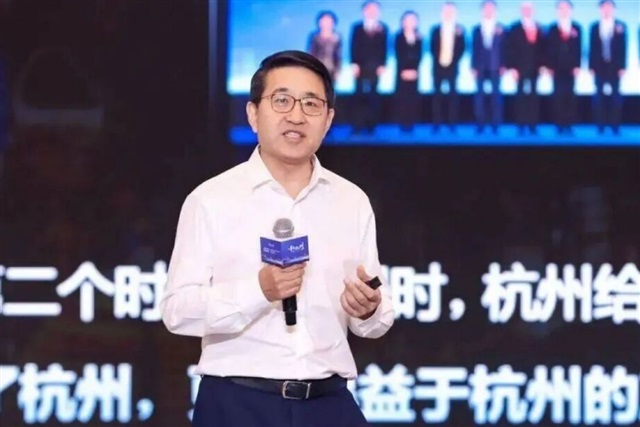
H3C, one of China’s leading ICT infrastructure vendors, has taken a more decisive path toward artificial intelligence servers. The shift comes on the heels of Yu Yingtao’s resignation as chairman of Unisplendour, the company that controls H3C, officially for “personal reasons.” A terse press release is enough to signal a restructuring that could have tangible repercussions on the market for training and inference hardware.
Read between the lines, the news reveals a push to position H3C as a major player in China’s AI hardware race. At a time when export restrictions on US components force local companies to build alternative supply chains, the concerted entry of a vendor with H3C’s portfolio and reach amounts to a precise industrial choice. It’s not just about manufacturing generic servers, but about offering platforms optimized for Large Language Model workloads, often with local accelerators or hybrid solutions designed to circumvent the limits imposed by Western chips.
For those evaluating on-premise LLM deployment, the vendor’s evolution is a piece of the puzzle worth watching closely. It means the Chinese market is generating enough demand to justify dedicated investments in a class of hardware that, by its very nature, requires compute density, thermal management, and memory architectures built to hold models of tens of billions of parameters in VRAM. The alternative to self-hosted infrastructure in China often runs through major cloud operators, but the push for data sovereignty and control over the entire pipeline — from training to inference — is tipping the balance toward local deployments, even in regulated enterprise settings.
H3C isn’t starting from scratch: it has established relationships with Chinese hyperscalers and builds systems for data centers of all sizes. But the “AI server first” pivot could translate into more aggressive configurations on the memory, interconnect, and serving framework support fronts. Although the source provides no technical specs, it’s reasonable to expect the company to focus on GPU density (or equivalents) and a software ecosystem that eases integration with widespread tools for model fine-tuning and quantization.
The leadership reset is no minor detail: Yu Yingtao’s resignation comes as Unisplendour is redefining its priorities after years of corporate turmoil. H3C, for its part, needs a focused leadership if it wants to compete with names like Inspur, Huawei, or Sugon, which already occupy the AI server segment. The implicit message is that the group intends to accelerate, likely driven by public sector contracts and an industrial base increasingly hungry for autonomous compute capacity.
In a global picture where the Total Cost of Ownership of on-premise solutions is weighed against the fees of managed cloud services, the Chinese game follows its own rules: geopolitical constraints turn hardware availability into a strategic variable. For this reason, every move by local vendors deserves to be read not as a mere product announcement, but as an indicator of trajectories that will influence the very feasibility of self-managed deployments.






💬 Comments (0)
🔒 Log in or register to comment on articles.
No comments yet. Be the first to comment!