
It was not a routine statement. Hugging Face's CEO chose a precise moment—right after Jensen Huang's exit—to reiterate that the fight for open-source AI will not stop. The move puts Nvidia's $12.9 billion acquisition back in focus and the questions it raises about how open the ecosystem will remain.
Behind the pledge lies a deeper industrial reading. Hugging Face has become the exchange floor for Large Language Models: models, datasets, and tooling pass through it. When the CEO talks about 'continuing to fight,' he is not only defending a philosophy: he is defending a distributed infrastructure where companies can download models, fine-tune them, and run Inference without necessarily going through proprietary APIs. That is the structural point: open source in AI is not just transparency; it is a bargaining lever for those who want self-hosted and data control.
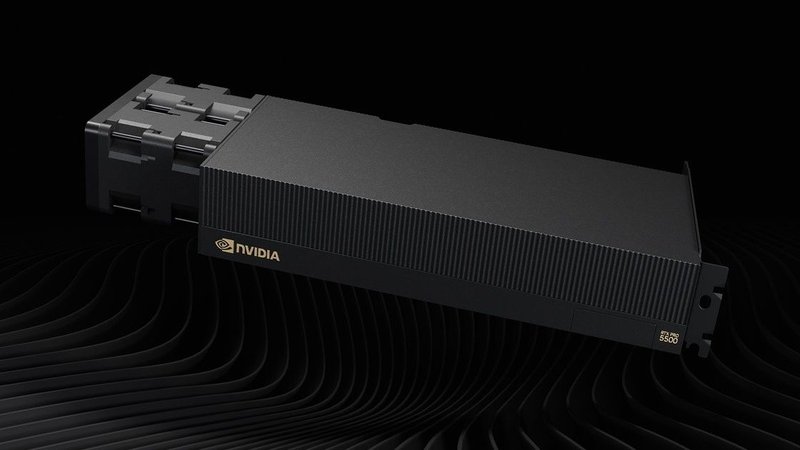
Huang's exit adds tension. Nvidia remains the dominant supplier of GPUs for training and Inference; its possible integration of proprietary hardware and software risks narrowing the space for those who want vendor-neutral stacks. A mega-acquisition of $12.9 billion, whatever its exact perimeter, signals a direction: consolidate control over the supply chain, not just sell silicon. For companies evaluating on-premise deployments, the message is twofold. On one hand, open models allow them to avoid cloud service lock-in and keep data within their own boundaries, with benefits for sovereignty and compliance. On the other, the hardware needed to run those models remains largely in the hands of a few vendors, and the real cost is measured in TCO, VRAM, and energy consumption.
Who wins and who loses? Proprietary cloud API providers see open source as their most dangerous competitor, because it shifts value from the service to the model and the data. Companies with data sovereignty requirements have an immediate interest in supporting self-hosted models and open frameworks: for them the stakes are not absolute performance, but the ability to govern pipelines and data without intermediaries. Nvidia, for its part, continues to benefit from compute demand: even open-source models must run on GPUs. The real battle in the coming years will be over orchestration and serving software, not just model weights.
For those observing on-premise deployment, the trade-offs sit on this ridge: open models, data control, and operating costs on one side; accelerators, compatibility, and system software on the other. AI-RADAR offers analytical frameworks at /llm-onpremise to evaluate these balances without simplification. Hugging Face's pledge is a signal: open source is not a temporary parking lot while vendors close the ecosystem, but a negotiating posture. It remains to be seen whether it will be enough to prevent hardware from becoming the only true master of the stack.




💬 Comments (0)
🔒 Log in or register to comment on articles.
No comments yet. Be the first to comment!