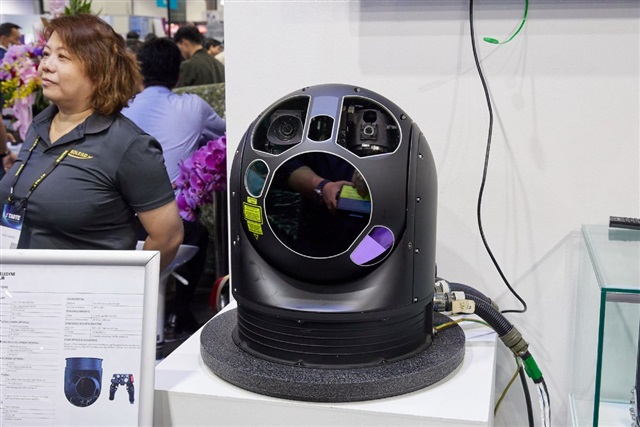
Digitimes has shone a light on a quiet but consequential shift unfolding in Taiwan's high-tech ecosystem: local IC designers, often fierce competitors, are coordinating forces to capture a larger slice of the AI vision market. The focus isn't on chips for training Large Language Models in data centers, but on specialized silicon for visual inference directly on devices – smart cameras, industrial robots, autonomous vehicles – where zero latency and privacy matter more than raw computational power.
The move signals a structural evolution in how AI approaches the network's edge. Until now, video stream analysis demanded robust connectivity to the cloud or centralized servers, bringing bandwidth costs and data security risks. Taipei's response is a shared platform – likely a reference architecture or accelerator module – that allows manufacturers and integrators to deploy convolutional and transformer-based vision networks without depending on single IP providers or general-purpose GPUs.
Why Taiwan and why now
The timing is no accident. The island hosts the world's densest supply chain for application-specific chip design: fabless houses like MediaTek, Novatek, and Realtek have decades of experience churning out SoCs for every class of consumer and industrial device. Pooling expertise on advanced process nodes (TSMC 7 nm and beyond) and neural network quantization tools lowers the barrier for anyone looking to embed AI in edge products, from surveillance cameras to drones.
The stated goal is to wrest value away from giants that currently dominate edge AI with proprietary solutions – Nvidia's Jetson line, Google's Coral, and to some extent Qualcomm. The strategy mirrors ARM's play in mobile processors: a common foundation on which differentiated implementations flourish, accelerating mass adoption through reduced costs and interoperability.
The cloud short circuit: data sovereignty wins
For anyone tracking on-premise deployment dynamics, this news confirms the pendulum is swinging from centralization to local autonomy in the visual domain as well. Processing frames directly on the sensor not only avoids latency bottlenecks – critical for applications like automatic braking or inline quality control – but keeps raw data away from third-party servers. In a regulatory landscape like GDPR, where every image can constitute personal data, the legal and operational advantage is enormous.
The Taiwanese designers' collaboration thus sets the stage for a market where horizontal scaling of edge AI becomes as simple as mounting a standard module and loading a pre-quantized model. This is no fantasy: it means mid-sized manufacturing enterprises, municipalities, and logistics operators can afford intelligent vision systems without recurring cloud computing costs or data exposure fears.
In the short term, the primary beneficiary is the fabric of small and medium businesses that TSMC and Taiwanese chip designers have always served. The losers are cloud-first platforms whose business hinges on monetizing computer vision APIs. In the long run, the deepest effect will be a commoditization of vision inference hardware, pushing margins toward software and system design – a balance-of-power shift identical to what we're already seeing in the LLM world with the rise of self-hosted solutions.
The alliance marks a watershed: AI vision is ceasing to be a service and becoming a standardized hardware component. For anyone evaluating on-premise computer vision projects, the direction is clear: expect Asian partners with aggressively priced integrated solutions, and prepare to weigh interoperability as a selection criterion alongside model accuracy.






💬 Comments (0)
🔒 Log in or register to comment on articles.
No comments yet. Be the first to comment!