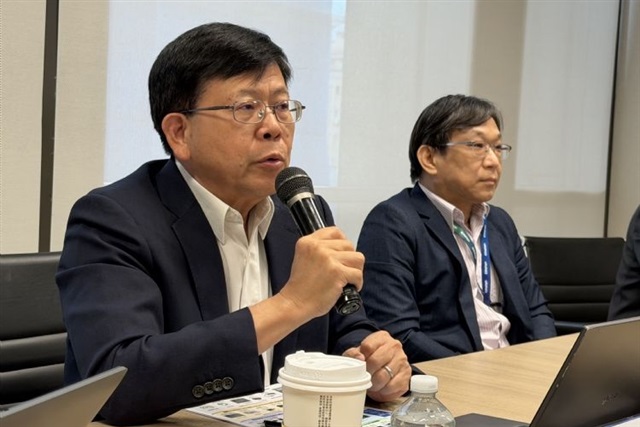
IEI Integration closed the first quarter with a margin of 28%, according to the Taiwanese industrial PC (IPC) maker’s financial report. President Jong-liang Jiang said a rebound is on the way, framing the dip as a transitional phase rather than structural weakness.
For those building local compute infrastructure, the news touches a raw nerve. IEI may not be a consumer name, but its fanless, compact, long-lifecycle systems are silent bricks of edge computing. These are exactly the devices increasingly running AI models entirely on-premise, far from cloud data centers.
Why IPCs matter for on-premise language models
Industrial PCs are not just computers; they are built to withstand extreme temperatures, vibration, dust, and to guarantee 7–10-year lifecycles. In AI contexts, they serve as edge inference nodes in factories, warehouses, smart cities, and surveillance applications. A quantized LLM can run locally on such hardware, without network latency and with full data sovereignty.
IEI manufactures motherboards, box PCs, and embedded systems that can integrate enterprise-grade or industrial GPU accelerators. This is not about training but local inference, often on hybrid architectures combining x86 CPUs and NPUs. The spread of these form factors is an enabler for AI deployment in air-gapped or regulated environments.
Margins and the supply chain: what to watch
A margin falling to 28% is not alarming per se, but it may signal component cost pressures — memory, SoCs, connectors — or a temporary demand slowdown. For those managing on-premise AI rollouts, the financial health of edge hardware makers affects lead times, pricing, and long-term availability. In industrial environments, vendor continuity is as critical as technical specifications.
Anyone evaluating a fully self-hosted inference infrastructure should track these indicators: a margin squeeze could translate into less flexible price lists or reduced board availability. Conversely, the promised rebound — if driven by rising edge AI demand — would be a positive signal for the whole ecosystem.
The expected rebound and the edge AI landscape
IEI Integration expects recovery in the coming quarters. No specifics were shared, but expectations are tied to industrial automation and computer vision projects requiring local processing. This aligns with the trend toward hybrid architectures, where an increasing share of inference moves outside the cloud.
For enterprise decision makers, IEI’s story is a reminder: edge componentry is not an undifferentiated commodity, and vendor stability can become a TCO factor. Without hard data, the only compass is awareness that every link in the chain — from semiconductors to fanless boxes — influences the ability to deploy an LLM in production on-premise without surprises.






💬 Comments (0)
🔒 Log in or register to comment on articles.
No comments yet. Be the first to comment!