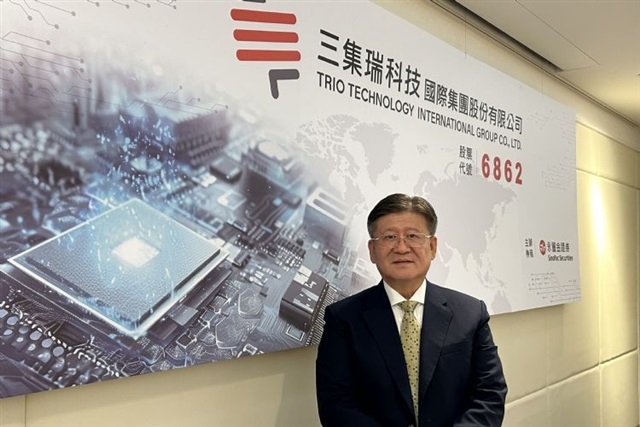
Trio chairman Huo-li Lin doesn't need flashy announcements: the numbers speak for themselves. In June, the company recorded a sharp revenue increase, driven by demand for battery backup systems destined for AI servers. A piece of news that might slip under the industry radar, but actually reveals a much deeper structural dynamic.
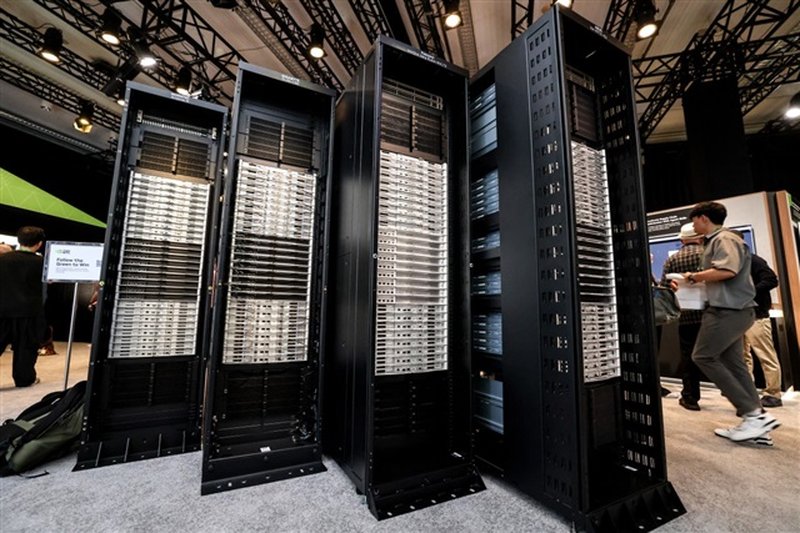
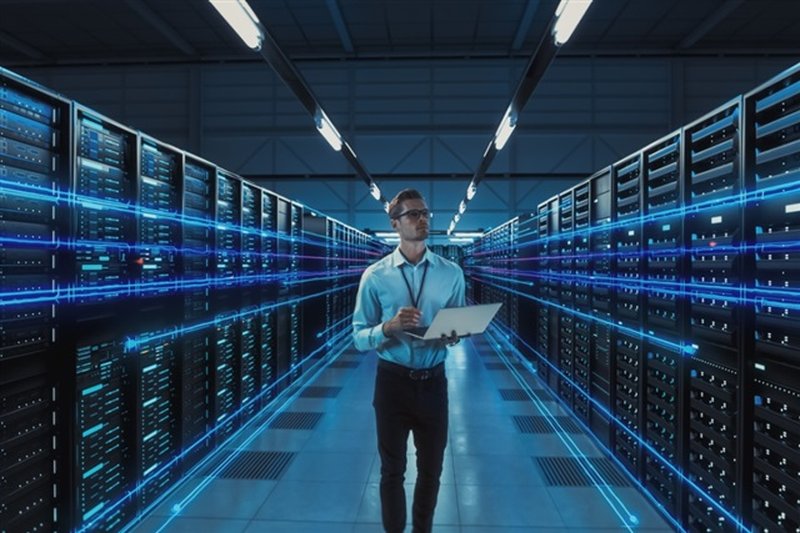
AI servers, especially those hosting GPUs for training and inference of Large Language Models, draw power peaks that stress any electrical infrastructure. It's not just about adding a few racks: a single multi-GPU node can absorb several kilowatts, and during training the load variability is extreme. A power interruption, even of a few milliseconds, means losing hours of computation and potentially corrupting training state. That's why uninterruptible power supplies (UPS) are no longer an optional accessory, but an architectural component on par with processors and network switches.
Trio’s numbers signal that the supply chain has woken up to this. The wave of AI server orders is causing a ripple effect across the entire power supply chain: switchgear, transformers, lithium batteries, cooling systems. It’s a symptom of a hardware rush that goes beyond chips, reshaping data center design criteria, especially for those opting for on-premise or colocation deployments.
The hidden cost of on-premise AI
For organizations evaluating self-hosted models, the Total Cost of Ownership doesn't stop at the purchase of GPUs and software licenses. The electrical part — cabling, UPS, generators, distribution — has an increasing impact, and procurement lead times are lengthening. Companies like Trio see their order books swelling, meaning that anyone planning an AI cluster today finds themselves competing for production capacity with dozens of other initiatives. This isn't a theoretical problem: in some regions, delivery times for medium-voltage transformers have already doubled compared to two years ago.
This pressure has second-order consequences. On one hand, it favors hyperscalers, who sign multi-year contracts with suppliers and secure priority. On the other, it pushes smaller enterprises to reconsider hybrid architectures: offloading training to the cloud and keeping inference on-premise, where consumption is more stable and predictable. But even on-premise inference, when scaled to hundreds or thousands of concurrent requests, may require UPS systems sized for impulsive loads.
Winners and losers
The surge in energy backup demand is reshaping the balance. Specialized manufacturers like Trio win, moving from providers of “boring” components to strategic partners. Electrical engineering firms and system integrators who know how to design modular data centers also win. Conversely, organizations that underestimated the ancillary costs of on-premise AI lose, finding themselves with blown budgets and stretched deployment timelines.
Then there is a geopolitical dimension. Much of the component base for batteries and UPS comes from Asia and the United States. The explosive demand growth could create regulatory and logistical bottlenecks, especially in Europe, where energy constraints and safety certifications are more stringent. For those pursuing data sovereignty and wanting everything in-house, reliance on external power suppliers can become the weak link in the chain.
The Trio case is therefore much more than a positive quarterly report. It is a leading indicator of an industry learning the hard way that artificial intelligence feeds not only on parameters and tokens, but on stable and reliable electrons. And that between a chip and its full potential, there is a UPS in the middle.






💬 Comments (0)
🔒 Log in or register to comment on articles.
No comments yet. Be the first to comment!