The Unstoppable Growth of AI Servers and Its Effects
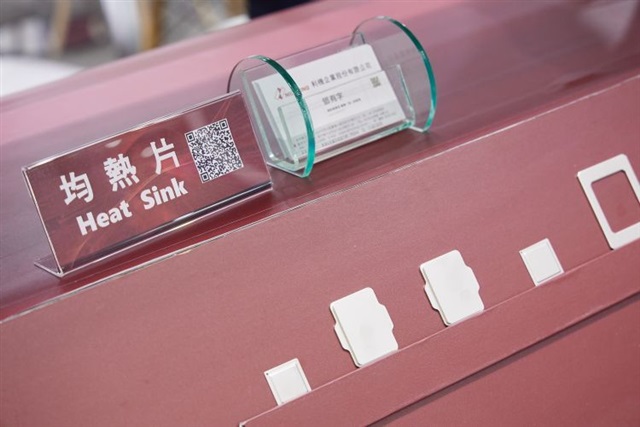
The sector of servers dedicated to artificial intelligence is experiencing unprecedented expansion, driven by the rapid adoption of Large Language Models (LLM) and other generative AI applications. This surge in demand has significant repercussions across the entire hardware supply chain. A striking example is Niching Industrial, which announced it has achieved record revenue for its heat spreaders, a seemingly secondary but actually crucial component for the efficient operation of AI systems.
This data is not just positive news for the company, but a clear indicator of the pressures and demands that AI infrastructure is placing on the market. AI servers, in fact, are equipped with high-performance GPUs (such as NVIDIA's A100 or H100 series) that generate a considerable amount of heat. Thermal management therefore becomes a decisive factor in ensuring the stability, performance, and longevity of these expensive assets.
The Critical Role of Thermal Management in AI
Heat spreaders are fundamental elements for thermal management within servers. Their function is to effectively transfer heat generated by the most critical components, such as GPUs and processors, to a larger cooling system, preventing overheating and thermal throttling, which would drastically reduce performance. In the context of intensive AI workloads, where GPUs constantly operate at the limit of their capabilities, the efficiency of the heat spreader becomes not only desirable but indispensable.
For CTOs and infrastructure architects evaluating on-premise deployments, the choice of adequate cooling solutions is a priority. An inefficient cooling system can lead to service interruptions, performance degradation, and, in the long term, premature hardware failures. The ability to maintain optimal operating temperatures directly impacts the stability of the computing environment and the capacity to sustain complex LLM inference and training workloads.
Implications for On-Premise Deployments and TCO
The increasing demand for thermal management components has direct implications for organizations choosing to implement their AI infrastructure in a self-hosted or air-gapped manner. Data sovereignty, regulatory compliance, and the desire for complete control over the computing environment drive many companies towards on-premise solutions. However, this choice entails the need to manage all infrastructural challenges internally, including heat dissipation.
The Total Cost of Ownership (TCO) of an on-premise AI infrastructure is strongly influenced not only by the initial cost of GPUs and servers but also by the operational expenses related to cooling and energy. More advanced heat dissipation solutions, while potentially involving higher initial CapEx, can result in lower OpEx due to greater energy efficiency and reduced maintenance needs. For those evaluating on-premise deployments, AI-RADAR offers analytical frameworks on /llm-onpremise to assess the trade-offs between performance, costs, and infrastructural requirements.
Future Prospects of the AI Component Market
The success of Niching Industrial is a microcosm of a broader trend: the market for AI components is in full effervescence. Innovation is not limited to silicon chips but extends to every element that contributes to the efficiency and reliability of the AI ecosystem. Research and development in areas such as liquid cooling, phase-change materials, and more compact and efficient heat dissipation architectures are expected to continue to grow.
This evolution is crucial to support the next generation of LLMs and AI applications, which will require even more computing power and, consequently, even more sophisticated thermal management solutions. Companies operating in the hardware component sector, like Niching Industrial, play a silent but indispensable role in shaping the future of artificial intelligence, providing the physical foundations upon which digital innovations are built.









💬 Comments (0)
🔒 Log in or register to comment on articles.
No comments yet. Be the first to comment!