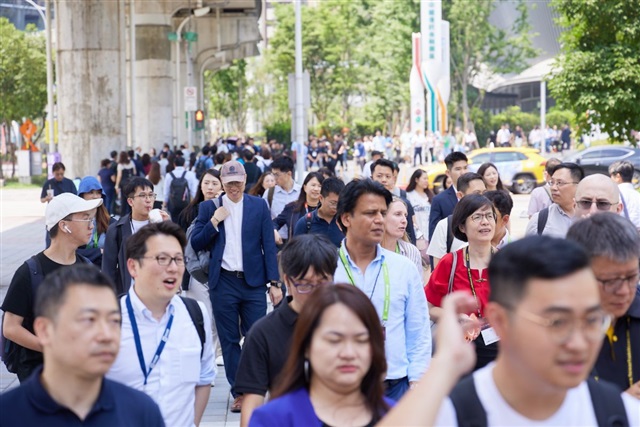
The global AI race is redrawing production geographies, with Taiwan as its silent epicenter. Recent data shows the island's GDP may grow by double digits, driven by investments and exports in the AI component supply chain. It’s a signal of how the hardware that powers cloud and on-premise inference has become a macroeconomic force, and a practical variable for anyone designing local deployments.
The hardware engine behind the surge
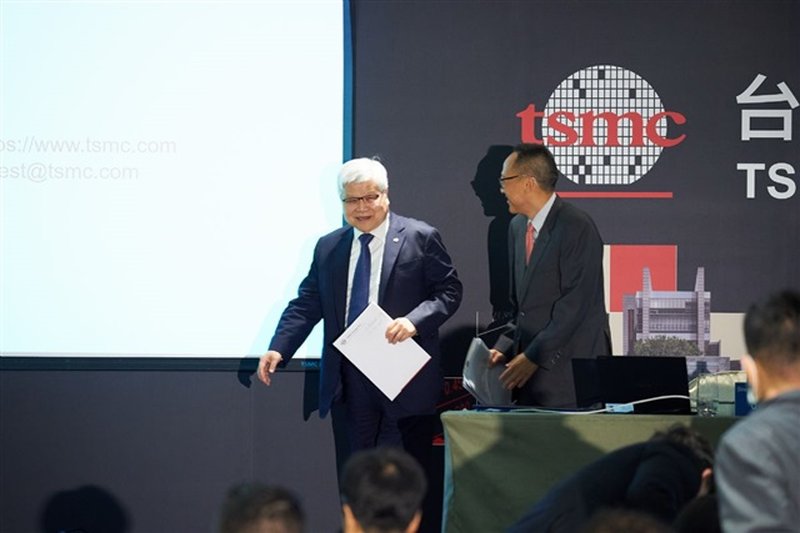
While official figures are still being refined, projections point to GDP growth exceeding 10% year-on-year – a pace Taiwan hasn't seen in years. The thrust comes from advanced semiconductors, high-bandwidth memory (HBM), and servers optimized for AI workloads. Companies like TSMC, along with the packaging and testing ecosystem, are running at full capacity to meet orders from major cloud providers and, increasingly, enterprises that are bringing inference in-house.
For those looking at the market through the lens of local deployment, this is a critical signal. The availability of GPUs and accelerators – and their cost – depends largely on Taiwanese production capacity. Any bottleneck trickles down to lead times and TCO for an on-premise project. The current surge in investment indicates that the supply chain is gearing up for structural, not cyclical, demand.
What it means for on-premise decision makers
It's not just about volumes. The ramp-up in AI component production also shifts the center of technological maturity: more efficient interconnect architectures, 3D packaging, and advanced process nodes make it possible to pack more compute into single nodes. For an organization evaluating a local cluster to run LLM fine-tuning or low-latency inference, this translates into potentially fewer machines needed and lower energy costs – two decisive variables for project sustainability.
Data sovereignty remains a key concern. Direct hardware control is a prerequisite for air-gapped or regulated environments. A robust, albeit geographically concentrated, supply chain raises dependency questions but also guarantees enough volume to make the self-hosted option increasingly viable for mid-sized enterprises, not just hyperscalers.
Beyond chips: a fragile balance
The boom must be read against the grain. Extreme manufacturing concentration in Taiwan, while creating scale efficiencies, introduces a systemic risk – geopolitical and logistical – that any well-architected on-premise project cannot ignore. Inventory planning, supplier diversification, and the ability to adapt software across accelerator generations become part of the blueprint.
From this vantage point, the GDP figure is a market signal: it prices in surging AI demand, and the industrial response is underway. For those now deciding whether and how to build internal compute capacity, the window of opportunity is wide, but it must be crossed with medium-term TCO assessments, keeping a close eye on supply chain evolution. The Taiwanese wave isn't just a macroeconomic headline; it's a concrete design parameter.






💬 Comments (0)
🔒 Log in or register to comment on articles.
No comments yet. Be the first to comment!