
A U.S. House panel will vote this week on a bill designed to flip the script on AI infrastructure accounting: no more inflated electricity bills for households, but energy costs squarely placed on the companies building and operating AI data centers. The move, still nascent, marks a turning point in the relationship between Big Tech and public utilities as soaring training and inference consumption strains power grids across entire states.
Why AI data centers are devouring the grid
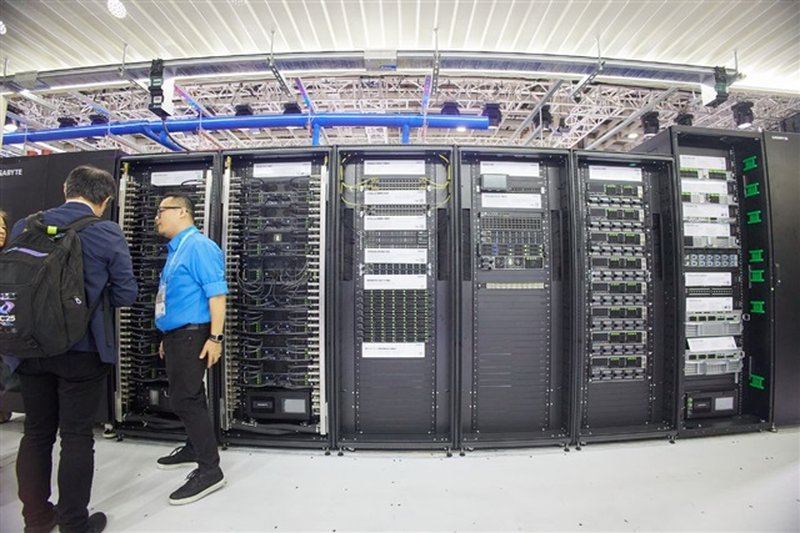
Large Language Models require GPU clusters running nonstop for weeks during training, with power draws in the megawatt range per installation. Inference, often overlooked, multiplies the impact: each query to a generative model activates hundreds or thousands of cores for a few seconds, stacking into aggregated consumption that quickly overtakes that of initial training. Unofficial industry estimates suggest that a single LLM query can cost up to ten times the energy of a traditional web search. Without corrective mechanisms, these resources risk being socialized through higher tariffs for everyone.
The transparency and real TCO puzzle
The legislative package aims to introduce reporting obligations and possible tariff mechanisms that isolate AI data center consumption, preventing operators from hiding costs behind sweetheart industrial contracts. The issue touches TCO calculations where, for AI workloads, energy must sit as a primary cost driver alongside hardware and software licensing. Those operating on-premise know well that infrastructure efficiency—from quantization choices to fleet sizing—directly affects economic sustainability. Should the proposed rules become law, organizations keeping data in their own facilities might gain an edge in predictable energy cost management, while cloud providers would be forced to pass the burden to customers or rethink region architectures.
Sustainability and sovereignty: two sides of the same coin
Congress’s move fits a debate that goes beyond wallets: energy is a pillar of digital sovereignty. Relying on external data centers means ceding control over physical resources and their ecological footprint. For those evaluating on-premise deployment, the ability to tailor workloads to available electrical capacity and negotiate dedicated supply becomes a strategic asset. AI-RADAR offers analytical frameworks to compare trade-offs between self-hosted and cloud setups precisely on energy cost predictability and regulatory alignment. In a future where AI faces mounting rules, energy transparency could become a decisive competitive factor.
A vote that rewrites the rules of the game
This week’s vote is just the start of a legislative journey that could influence global allies and competitors alike. If the U.S. adopts stringent measures, Europe—already attuned with the Green Deal and ESG reporting standards—may follow suit, raising the bar further for those operating on an international scale. Meanwhile, cloud providers are scrambling with dedicated renewable energy investments and novel cooling architectures, but the regulatory question remains: who really pays the electricity check for the AI revolution?








💬 Comments (0)
🔒 Log in or register to comment on articles.
No comments yet. Be the first to comment!