Liquid Cooling's Expansion in the AI Era
The artificial intelligence sector, particularly that of Large Language Models (LLM), is pushing the boundaries of IT infrastructure, demanding ever-increasing compute density and power. In this scenario, thermal management has become a crucial challenge. While liquid cooling was primarily associated with high-end AI GPUs, such as NVIDIA A100 or H100, until recently, this trend is now shifting.
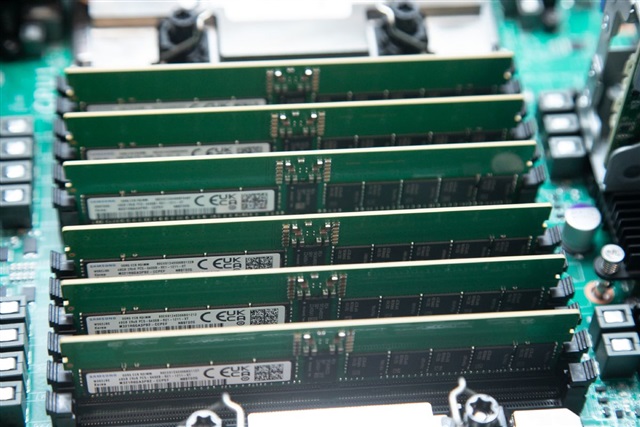
According to recent observations, the adoption of liquid cooling is extending well beyond just AI-dedicated GPUs. Fundamental components like memory cards and high-speed network cards are beginning to integrate liquid cooling solutions, signaling a significant evolution in modern data center architectures. This expansion reflects the growing need to dissipate heat generated by an increasingly powerful and interconnected hardware ecosystem.
The Technical Reasons Behind This Evolution
The drive towards liquid cooling for a wider range of hardware components is not accidental. Modern AI GPUs, with their high VRAM and compute capabilities, generate considerable amounts of heat, making traditional air cooling often insufficient to ensure optimal performance and long-term stability. However, the evolution of LLM architectures and Inference and training workloads has highlighted that other elements of the compute pipeline have also become "hot spots."
Memory cards, especially high-bandwidth memory (HBM), and network cards with extremely high throughput, essential for communication between GPUs in distributed clusters, are reaching levels of power consumption and heat generation that demand more efficient cooling solutions. Integrating liquid cooling into these components allows for lower operating temperatures, improving reliability, extending hardware lifespan, and enabling higher rack densities—a key factor for optimizing space in data centers.
Implications for On-Premise Deployments and TCO
For organizations evaluating the deployment of LLMs and AI workloads in self-hosted or air-gapped environments, the expansion of liquid cooling has significant implications. The ability to effectively manage heat in high-density clusters is fundamental for maximizing performance and energy efficiency. A well-designed liquid cooling system can contribute to reducing the Total Cost of Ownership (TCO) in the long run, despite a potentially higher initial CapEx.
This is achieved through greater energy efficiency (liquid is a more effective heat conductor than air), reduced physical space requirements, and enhanced operational stability that minimizes downtime and maintenance costs. For CTOs and infrastructure architects, considering liquid cooling for the entire AI hardware stack, not just GPUs, becomes a strategic element in designing on-premise data centers that ensure data sovereignty, compliance, and sustained performance. AI-RADAR offers analytical frameworks on /llm-onpremise to evaluate the trade-offs between different deployment strategies.
The Future of AI Infrastructure: Efficiency and Resilience
The widespread adoption of liquid cooling for a broader range of hardware components marks an important step in the evolution of artificial intelligence infrastructures. This trend not only addresses immediate heat dissipation needs but also paves the way for more compact, powerful, and efficient data center designs. The ability to maintain hardware at optimal temperatures is directly correlated with its capacity to operate at full capacity without throttling, ensuring consistent throughput and reduced latency for Inference and training operations.
In a technological landscape where the demand for AI compute power continues to grow exponentially, investment in advanced cooling solutions becomes not just a technical necessity, but a strategic lever for companies aiming to build and manage their AI capabilities in a resilient and sustainable manner. Infrastructure planning will increasingly need to consider these innovations to remain competitive and at the forefront.






💬 Comments (0)
🔒 Log in or register to comment on articles.
No comments yet. Be the first to comment!