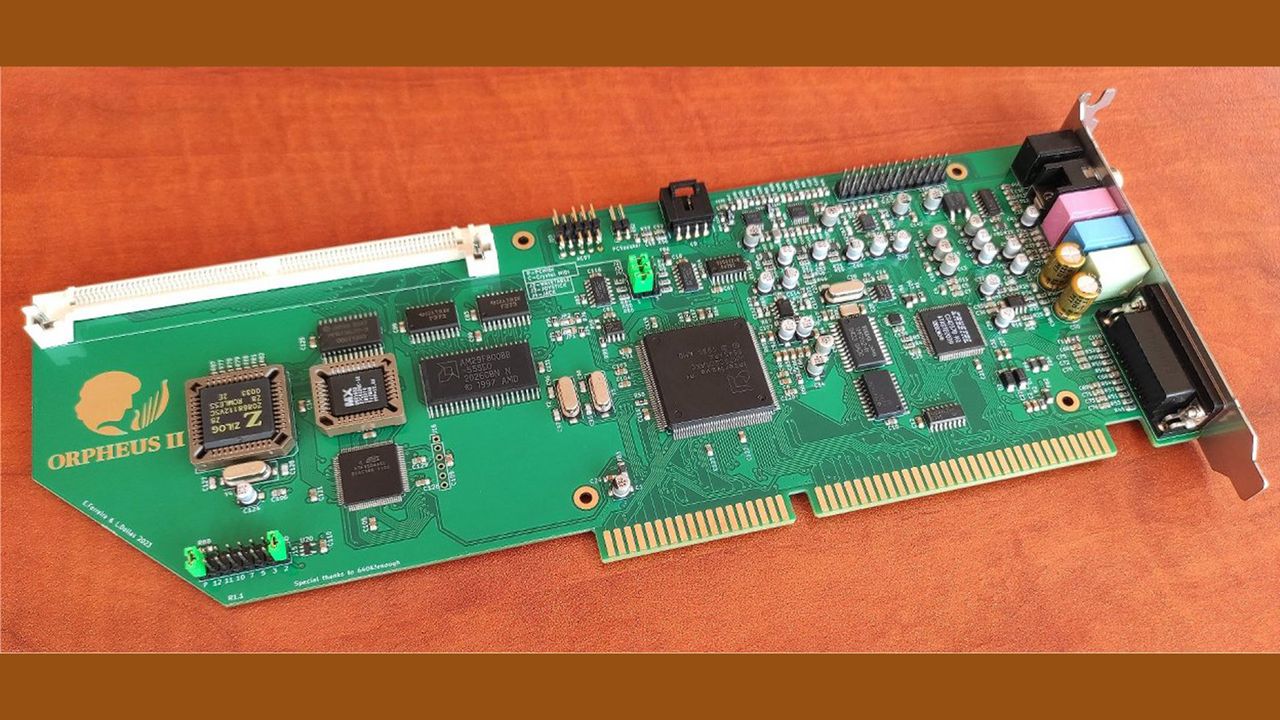
The Return of Specialized Hardware: A Case Study
The world of technology is full of unexpected returns, often driven by persistent niche demand. A recent example is the comeback of the Orpheus II ISA soundcard, a hardware solution specifically designed for users of DOS systems and early Windows versions. This re-release, motivated by 'popular demand,' underscores how even in seemingly obsolete contexts, dedicated hardware supporting specific standards retains intrinsic value.
This phenomenon offers a crucial insight for the Large Language Model (LLM) sector, where the choice of specialized hardware components is equally decisive for the success of on-premise deployments. The lesson is clear: when a workload presents unique and well-defined requirements, the most effective solution often lies in hardware infrastructure custom-designed or selected for those specific needs, rather than a generic approach.
Hardware Specifications and AI Workloads
In the LLM landscape, the need for targeted hardware is no less pressing. For those evaluating an on-premise deployment, the selection of Graphics Processing Units (GPUs) and their specifications, such as available VRAM, memory bandwidth, and compute capability, is fundamental. Large models require GPUs with high VRAM, like NVIDIA A100 or H100, to be loaded and processed efficiently.
Hardware choice directly impacts critical parameters such as throughput (tokens per second) and latency, which are essential for real-time applications or those with stringent requirements. The ability of a system to support 'every major audio standard' in the Orpheus II context parallels the need for AI infrastructures that can handle diverse model architectures, quantization levels (e.g., FP16, INT8), and parallelization techniques like tensor parallelism or pipeline parallelism.
Implications for On-Premise Deployments
The decision to adopt a self-hosted approach for LLM workloads is often driven by data sovereignty requirements, regulatory compliance (such as GDPR), and the need to operate in air-gapped environments. In these scenarios, the flexibility and control offered by proprietary infrastructure outweigh the advantages of immediate cloud scalability. However, this entails the responsibility of autonomously selecting, configuring, and managing the hardware.
'Popular demand' for the Orpheus II demonstrates that, even for niche needs, the market can respond with specific hardware solutions. Similarly, companies opting for on-premise seek silicon solutions that perfectly fit their training and inference requirements, balancing performance and cost. This approach ensures that resources are optimized for the specific workload, avoiding waste and maximizing efficiency.
Beyond the Cloud: Control and TCO
Total Cost of Ownership (TCO) analysis is a key factor in evaluating cloud versus on-premise deployments. While the initial investment for bare metal hardware can be significant, long-term operational costs for constant LLM workloads can make on-premise a more economically advantageous choice. Complete control over the infrastructure ensures not only data security and privacy but also the ability to optimize every component of the stack, from GPU firmware to inference frameworks.
For those evaluating these complex deployment decisions, AI-RADAR offers analytical frameworks on /llm-onpremise to better understand the trade-offs and specific constraints of each approach, supporting informed choices that align technological capabilities with strategic objectives. Just as the Orpheus II responds to a specific and lasting demand, so too does on-premise hardware for LLMs offer a targeted response to the needs for control, performance, and long-term TCO.





💬 Comments (0)
🔒 Log in or register to comment on articles.
No comments yet. Be the first to comment!