
Artificial intelligence is turbocharging the chip industry, and the latest projections confirm it: the global semiconductor market could surpass $2 trillion by the end of the decade. The estimate comes from DIGITIMES, which argues that the current AI-driven supercycle and the proliferation of Large Language Models (LLMs) will have a structural impact comparable to, if not greater than, previous technology waves.
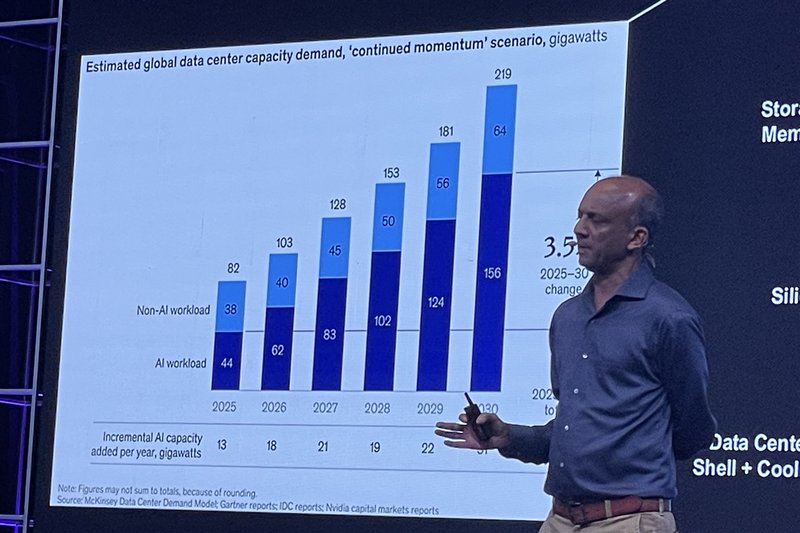
Behind these figures lies a convergence of factors that closely concerns anyone designing inference and training infrastructure. The explosive growth in model parameter counts, larger context windows, and the spread of techniques like quantization are pushing hardware requirements skyward, especially for GPUs and accelerators with ample VRAM and memory bandwidth.
The figure isn't just a curiosity for market analysts: for organizations evaluating self-hosted LLM deployments, it means navigating an ecosystem where advanced hardware availability will remain a critical variable. In recent years, chip demand has already strained supply chains, and a market poised to double in just a few years risks intensifying competition for access to the most performant components.
In this landscape, the choice between cloud and on-prem infrastructure becomes not only a matter of immediate costs, but of control over latency, data privacy, and Total Cost of Ownership (TCO) predictability. Those assessing a self-hosted investment today must consider that chipmakers' roadmaps will be heavily skewed toward satisfying large cloud providers first, then the enterprise channel. That means the window to acquire hardware at sustainable prices and in adequate volumes could narrow, especially for high-end GPUs needed for low-latency inference or model fine-tuning.
On the data sovereignty front, semiconductor market growth doesn't automatically translate into greater accessibility for local solutions. On the contrary, manufacturing concentration and the scramble for supplies could reinforce dependence on a handful of players, making it even more strategic to evaluate architectures that balance commodity hardware with software optimizations, such as reduced-precision quantization or the use of efficient serving frameworks.
The $2 trillion horizon is therefore not just a trendy number: it's an indicator of transformations underway across the entire AI stack, from silicon to deployment pipelines. For those working on local environments, the challenge will be turning this growth into an opportunity, without getting caught in bottlenecks that risk nullifying the advantages of the on-prem choice.







💬 Comments (0)
🔒 Log in or register to comment on articles.
No comments yet. Be the first to comment!