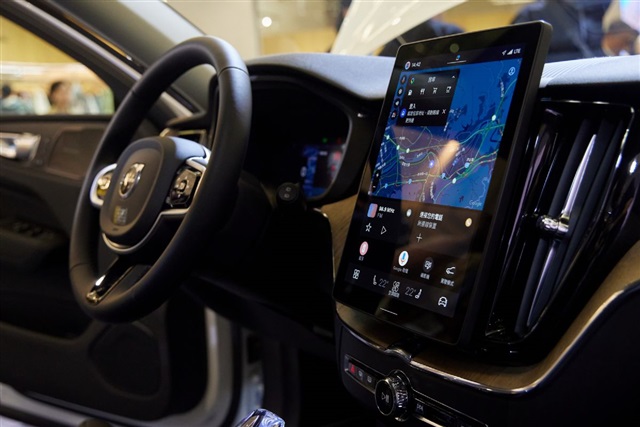
Automotive Drives Semiconductor Innovation
The automotive sector is undergoing a profound transformation, driven by architectural innovations that redefine the role of electronics within vehicles. This evolution, ranging from advanced driver-assistance systems (ADAS) to next-generation infotainment, is significantly raising the technological "barriers" for chips. This means that requirements for computing power, energy efficiency, and integration are becoming increasingly stringent, demanding more sophisticated and higher-performing semiconductors.
A notable aspect of this trend is the increasing semiconductor content per vehicle. Each new generation of cars incorporates a greater number and wider variety of chips, from microcontrollers to more complex processors for artificial intelligence. This phenomenon occurs despite a period of slowdown in overall vehicle sales, underscoring how the drive for technological innovation is an independent and driving factor for the chip industry.
The Role of Artificial Intelligence and Computing Needs
The increasing complexity in automotive architectures is closely linked to the integration of artificial intelligence-based functionalities. Autonomous driving systems, advanced voice recognition, driver monitoring, and predictive vehicle management require real-time data processing capabilities that only the latest generation of semiconductors can offer. This includes processors with dedicated accelerators for AI Inference, often with specific requirements in terms of VRAM and throughput.
For companies in the sector, the development and testing of these systems involve managing enormous volumes of data and training Large Language Models (LLMs) or complex vision models. This process demands robust computing infrastructures, often self-hosted, to ensure data sovereignty and regulatory compliance. The choice between on-premise deployment and cloud solutions becomes crucial, considering latency, security constraints, and the TCO associated with acquiring and managing specialized hardware.
Implications for On-Premise Deployment and TCO
The rising demand for high-performance semiconductors in the automotive sector has direct repercussions on infrastructural deployment strategies. Companies developing these technologies must invest in data centers capable of supporting intensive workloads, from simulation to AI model validation. This often translates into the need for bare metal servers equipped with cutting-edge GPUs, such as NVIDIA A100 or H100 series, with high amounts of VRAM to handle large models.
Evaluating the Total Cost of Ownership (TCO) becomes a determining factor. While the initial investment in on-premise hardware can be significant, it offers long-term advantages in terms of data control, security, and predictability of operational costs, especially for constant and intensive workloads. The ability to keep sensitive data within air-gapped or strictly controlled environments is fundamental for compliance and intellectual property protection, critical aspects in the automotive sector.
Future Prospects and Technological Challenges
The continuous push for innovation in automotive architectures foreshadows a sustained demand for increasingly powerful and specialized semiconductors. This trend poses significant challenges, from managing the global supply chain to the need for developing new Quantization techniques and model optimization for in-vehicle Inference. Companies will need to balance the pursuit of extreme performance with the energy efficiency and robustness required for the automotive environment.
For those evaluating on-premise deployment for AI model development and training, AI-RADAR offers analytical frameworks on /llm-onpremise to assess the trade-offs between different hardware architectures and deployment strategies. The ability to efficiently manage the entire AI development pipeline, from model fine-tuning to their release, will be a key success factor in a rapidly evolving sector.







💬 Comments (0)
🔒 Log in or register to comment on articles.
No comments yet. Be the first to comment!