A Strategic Choice in the AI Landscape
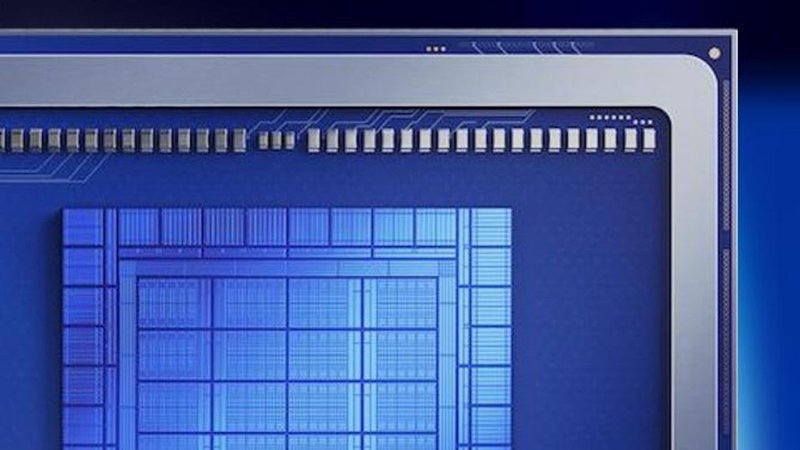
Intel is outlining a distinctive strategy in the AI accelerator market, as revealed by recent leaked images of its upcoming GPU, codenamed "Crescent Island." The most significant move involves the adoption of LPDDR5X memory, a notable deviation from the industry standard where High Bandwidth Memory (HBM) dominates high-end solutions. This decision is not coincidental but represents a direct response to the persistent global HBM shortage, a factor that has significantly impacted the supply chain and production costs of AI accelerators.
The integration of 160GB of LPDDR5X memory on "Crescent Island" suggests an approach aimed at balancing capacity, cost, and availability. In an ecosystem where the demand for computing power for Large Language Models (LLM) and other AI workloads is constantly growing, the ability to offer performant solutions without relying exclusively on critical and expensive components becomes a crucial competitive advantage.
Technical Details and Architectural Implications
At the heart of the "Crescent Island" GPU lies a massive Xe3P core, which promises to deliver the necessary computing power for the most demanding AI applications. The choice of LPDDR5X memory, with its 160GB, offers high capacity, which is fundamental for hosting large LLMs and managing extended context windows. While LPDDR5X may not match the pure bandwidth of HBM, it offers a more advantageous cost-per-gigabyte ratio and greater market availability.
This configuration implies a trade-off. While HBM excels in scenarios requiring extreme memory bandwidth for intensive computational operations, LPDDR5X can be optimized for workloads where memory capacity is as much a limiting factor as bandwidth, or where the overall TCO is a priority. For professionals managing AI deployments, understanding these differences is crucial for optimizing inference and training pipelines, balancing performance and budget.
Benefits for On-Premise Deployments and TCO
Intel's strategy with "Crescent Island" has direct implications for organizations considering self-hosted or air-gapped AI deployments. The availability of a GPU with 160GB of cheaper memory can significantly reduce the Total Cost of Ownership (TCO) for AI infrastructure. This is particularly relevant for companies that need to maintain data sovereignty and regulatory compliance, preferring on-premise solutions over cloud services.
Reduced initial hardware costs and easier procurement of LPDDR5X memory can accelerate the adoption of internal AI solutions, enabling enterprises to build and scale their inference and training capabilities without the dependencies and long-term operational costs associated with cloud infrastructures. For those evaluating on-premise deployments, AI-RADAR offers analytical frameworks on /llm-onpremise to assess specific trade-offs between performance, cost, and control.
Future Prospects in the AI Accelerator Market
The introduction of "Crescent Island" with its innovative memory architecture positions Intel as a player unafraid to explore alternative paths to address market challenges. In a sector dominated by a few major players, offering solutions that mitigate supply chain bottlenecks and provide more cost-effective options can stimulate innovation and competition.
This move could also influence the future design decisions of other chip manufacturers, pushing them to consider a more diversified portfolio of memory technologies. The ability to adapt to market dynamics and offer viable alternatives is fundamental to sustaining AI growth and ensuring that businesses of all sizes can access the computing power needed for their projects.





💬 Comments (0)
🔒 Log in or register to comment on articles.
No comments yet. Be the first to comment!