Intel Arc G3: Panther Lake's Challenge in the Handheld Segment
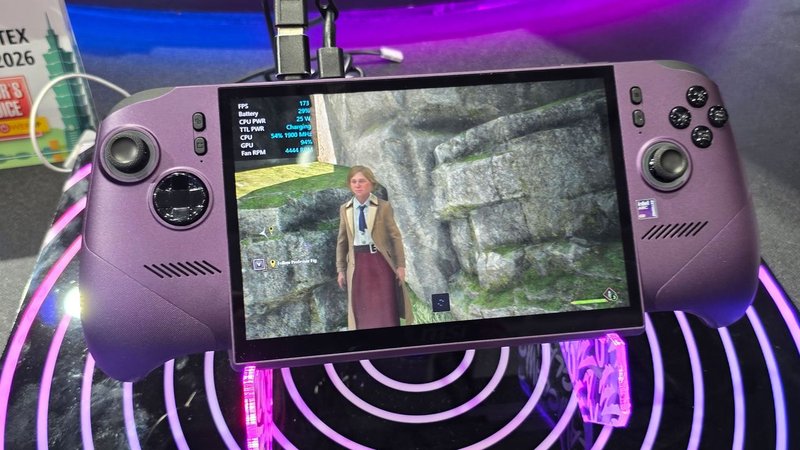
Intel has announced the introduction of its new Arc G3 chips, based on Panther Lake silicon, with the stated goal of competing in the growing handheld device market. This move represents a clear signal of Intel's intention to challenge AMD's dominance in this segment, bringing innovation in terms of computing power and graphical capabilities in a compact form factor. The integration of processors with up to 14 cores and Arc B390 graphics aims to redefine expectations for portable device performance, especially in an era where on-device AI processing is becoming increasingly crucial.
The expansion of computing capabilities directly on edge devices, such as handhelds, is a significant trend for the artificial intelligence ecosystem. It allows complex workloads, including smaller Large Language Models (LLMs) or quantized versions, to be executed directly on the device, reducing cloud dependency and enhancing user experience with lower latency and greater privacy.
Technical Details and Implications for On-Device AI
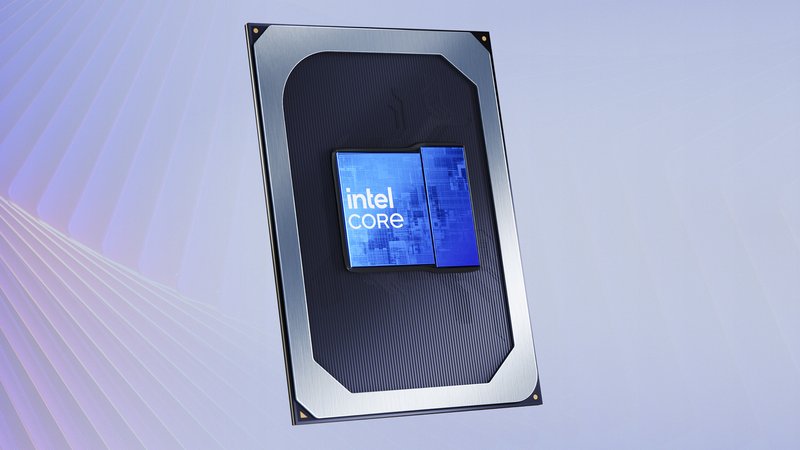
The new Arc G3 chips, based on the Panther Lake architecture, integrate up to 14 cores and an Arc B390 graphics section. This combination is designed to offer a balance between energy efficiency and performance, critical factors for handheld devices. The presence of a high number of CPU cores, coupled with an integrated GPU with shared or dedicated VRAM (though limited compared to server solutions), suggests a holistic approach to processing mixed workloads, ranging from gaming to AI model inference.
For LLM inference, the availability of dedicated cores and an integrated GPU is fundamental. It enables the execution of models optimized for the edge, such as those with 4-bit or 8-bit quantization, facilitating features like local voice assistants, real-time translation, or image processing directly on the device. The primary challenge for these chips will be balancing computing power with the thermal and power consumption constraints typical of portable devices, ensuring adequate throughput without compromising battery life.
The Context of Edge AI and Data Sovereignty
Intel's initiative fits into a broader context of increasing interest in Edge AI, where processing occurs as close as possible to the data source. This approach offers significant advantages in terms of latency, security, and data sovereignty. Running LLM inference on a handheld device means that sensitive data does not necessarily have to leave the device to be processed, addressing stringent compliance and privacy requirements, such as GDPR.
For companies evaluating deployment strategies for their AI workloads, the self-hosted or edge option, such as that offered by these new chips, presents a valid alternative to the cloud. While the training capabilities for complex models remain the purview of large cloud or on-premise infrastructures, inference for specific applications can greatly benefit from edge solutions. This reduces the long-term TCO for certain use cases and offers unprecedented control over data and the execution environment. AI-RADAR offers analytical frameworks on /llm-onpremise to evaluate the trade-offs between on-premise, edge, and cloud deployments, considering factors such as costs, performance, and security requirements.
Future Prospects for Portable AI Processing
Intel's entry into the handheld segment with Arc G3 chips, featuring 14 cores and Arc B390 graphics, marks a turning point for portable AI processing. Competition among major silicon manufacturers is set to stimulate further innovation, pushing the limits of what is achievable in terms of performance and energy efficiency on edge devices. This will not only benefit consumers with richer and more responsive experiences but also open new opportunities for developers and businesses seeking to integrate advanced AI capabilities into products and services operating in environments with limited connectivity or stringent privacy requirements.
The future of AI is increasingly distributed, and solutions like Intel's Arc G3 chips are fundamental to enabling this vision, bringing the power of LLMs and other AI models directly into users' hands, with unprecedented control and flexibility.





💬 Comments (0)
🔒 Log in or register to comment on articles.
No comments yet. Be the first to comment!