
Intel's Offering for Local Computing: Core Ultra 5 250KF Plus
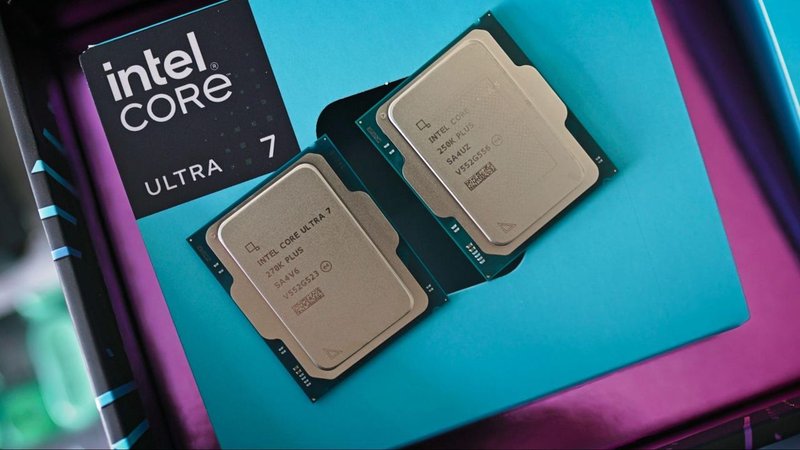
Intel recently expanded its processor lineup with the release of the Core Ultra 5 250KF Plus. This new CPU, featuring an 18-core configuration, is now available for retail purchase, entering the market at a price under $200. The introduction of a processor with these specifications and at such a competitive cost highlights the continuous evolution in the hardware sector, making computing power increasingly accessible for a wide range of applications.
The availability of high-performance hardware solutions at affordable prices is a crucial factor for companies and professionals evaluating the implementation of local computing infrastructures. The Core Ultra 5 250KF Plus, with its multi-core architecture, is well-suited to handle intensive workloads, offering a solid foundation for systems that require efficient data processing directly on-site.
Technical Details and Market Positioning
The Core Ultra 5 250KF Plus stands out for its 18 cores, a configuration that promises significant multi-threaded processing capabilities. Although the source does not specify further technical details such as clock speed or cache, the core count is a key indicator of its potential performance in scenarios that benefit from parallelism, such as code compilation, rendering, or the execution of smaller artificial intelligence models.
Its pricing, under $200, makes it particularly attractive. In a market where hardware solutions for AI can reach high costs, a processor in this range can represent an economical entry point for experimenting with and implementing AI workloads on a smaller scale or for less demanding inference functions. Its presence in the retail market, as also shown by images depicting it installed in a motherboard socket, confirms its ready availability for integration into custom systems.
Implications for On-Premise Deployments and Data Sovereignty
For organizations prioritizing on-premise deployments, the availability of CPUs like the Core Ultra 5 250KF Plus offers new opportunities. The ability to run AI workloads directly on their own servers, rather than relying on external cloud services, is fundamental for maintaining complete control over data and ensuring compliance with stringent privacy regulations, such as GDPR. An 18-core processor can effectively manage inference for smaller LLMs or process sensitive data in air-gapped environments, where external connectivity is limited or absent.
The choice of self-hosted hardware also contributes to optimizing the TCO (Total Cost of Ownership) in the long term, reducing dependence on variable operational costs typical of cloud solutions. While GPUs remain central for large-scale LLM training and inference, modern CPUs play a growing role in data pre-processing, orchestration, and the execution of smaller or quantized models, offering a balance between performance and cost for specific deployment needs.
Future Prospects and Strategic Considerations
The release of CPUs like the Core Ultra 5 250KF Plus by Intel reflects a broader trend in the technology sector: the democratization of computing power. As the requirements for running AI models evolve, with an increasing emphasis on efficiency and accessibility, mid-range hardware gains relevance. This type of processor can serve as the backbone for edge servers, dedicated local development workstations, or distributed computing nodes, supporting strategies aimed at reducing latency and improving resilience.
For CTOs, DevOps leads, and infrastructure architects, evaluating these hardware options is crucial. The decision between an on-premise deployment and a cloud-based solution involves a thorough analysis of trade-offs in terms of initial costs, scalability, security, and data sovereignty. The emergence of powerful and affordable CPUs enriches the landscape of available choices, allowing for greater flexibility in designing resilient and controlled AI architectures.






💬 Comments (0)
🔒 Log in or register to comment on articles.
No comments yet. Be the first to comment!