New Frontiers for Intel CPUs: A Performance Leap Detected by Geekbench
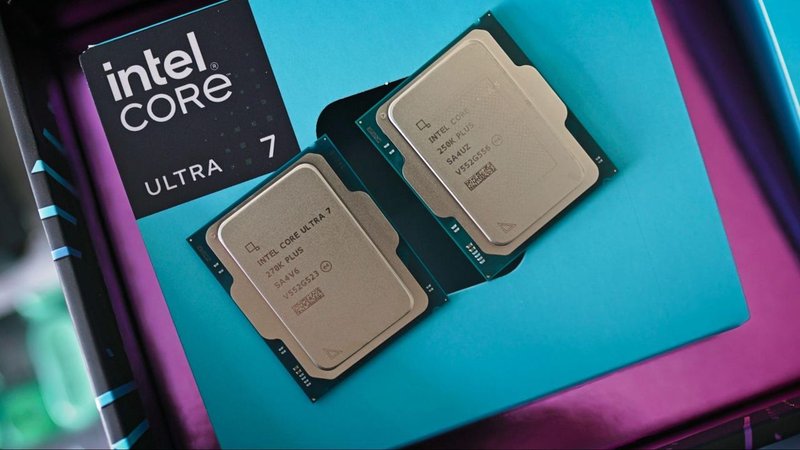
The AI hardware landscape is constantly evolving, with CPU manufacturers pushing the limits of their architectures to tackle increasingly complex workloads. In this context, an investigation conducted by Geekbench has brought to light significant data: the Intel Core Ultra 7 270K Plus CPU, installed in a standard motherboard socket, has shown a performance increase that can reach up to 30%.
This remarkable leap forward is not coincidental but is specifically attributed to the introduction of newly-vectorized instructions, enabled by a technology identified as "iBOT". For companies and technical teams evaluating on-premise deployment solutions, such improvements in CPU performance represent a crucial factor, directly influencing the efficiency and TCO of local infrastructures.
Technical Details: Vectorized Instructions and the Role of "iBOT"
Vectorized instructions are a key element in modern CPU architectures, allowing a single command to process multiple data elements simultaneously. This approach is particularly advantageous for parallel workloads, such as those typical of inference for smaller Large Language Models (LLMs), processing embeddings, or other pre-processing and post-processing operations in the context of AI. The 30% increase detected by Geekbench suggests a deep optimization at the microarchitecture level, enabling the Intel Core Ultra 7 270K Plus CPU to execute these operations with greater efficiency.
While the specific details of "iBOT" have not been fully disclosed, its role as an enabler of these new vectorized instructions is evident. For infrastructure architects, understanding how these innovations translate into real-world performance is fundamental for correctly sizing servers and workstations intended for AI workloads that do not necessarily require the massive power of high-end GPUs but greatly benefit from a robust and optimized CPU.
Implications for On-Premise Deployments and Data Sovereignty
For CTOs, DevOps leads, and infrastructure architects, CPU efficiency has a direct impact on deployment decisions. A 30% performance increase in a CPU like the Intel Core Ultra 7 270K Plus can mean the ability to handle more workloads with less hardware, reducing the overall TCO of the on-premise infrastructure. This is particularly relevant for scenarios where data sovereignty, regulatory compliance (such as GDPR), or the need for air-gapped environments make the public cloud an unfeasible solution.
The ability to perform inference and other AI operations locally, with efficient hardware, offers unprecedented control over data and processes. While GPUs remain irreplaceable for training large LLMs and for massive-scale inference, advanced CPUs are carving out an increasingly important role for specific workloads, edge computing, and as an essential complement in hybrid architectures. For those evaluating on-premise deployments, AI-RADAR offers analytical frameworks on /llm-onpremise to assess the trade-offs between different hardware configurations and deployment strategies.
Future Prospects and Final Considerations
The continuous improvement of AI capabilities in CPUs, as demonstrated by Geekbench's results for the Intel Core Ultra 7 270K Plus, indicates a clear trend in the industry. Silicio manufacturers are heavily investing to make CPUs more suitable for artificial intelligence workloads, not just as general-purpose processors, but with specific accelerations that can compete in market niches previously dominated exclusively by GPUs.
This evolution offers greater flexibility to technical decision-makers, allowing them to optimize hardware based on specific workload needs, budget constraints, and security requirements. The choice between CPU and GPU, or a combination of both, becomes increasingly nuanced and dependent on a detailed analysis of trade-offs in terms of throughput, latency, VRAM, and TCO. Advances like those observed with Intel's vectorized instructions are a sign that the future of on-premise AI will be increasingly diverse and performant.







💬 Comments (0)
🔒 Log in or register to comment on articles.
No comments yet. Be the first to comment!