Introduction
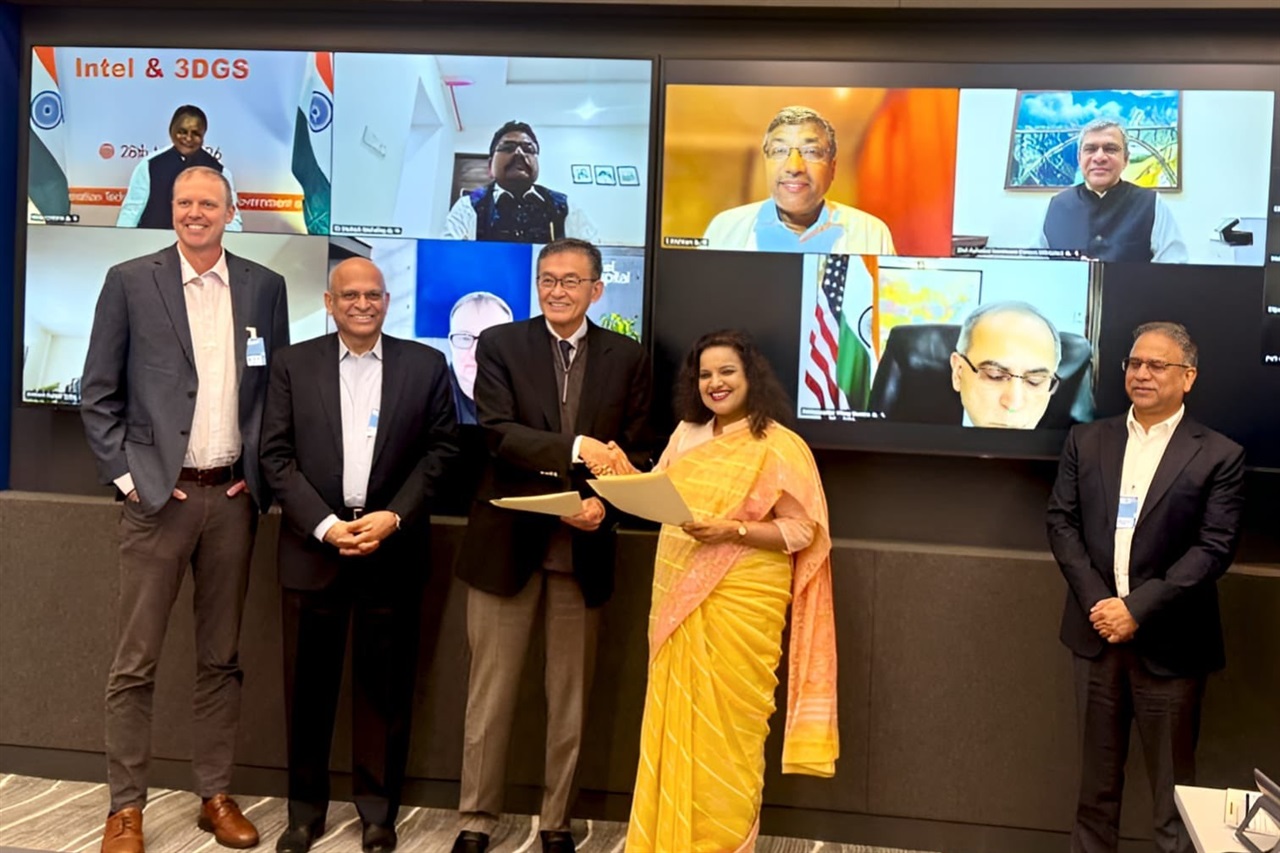
Intel has announced a strategic initiative marking its first significant entry into India's semiconductor ecosystem. The company has signed a Memorandum of Understanding (MoU) to commence the production of advanced glass substrates. This move, confirmed by authoritative sources, underscores India's growing importance as a manufacturing and innovation hub in the global technology sector.
Intel's decision to invest in this production capability in India reflects a broader trend of diversifying supply chains and strengthening local capacities. For companies operating in the artificial intelligence sector, particularly those evaluating on-premise deployments of Large Language Models (LLM) and other intensive workloads, the stability and resilience of the semiconductor supply chain are critical factors.
The Role of Advanced Glass Substrates
Advanced glass substrates represent an emerging and crucial technology for the next generation of semiconductor packaging. They offer significant advantages over traditional organic substrates, including greater dimensional stability, improved signal integrity, and the ability to support higher interconnection densities. These characteristics are fundamental for the creation of complex, high-performance chips, such as GPUs and AI accelerators.
In the context of AI systems, where the need to process enormous volumes of data with low latency is imperative, the efficiency of chip packaging directly translates into performance and power consumption. The ability to integrate multiple dies onto a single substrate with shorter, faster interconnections is essential to achieve the throughput and VRAM levels required by the largest AI models, thereby supporting LLM inference and training on self-hosted infrastructures.
Implications for Supply Chain and TCO
The expansion of Intel's production capabilities for glass substrates in India could have positive repercussions on the global semiconductor supply chain. Greater geographical diversification of production reduces reliance on single regions, mitigating risks associated with geopolitical or logistical disruptions. This aspect is particularly relevant for organizations investing in on-premise AI infrastructure, where the availability and cost of hardware are key components of the Total Cost of Ownership (TCO).
The ability to access advanced components more reliably and potentially at optimized costs can influence investment decisions in specific AI hardware, such as GPUs with high VRAM or custom accelerators. For CTOs and infrastructure architects, evaluating the TCO of an on-premise deployment includes not only the initial CapEx but also long-term operational costs, supply chain resilience, and the ability to scale infrastructure according to training and inference needs.
Future Prospects and Data Sovereignty
This move by Intel is part of a broader framework of global investments in the semiconductor sector, with many countries seeking to strengthen their manufacturing autonomy. For companies managing sensitive data and subject to stringent data sovereignty regulations, such as GDPR, the possibility of a more robust and localized supply chain can help ensure greater control and security.
AI-RADAR constantly monitors these market dynamics, providing analysis on the trade-offs between on-premise deployment and cloud solutions for AI workloads. The availability of advanced packaging technologies and a diversified supply chain are enabling factors for self-hosting strategies, allowing organizations to maintain control over their data and infrastructures, a crucial aspect for compliance and security in air-gapped or hybrid environments.








💬 Comments (0)
🔒 Log in or register to comment on articles.
No comments yet. Be the first to comment!