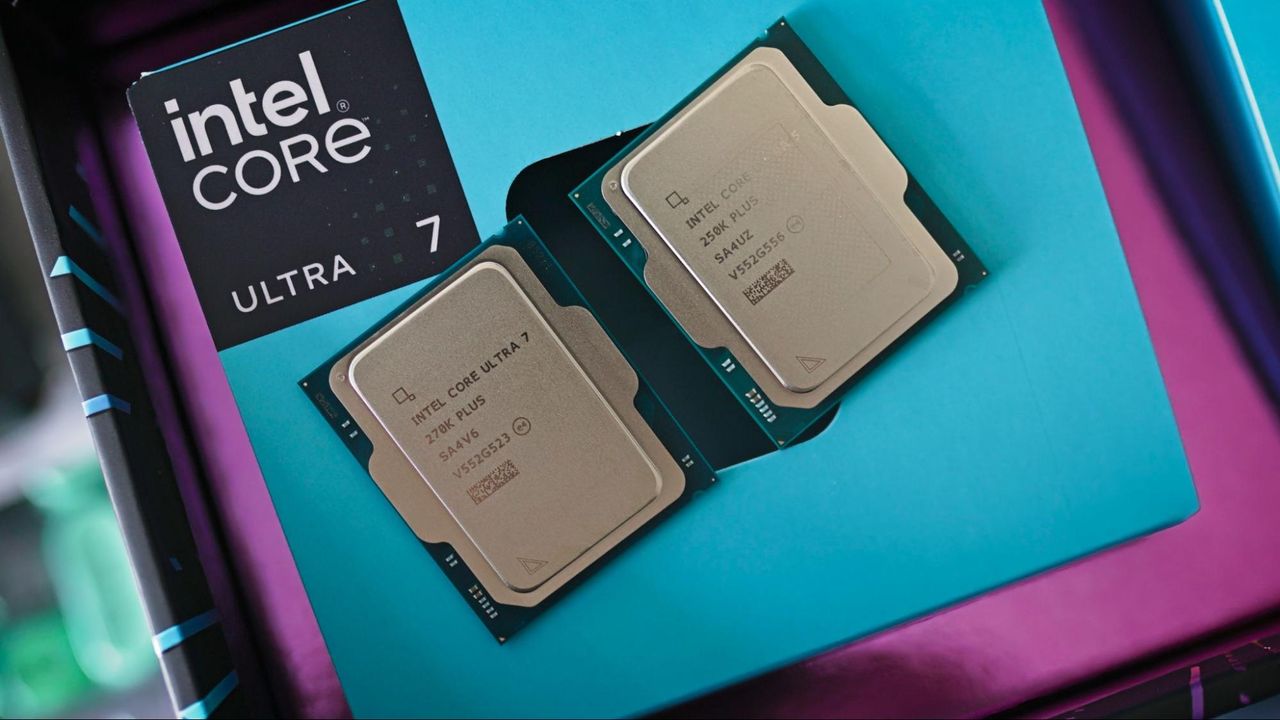
Intel has quietly updated the recommended pricing for its flagship desktop CPUs. On the official product pages, the Core Ultra 270K Plus is now listed at $349 and the 250K Plus at $229, marking an increase of up to $50 from earlier indications. No loud announcement, just a significant tweak for anyone tracking the cost of compute hardware.
The Core Ultra family is Intel’s attempt to bring AI acceleration directly onto the desktop processor die, pairing the traditional integrated GPU with an NPU (Neural Processing Unit) for lightweight inference workloads. These are not chips designed to train billion-parameter LLMs, but they can run quantized models with reasonable agility, especially in prototyping or office automation scenarios where cloud latency is unacceptable.
This price bump comes at a time when on-premise compute demand, even at the single-machine level, is evolving. More developers and small teams are evaluating local LLM execution for data sovereignty reasons or to cut operational costs of cloud APIs. In that context, the CPU’s cost becomes a meaningful part of the TCO for an inference-focused workstation. A $50 difference on a single component may seem modest, but across a fleet of machines or in a market scrutinizing every dollar, the signal is clear: margins are tightening and manufacturers pass supply-chain pressures downstream.
Intel hasn’t officially commented on the revision, but the move fits a broader picture. Advanced process nodes are expensive, yields are not yet optimal, and competition with AMD in the enthusiast segment remains fierce. At the same time, the push toward “AI-ready” PCs demands specialized silicon, which drives up the per-die cost.
For anyone building a machine today to experiment with local models – a home lab server, an edge node, even an air-gapped environment – choosing a CPU is no longer just about clock speed and core count. NPU presence, the ability to offload small inference tasks from the main GPU, and of course price all come into play. Today’s Intel increase adds a new element to the equation, a reminder that hardware for local AI is a moving investment where costs aren’t dropping as linearly as hoped.
The ripple effect could also hit European distribution, where final prices are already burdened by VAT and import costs. If the official list price rises, the retail price risks drifting further from that psychological threshold that makes on-premise competitive against the cloud, at least for intermittent workloads.







💬 Comments (0)
🔒 Log in or register to comment on articles.
No comments yet. Be the first to comment!