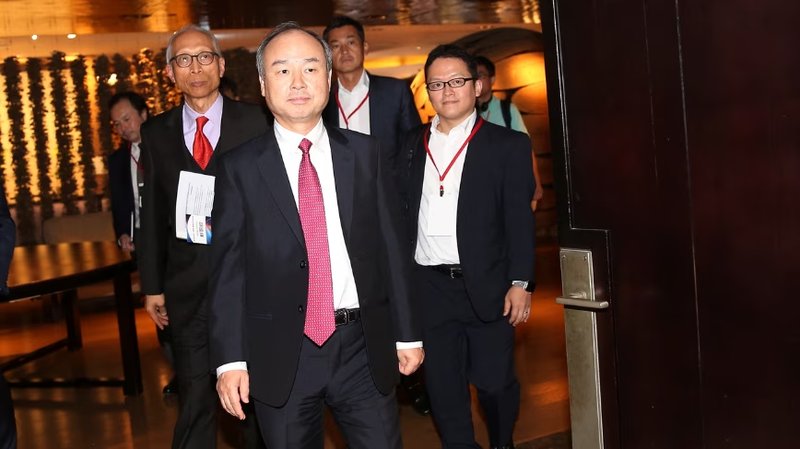
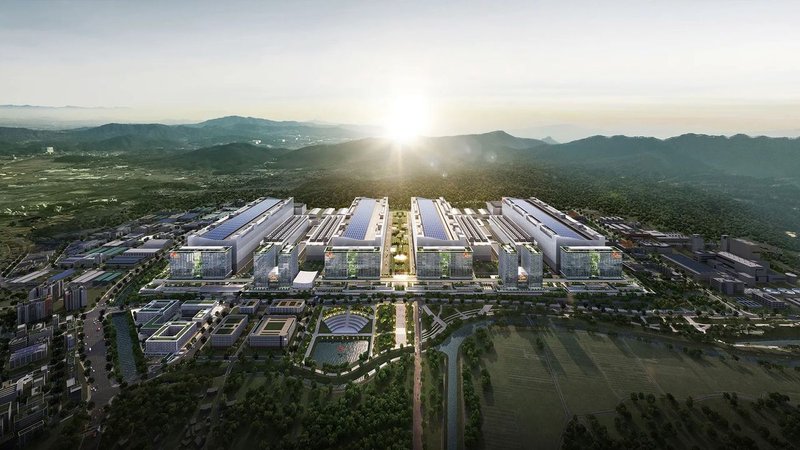
SK Hynix has announced an 80 trillion won (roughly $51.46 billion) investment to build a new NAND flash memory factory in Cheongju, South Korea. The facility, named M17, is expected to start production in the first half of 2029. CEO Kwak Noh-jung made the announcement at an event attended by President Lee Jae-myung, underscoring the project’s strategic weight for the national tech ecosystem.
The headline figure is eye-catching, but what makes this investment especially relevant for those deploying AI models is its place in the broader memory puzzle. Until now, the spotlight has mostly fallen on high-bandwidth memory like HBM, which feeds GPUs during LLM training. Yet the explosive growth of datasets and the rise of RAG architectures – which demand fast access to vector databases and large file stores – are also shifting attention toward high-performance NAND storage.
For teams running on-premise infrastructure, storage is never just an afterthought. A GPU cluster used for fine-tuning open-source models needs to pull data from mass storage quickly. If the storage can’t keep up, even the fastest GPUs sit idle, undermining the compute investment. And in settings where data sovereignty is non-negotiable – think healthcare, defense, or finance – local storage becomes the bedrock of the entire value chain, because data cannot flow to public clouds and must be processed entirely on-site.
SK Hynix’s move suggests the market expects sustained demand for NAND memory in AI applications over the long term. Building a $50-billion-plus plant is a bet on a growth cycle that extends well beyond the current GPU boom. As multimodal models advance and checkpoint sizes balloon – some models already weigh hundreds of gigabytes – the need for fast, dense, and reliable storage will only intensify. For teams assessing the TCO of an on-premise AI stack, factoring storage into the calculus from day one is no longer optional; it’s mandatory.
The 2029 timeline means the direct impact won’t be immediate, but the direction is clear: flash memory will become an increasingly critical asset in the AI pipeline, on par with compute and networking. For technical decision-makers, the takeaway is straightforward: while selecting GPUs and designing racks, it’s worth asking whether today’s storage will still be up to the workloads arriving three or four years from now.




💬 Comments (0)
🔒 Log in or register to comment on articles.
No comments yet. Be the first to comment!