
Intel Defines Desktop Roadmap with Multi-Tiered Strategy
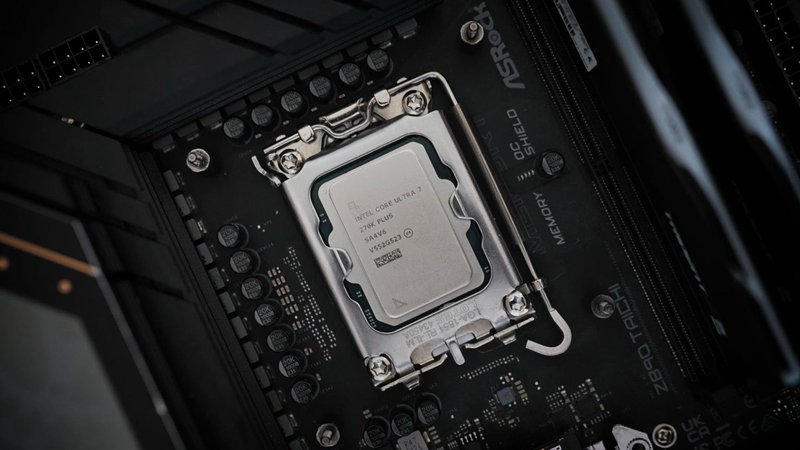
Intel is defining its desktop CPU roadmap with a strategy promising innovation on multiple fronts. This approach, dubbed the "one-two punch," suggests a coordinated or sequential release of new technologies aimed at strengthening the company's position in the high-performance PC segment. This is particularly interesting for infrastructure architects and CTOs considering local hardware for intensive workloads, including those related to Large Language Models (LLMs).
The ability to run models on self-hosted systems depends not only on GPUs but also on performant CPUs that handle pre-processing, post-processing, and the execution of smaller or optimized models. A robust on-premise infrastructure, based on the latest generation CPUs, can offer significant advantages in terms of data sovereignty and control over operational costs, crucial aspects for many organizations.
Emerging Technical Details: Z990, Nova Lake, and Raptor Lake Next
Initial leaks reveal three pillars of this strategy. The Z990 chipset has been spotted, indicating a new platform that will support future processor generations. This chipset will likely bring improvements in connectivity, I/O, and support for new memory technologies, all crucial elements for the overall efficiency of a system that must handle complex data flows, typical of AI workloads.
In parallel, the Nova Lake architecture is beginning to take shape with more specific details, positioning itself as one of Intel's next flagship generations. Finally, a further evolution, referred to as "Raptor Lake Next," has been teased, suggesting an update or direct successor to the current Raptor Lake line, which could serve as a bridge to Nova Lake. These architectural updates aim to improve per-core performance and power efficiency, key factors for Total Cost of Ownership (TCO) in large-scale deployments, even for systems that do not exclusively rely on dedicated GPUs.
Implications for On-Premise Deployments and Local AI
For enterprises prioritizing data sovereignty and complete control over their infrastructure, Intel's new desktop CPUs offer compelling options. While GPUs remain dominant for training and inference of large LLMs, modern CPUs are increasingly capable of handling inference for smaller or quantized models, especially in edge scenarios or for applications requiring low latency on a limited number of requests. The availability of robust and updated desktop platforms can lower the entry barrier for experimenting with on-premise LLMs, offering a more flexible solution compared to cloud infrastructures.
The choice between CPUs and GPUs for inference depends on factors such as model size, desired throughput, and budget. CPUs, particularly those with a high core count and optimizations for AI workloads, can potentially offer a lower TCO for specific inference workloads, especially when dedicated GPU infrastructure is not justified or necessary. This is particularly true for air-gapped environments or those with stringent compliance requirements.
Future Outlook and Trade-offs for Decision-Makers
Intel's strategy highlights the continuous evolution of the hardware landscape, where every component plays a role in supporting computationally intensive workloads. For decision-makers, evaluating these new CPUs will require a careful analysis of the trade-offs between initial cost (CapEx), energy consumption (OpEx), and specific application requirements. The ability to run AI workloads locally offers advantages in terms of latency and security but requires careful infrastructure planning.
While the cloud offers scalability and flexibility, self-hosted solutions based on hardware like that proposed by Intel allow granular control over security, compliance, and environment customization. AI-RADAR provides analytical frameworks on /llm-onpremise to evaluate these trade-offs, helping organizations make informed decisions about on-premise deployments and balance performance needs with control and cost.






💬 Comments (0)
🔒 Log in or register to comment on articles.
No comments yet. Be the first to comment!