
Intel Wildcat Lake CPUs Emerge via Advantech
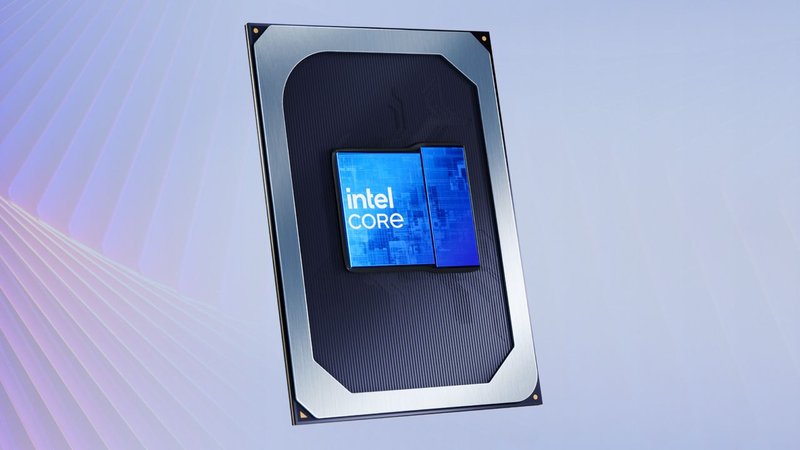
The hardware landscape for artificial intelligence is constantly evolving, with increasing attention not only on high-performance GPUs but also on more efficient and lower-cost solutions. In this context, the first specifications for Intel's upcoming Wildcat Lake CPU series, aimed at the low-budget segment, have emerged. The revelation comes from Advantech, a Single Board Computer (SBC) manufacturer, which included details of these processors in the datasheet for its new MIO-5356.
This early insight, while not directly from Intel, offers a concrete look at the company's upcoming offerings. The presence of these CPUs in an OEM product like Advantech's MIO-5356 suggests that their market release is imminent and that they are already being integrated into embedded and industrial solutions. For decision-makers evaluating hardware for AI deployments, this information is crucial for planning future architectures.
Technical Details and Market Positioning
The Advantech datasheet confirmed the existence of three specific models within the Wildcat Lake family: the Core 7 350, Core 5 320, and Core 3 305. These names clearly indicate a positioning in the low-budget segment, an area where energy efficiency and Total Cost of Ownership (TCO) play a fundamental role. While detailed clock speeds or core counts were not disclosed at this stage, the nomenclature suggests a performance hierarchy within the range.
Single Board Computers like the Advantech MIO-5356 are compact, integrated platforms often used in industrial environments, embedded systems, and edge applications. The integration of Wildcat Lake CPUs into these devices highlights Intel's intention to provide solutions suitable for workloads requiring a balance of computing power, reduced power consumption, and low costs. This positioning is particularly relevant for AI scenarios where inference of smaller models or real-time data processing at the edge takes precedence over large-scale Large Language Model (LLM) training.
Implications for On-Premise and Edge Deployments
For companies considering on-premise or self-hosted deployments of AI workloads, the introduction of low-power CPUs like Wildcat Lake opens up new possibilities. While GPUs remain the dominant choice for high-intensity LLM training and inference, CPUs play a crucial role in many other aspects of AI infrastructure. They can manage orchestration, data pre-processing and post-processing, inference of lighter or specialized models, and serve as a foundation for air-gapped environments where data sovereignty is a top priority.
Adopting cost- and energy-efficient CPUs can significantly reduce the overall TCO of an AI infrastructure, especially for edge deployments. In these scenarios, where space, power, and cooling are often limited, the efficiency of a Wildcat Lake-based Single Board Computer can provide a competitive advantage. The choice between CPUs and GPUs, or a hybrid combination, always depends on specific workload requirements, desired latency, and necessary throughput. For those evaluating on-premise deployments, analytical frameworks exist to help assess these trade-offs, such as those discussed on /llm-onpremise.
Future Prospects and Hardware Trade-offs
The emergence of Wildcat Lake CPUs underscores a broader trend in the AI hardware industry: the diversification of solutions to meet a wide range of needs. There is no universal solution, and choosing the most suitable hardware is a strategic decision that directly impacts performance, operational costs, and scalability. Technical decision-makers must carefully consider the AI workload profile, model size, latency requirements, and budget and power consumption constraints.
Low-power CPUs like Wildcat Lake may not directly compete with high-end GPUs for massive LLM training, but they offer a viable and often more economical alternative for small-scale inference, edge processing, and embedded applications. This flexibility allows companies to build more resilient AI architectures optimized for specific use cases, balancing power, efficiency, and control over their data.





💬 Comments (0)
🔒 Log in or register to comment on articles.
No comments yet. Be the first to comment!