
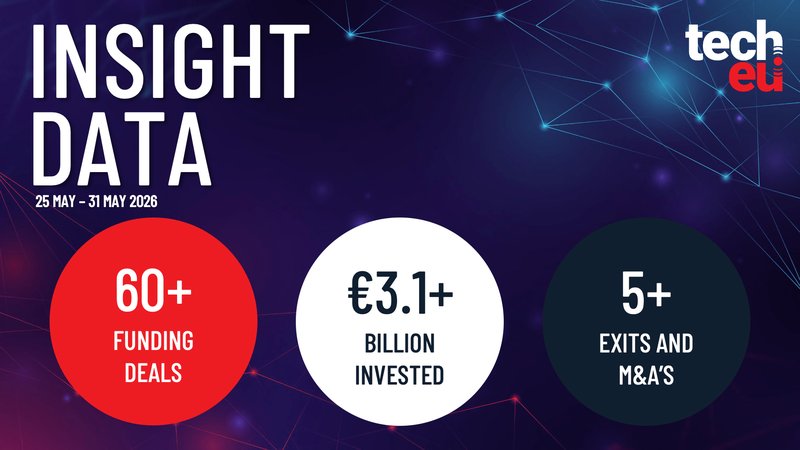
These numbers tell a story of recalibration: in June, European venture capital closed more than 55 deals totaling over 1.6 billion euros, but with smaller average rounds compared to previous quarters. The news, reported by Tech.eu's monthly roundup, is more than just statistics. Within that capital flow, one can read strategic choices that touch semiconductors, quantum computing, and artificial intelligence, with direct implications for anyone evaluating on-premise stacks and self-hosted large language models.
Take Openchip, which secured 115 million euros from the SETT fund to strengthen Europe's ability to design and manufacture advanced semiconductors. In a landscape where NVIDIA GPUs remain the dominant choice for inference and training, the emergence of European alternatives could shift the TCO calculus for companies bound by data residency requirements. Chips fabricated in Europe mean a supply chain less exposed to geopolitical tensions and, on the GDPR compliance front, finer control over the physical location of hardware processing sensitive information.
In the background, the news that IQM became the first European quantum computing company to list on a major US exchange signals that Europe does not intend to sit out the next computational wave. Today, quantum is not yet a replacement for GPU clusters handling inference workloads, but its evolution promises to tackle model optimization and resource scheduling problems that will become critical as on-premise deployments grow more complex.
Meanwhile, Datadog acquired Adaptive ML to strengthen its artificial intelligence lab: a move that, together with the rise in seed and pre-seed rounds for AI startups (such as BidScript, Visiblie, and Brym), paints a picture of an ecosystem gearing up to bring more AI tools directly into existing infrastructures rather than outsourcing everything to the cloud. For teams managing LLM pipelines on-premise, this translates into the prospect of monitoring and management frameworks increasingly integrated with local environments, with no need to expose data externally.
It is no coincidence that among Tech.eu's recommended reads are a deep dive into the ten semiconductor companies that raised the most capital in 2025 and an analysis of PyTorch as the software layer underpinning Europe's AI ambitions. These are signals that infrastructure – from chips to frameworks – is the real battleground for those seeking to maintain sovereignty and control over their data.






💬 Comments (0)
🔒 Log in or register to comment on articles.
No comments yet. Be the first to comment!