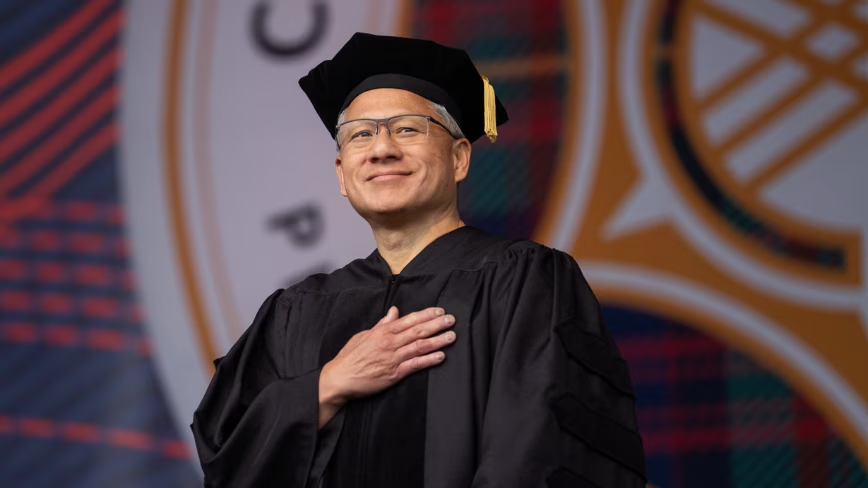
Nvidia's Jensen Huang Joins Tsinghua University Advisory Board Chaired by Tim Cook
Jensen Huang, the charismatic CEO of Nvidia, has accepted a significant role on the advisory board of Tsinghua University’s School of Economics and Management. The news, reported by the Financial Times, places Huang within a distinguished group of global leaders, chaired by Apple CEO Tim Cook. This appointment comes at a time of increasing complexity in technological and geopolitical relations between major global powers.
The advisory board boasts an impressive roster of leaders from the tech and financial sectors. In addition to Huang and Cook, it includes prominent figures such as Elon Musk (Tesla, SpaceX), Michael Dell (Dell Technologies), Satya Nadella (Microsoft), Mark Zuckerberg (Meta), Jamie Dimon (JPMorgan Chase), and Larry Fink (BlackRock). The presence of such personalities underscores the strategic importance of Tsinghua University in the global academic and industrial landscape, particularly concerning innovation and technological development.
Geopolitical and Technological Context
Tsinghua University is one of China's most prestigious academic institutions, renowned for its excellence in scientific and technological research, including key areas like artificial intelligence and semiconductors. Its School of Economics and Management serves as a bridge between academia, industry, and policy, influencing the future directions of innovation and the economy.
Huang's appointment takes on particular significance when contextualized. It occurred just days after his trip to China, where he accompanied former U.S. President Donald Trump. This detail highlights the sensitivity and complexity of international dynamics involving technology industry leaders, who are often required to navigate commercial interests, national policies, and geopolitical tensions. For companies operating in the AI sector, understanding these intersections is crucial for strategic planning, especially in terms of market access, supply chains, and regulatory compliance.
The Influence of Tech Leaders and Strategic Decisions
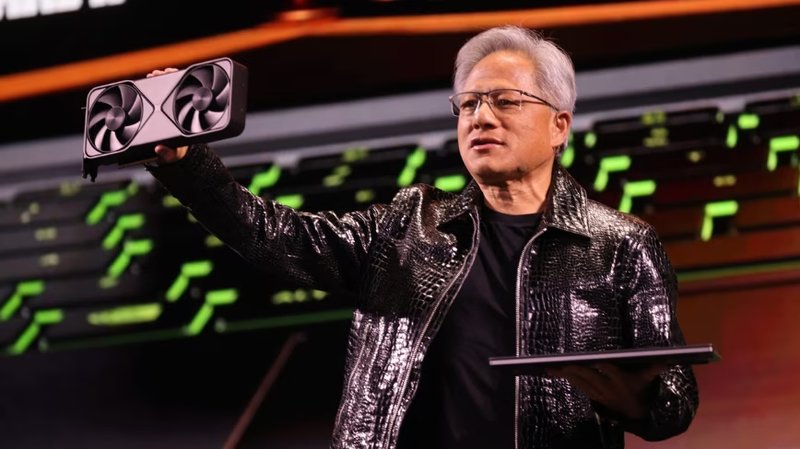
Nvidia, under Jensen Huang's leadership, has become a fundamental pillar of the global artificial intelligence infrastructure. Its GPUs are considered essential for the training and inference of Large Language Models (LLMs), powering much of the progress in the AI field. Huang's participation in such a high-caliber advisory board can offer Nvidia a privileged perspective on emerging trends and academic and industrial policies in a key region like China.
The presence of such a diverse group of leaders, representing sectors ranging from hardware (Nvidia, Dell) to software (Microsoft, Meta), from finance (JPMorgan, BlackRock) to disruptive innovation (Tesla, SpaceX), reflects the pervasive and interconnected nature of modern technology. Strategic decisions regarding the deployment of AI solutions, whether self-hosted, cloud-based, or hybrid, are increasingly influenced by a complex mix of economic, technical, and, not least, geopolitical factors. Data sovereignty, supply chain security, and Total Cost of Ownership (TCO) become central elements in this scenario.
Future Outlook and Industry Implications
The composition of this advisory board highlights the growing importance of collaboration, but also potential competition, among global technological powers. China continues to invest heavily in artificial intelligence development, and the presence of figures like Huang in a leading institution such as Tsinghua University can facilitate the exchange of knowledge, while still navigating the complexities of international relations.
For businesses and technical decision-makers evaluating LLM deployment, understanding these dynamics is paramount. Choices regarding infrastructure, whether on-premise to ensure data sovereignty or cloud-based for scalability, must consider a continuously evolving global landscape. AI-RADAR aims to provide in-depth analysis of these trade-offs, assisting CTOs and infrastructure architects in navigating the challenges of LLM deployment in complex environments, with a particular focus on the constraints and opportunities of self-hosted solutions.






💬 Comments (0)
🔒 Log in or register to comment on articles.
No comments yet. Be the first to comment!