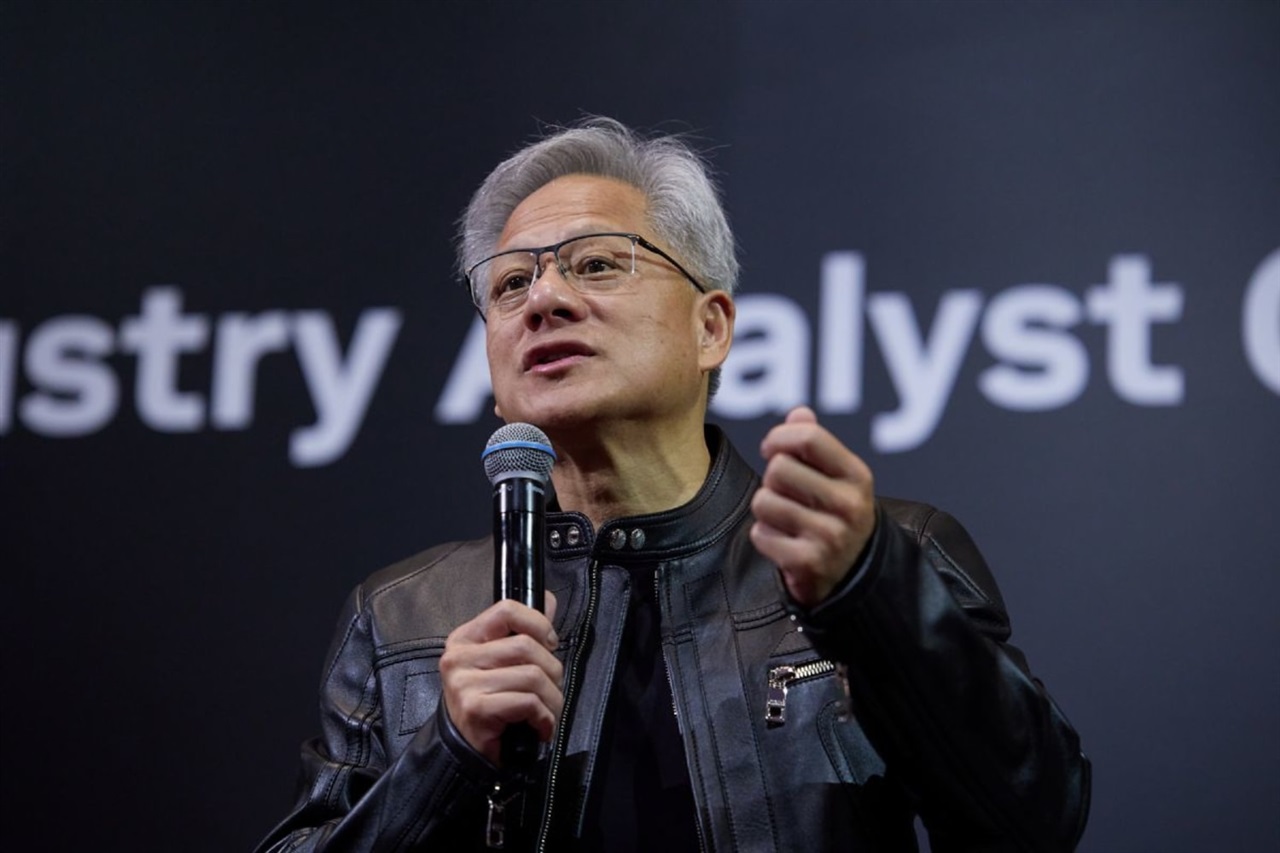
Jensen Huang put it bluntly: AI agents are tools, not humanlike beings. A clarification that arrives as the industry grapples with the autonomy of these software entities and their implications for the workforce.
The statement, attributed to Nvidia's CEO, must be read against the backdrop of a company that builds the hardware for the vast majority of inference and training workloads. It’s not a philosophical quip—it’s a market positioning move aimed at cooling science-fiction expectations and bringing AI agents back into the realm of software engineering.
For those tracking enterprise deployment, the message is a compass. If agents are tools, they must be evaluated with the same metrics as any other IT stack component: latency, throughput, Total Cost of Ownership (TCO), integration with existing systems, and compliance. The anthropomorphism that rode the wave of Large Language Models (LLMs) risked turning every agent into a promise of decision-making autonomy, creating a dangerous mismatch between what the model can do and what the business is willing to delegate.
Nvidia, for its part, pushes frameworks like NIM and orchestration tooling that turn the model into a brick in an enterprise pipeline, not an independent digital colleague. This approach speaks directly to those evaluating on-premise architectures: a tool-agent can be governed with security policies and auditing, confined in air-gapped environments, and subjected to fine-tuning on proprietary data without the fear of uncontrolled emergent behaviors.
The second-order impact centers on data sovereignty. If a company perceives the agent as an anthropomorphic black box, the reflex is to shift everything to third-party public clouds, with all the associated risks. If, instead, it sees the agent as deterministic software, the push toward self-hosting grows, where VRAM, quantization, and inference optimization become competitive differentiators.
It’s no accident that Huang chose this moment to draw a clear line. The agent race is on, and the boundary between tool and human replacement will determine not only the speed of adoption but also the architecture underlying the workloads of the next decade.




💬 Comments (0)
🔒 Log in or register to comment on articles.
No comments yet. Be the first to comment!