A statement that fuels the rivalry
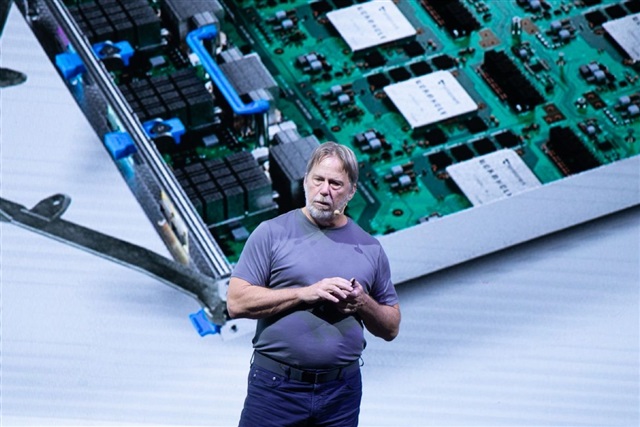
Jim Keller, a legendary figure in semiconductor design with tenures at AMD, Apple, and Tesla, has declared that Tenstorrent, the startup he leads as CEO, will surpass Cerebras Systems in the AI chip market. The statement, reported by wire services, comes at a time of strong acceleration for the sector: demand for specialized processors to train and run inference on large language models keeps growing, pushing companies and research centers toward ever more performant and autonomous solutions.
Two hardware philosophies face off
To grasp the weight of the challenge, one must look at the architectures. Cerebras has bet on its wafer-scale engine, a processor as large as an entire silicon wafer, designed for extreme throughput and to minimize communication bottlenecks. Tenstorrent, for its part, develops processors based on the RISC-V architecture and a mesh interconnect that promises scalability and flexibility, suitable for both data centers and more distributed deployments. Both approaches aim to break the current dominance of NVIDIA GPUs, offering alternatives to those seeking control, energy efficiency, and cost predictability — key elements for on-premise infrastructure.
The deployment and sovereignty nexus
The competition between Tenstorrent and Cerebras goes beyond technology: it strikes at the heart of deployment decisions for enterprises and institutions. Those evaluating self-hosted infrastructure for LLMs — driven by privacy needs, GDPR compliance, or Total Cost of Ownership optimization — watch these new chip families closely. A diversified hardware ecosystem reduces reliance on single vendors and allows system sizing to match real workloads, without cloud subscription constraints or resource sharing. In this context, Keller’s challenge takes on significance beyond raw performance: it signals the direction of the entire enterprise AI supply chain.
Outlook in a boiling market
Tenstorrent’s bet, if backed by concrete results, could reshape a market currently dominated by a few names. Intensifying competition will likely bring faster iteration, more accessible pricing, and greater attention to the needs of those operating in controlled environments. It remains to be seen whether promises will translate into chips that are actually available and supported by a mature software ecosystem — a prerequisite for convincing engineers to migrate to non-established platforms. For those designing the future of their AI infrastructure today, every new player adds a piece to the puzzle of a truly open landscape.






💬 Comments (0)
🔒 Log in or register to comment on articles.
No comments yet. Be the first to comment!