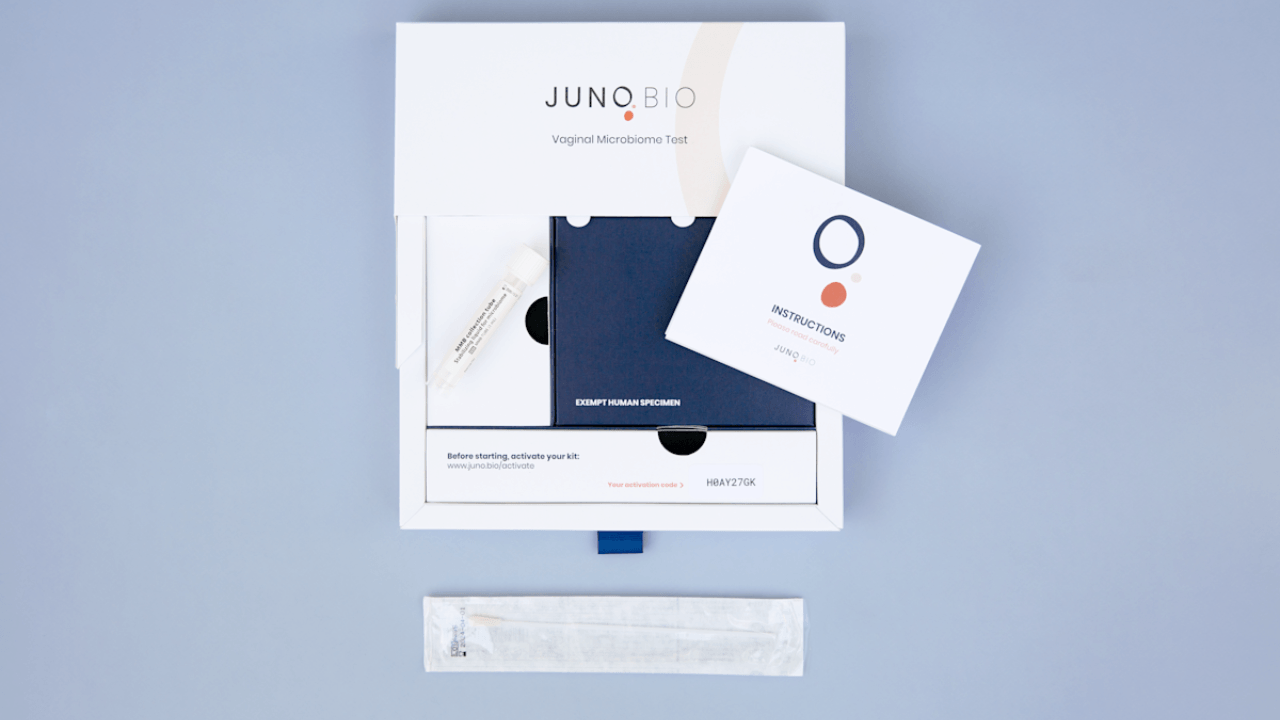
When it comes to healthcare data, where it is processed is not a technical detail: it is the foundation of trust and regulatory compliance. Juno Bio, a UK-founded company working on precision diagnostics for women's health, has just opened its first sequencing lab in Oakland, California, built entirely around the needs of vaginal health. Backed by a $3.8 million funding round led by Ada Ventures, Artesian, Entrepreneur First, and Illumina Accelerator, the move signals a strategic shift: from relying on third-party labs to taking direct control of the analytical infrastructure.
The CLIA-certified lab uses next-generation sequencing to analyze about 10,000 bacterial and fungal species, along with four common STIs, giving patients and clinicians a detailed picture of the vaginal ecosystem. Numbers shared by the company highlight the scope of the problem it aims to solve: before the Juno Bio test, 67.5% of customers had been incorrectly diagnosed, and only 13% had been successfully treated. Approximately half of users present co-infections, often invisible to conventional tests but critical for treatment outcomes.
Proprietary infrastructure as a data defense
Bringing sequencing into its own lab is not a matter of convenience but a statement of principle on data sovereignty. Every sample processed in Juno Bio’s facility never leaves the company’s perimeter, eliminating risks tied to external data transfers and strengthening protection for highly personal information. In an environment where healthcare data breaches are on the rise and regulations like HIPAA or GDPR impose strict requirements, owning the entire analytical pipeline becomes a competitive advantage and a legal safeguard.
This choice resonates with anyone operating in fields where data cannot leave their sphere of control, as happens with on-premise LLM deployments for medical record analysis or diagnostic imaging. Juno Bio’s decision shows how a startup can build a self-hosted architecture from the start, avoiding the typical compromises of cloud solutions when the cost of non-compliance far outweighs the infrastructure investment.
Beyond the test: an integrated clinical platform
The lab opening is part of a broader trajectory. The company has already sold over 20,000 tests organically and evolved its offering into a clinical platform that integrates telemedicine, pharmacies, and pharmaceutical R&D partnerships. The data collected, forming one of the largest repositories of vaginal microbiome information, fuels scientific collaborations and could eventually support predictive models, always with the guarantee that processing happens under Juno Bio’s direct control.
The stakes are not just technological. As noted by Dr. Anna Powell of Johns Hopkins, a medical advisor to the company, vaginal microbiome testing can reshape the management of chronic or recurrent conditions, but achieving this requires high standards of data interpretation and process reliability. Internalizing sequencing is also a response to this need for quality: fewer handovers, less variability, greater direct accountability for results.
Ultimately, Juno Bio is taking a step whose implications extend beyond women's health. It demonstrates that investing in a dedicated lab infrastructure, even for a company still in its growth phase, is economically viable and strategically sound when sensitive data forms the core of the business. For those following the evolution of on-premise architectures in AI and digital health, the Oakland lab is not just niche news; it is a clue to how privacy-conscious companies are redefining the very concept of a platform.








💬 Comments (0)
🔒 Log in or register to comment on articles.
No comments yet. Be the first to comment!