
China Reshapes the AI Memory Market
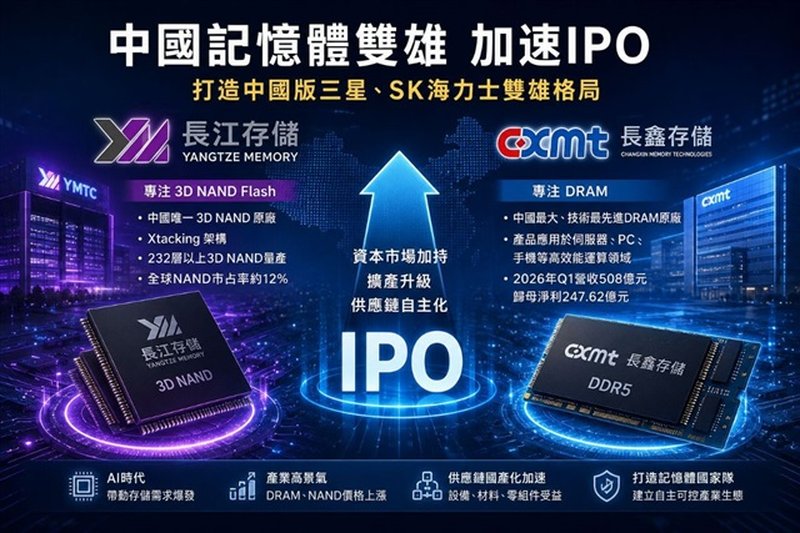
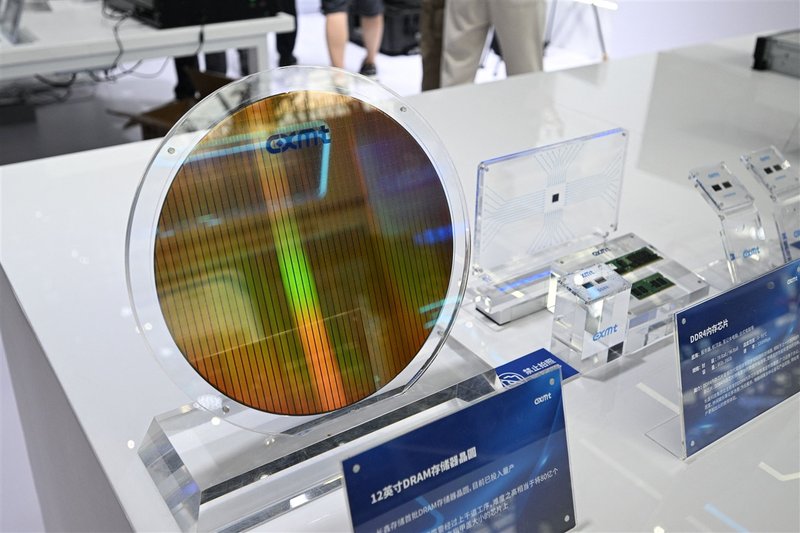
The global memory production landscape is undergoing a significant transformation, with China emerging as an increasingly relevant player. Companies such as YMTC (Yangtze Memory Technologies Co.) and CXMT (Changxin Memory Technologies) are leading a remarkable expansion in chip memory production capacity. This increase is not an isolated phenomenon but is fully embedded in the artificial intelligence cycle, a sector demanding growing volumes of high-performance memory.
This Chinese ascent has the potential to alter established global supply chain balances. For companies operating in the AI field, understanding these dynamics is crucial, especially for those planning to invest in self-hosted and on-premise infrastructures, where hardware availability and cost are determining factors.
The Strategic Importance of Memory in the AI Era
In the context of artificial intelligence, memory is not merely a component but a strategic element that directly influences the performance and feasibility of workloads. Large Language Models (LLMs) and other generative AI models require vast amounts of VRAM for Inference and, even more so, for Training. The memory capacity of GPUs, often measured in gigabytes, determines the maximum size of models that can be loaded, the length of the manageable context window, and the batch size for optimizing throughput.
The availability of high-bandwidth memory (HBM) is particularly critical for high-end GPUs used in data centers. An increase in global production capacity, or a shift in sourcing, can directly impact the costs and delivery times of graphics cards and AI-dedicated servers. This translates into a direct influence on the Total Cost of Ownership (TCO) for on-premise AI infrastructures.
Implications for the Supply Chain and On-Premise Deployments
The shifting balance in memory production, with the rise of Chinese players, introduces new variables into the global supply chain. Companies relying on memory components for their AI systems must consider how these dynamics might affect availability, pricing, and supplier diversification. Increased supply from new players could, in theory, lead to greater competition and more accessible prices, but also to new challenges related to standardization and compatibility.
For CTOs and infrastructure architects evaluating on-premise deployments, supply chain stability is a key factor. The ability to procure hardware with adequate specifications (such as sufficient VRAM for specific LLMs) at predictable costs is fundamental for long-term planning. This scenario underscores the importance of a resilient sourcing strategy and the need to closely monitor semiconductor market trends.
Future Prospects and Strategic Considerations
The expansion of Chinese memory capacity, led by YMTC and CXMT, is a clear signal of the growing strategic importance of AI and its underlying infrastructure. For organizations aiming to maintain data sovereignty and control over their AI workloads through self-hosted and air-gapped solutions, understanding these market dynamics is essential.
The choice between on-premise and cloud solutions for AI is complex and requires an in-depth analysis of trade-offs, including initial costs (CapEx), operational costs (OpEx), and supply chain resilience. AI-RADAR aims to provide analytical frameworks on /llm-onpremise to help evaluate these aspects, offering a neutral perspective on the constraints and opportunities emerging from a constantly evolving global market.






💬 Comments (0)
🔒 Log in or register to comment on articles.
No comments yet. Be the first to comment!