The Impact of AI Memory Demand on the Global Supply Chain
The rapid expansion of artificial intelligence, particularly Large Language Models (LLMs), is generating unprecedented demand for hardware resources. A recent warning, issued by an industry coalition, highlights how the extreme memory consumption by AI-dedicated data centers is putting pressure on the global supply chain. This situation, if not managed, could have significant repercussions far beyond the technology sector, influencing the economies of crucial industries.
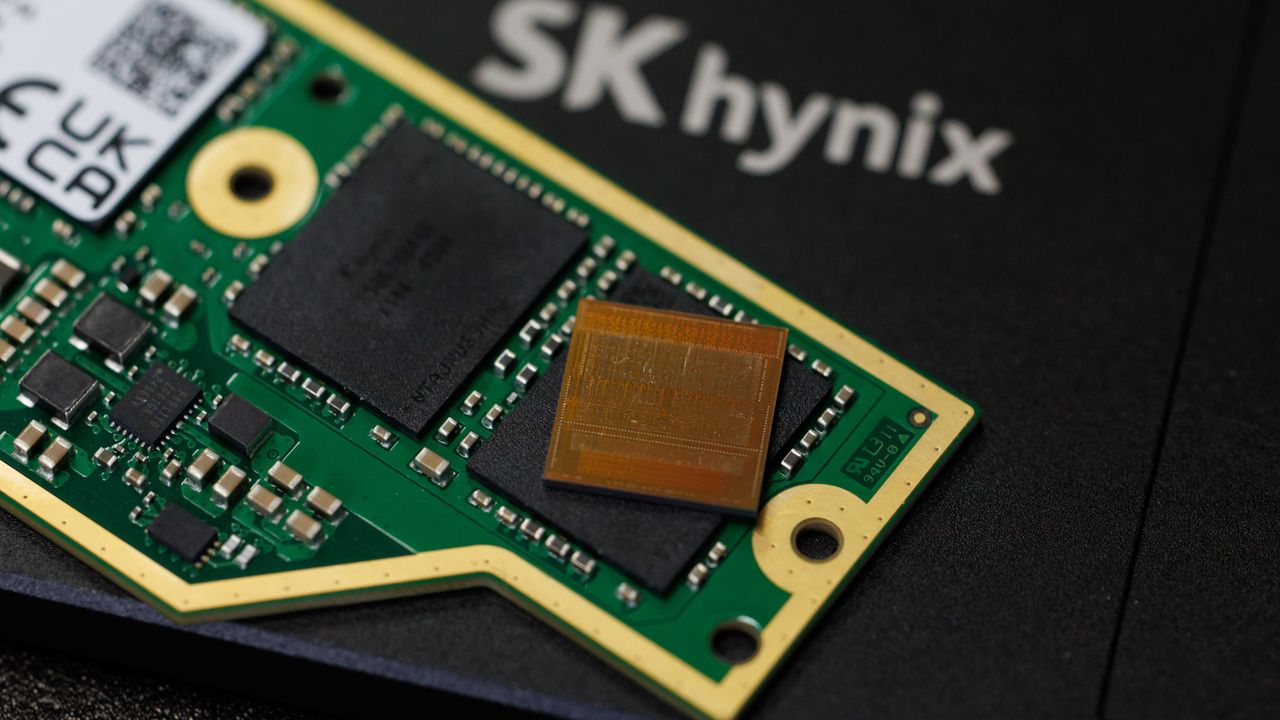
The core of the concern revolves around High Bandwidth Memory (HBM) chips, essential components for modern GPUs used in LLM training and Inference. The source specifically mentions SK Hynix HBM chips, among the leading players in this market segment. The increasing demand for these components, indispensable for managing the massive datasets and complex models that characterize advanced AI, is creating a bottleneck that could lead to a generalized shortage.
LLM Memory Requirements and the Role of HBM Technology
LLMs require vast amounts of VRAM (Video RAM) to operate effectively. Models with billions of parameters need tens, if not hundreds, of gigabytes of memory to be loaded and to perform Inference with acceptable latencies and high throughput. HBM technology addresses this need by offering superior memory bandwidth compared to traditional GDDR, allowing GPUs to access data more quickly and process complex AI workloads with greater efficiency.
This memory architecture is fundamental for high-end GPUs, such as NVIDIA H100 or AMD Instinct MI300X, which are at the heart of AI infrastructures. Integrating HBM stacks directly onto the GPU package reduces the physical distance between the processor and memory, minimizing latency and maximizing throughput. However, the complexity of HBM chip production, involving advanced packaging processes like 3D stacking, makes their supply inherently limited and sensitive to demand fluctuations.
Implications for TCO and Data Sovereignty
The potential shortage of HBM chips and the resulting price increase have direct implications for companies evaluating the deployment of AI infrastructures, particularly those opting for self-hosted or on-premise solutions. The Total Cost of Ownership (TCO) of an AI data center is heavily influenced by hardware costs, and an increase in prices for key components like HBM chips can significantly alter spending projections. This makes strategic hardware procurement planning even more critical.
Furthermore, reliance on a restricted supply chain raises issues of data sovereignty and operational resilience. Companies wishing to maintain full control over their data and AI workloads, perhaps due to compliance requirements or for air-gapped environments, must carefully consider the long-term availability of specific hardware. Difficulty in obtaining HBM chips could delay projects or force compromises on performance or scalability. For those evaluating on-premise deployment, AI-RADAR offers analytical frameworks on /llm-onpremise to assess these trade-offs.
Future Outlook and Mitigation Strategies
The current situation underscores the need for companies to adopt proactive strategies in managing their AI infrastructures. This includes diversifying suppliers, exploring alternative hardware solutions (where possible), and careful planning of upgrade cycles. Research and development into new memory architectures or software optimization techniques, such as advanced Quantization, could help mitigate pressure on HBM demand by reducing VRAM requirements for Inference.
In a context where AI is increasingly pervasive, the stability of the supply chain for critical components like HBM chips becomes a determining factor not only for technological innovation but also for the competitiveness and resilience of entire industries. Collaboration among governments, chip manufacturers, and technology companies will be essential to address this challenge and ensure that AI advancement does not come at the expense of other vital sectors.










💬 Comments (0)
🔒 Log in or register to comment on articles.
No comments yet. Be the first to comment!