
The Hidden Water Footprint of Artificial Intelligence
The exponential advancement of artificial intelligence, particularly Large Language Models (LLMs), brings with it a series of implications that extend beyond mere technological innovation. One of the most significant, and often underestimated, concerns its environmental impact. Current projections indicate that AI could consume up to 600 billion gallons of water by 2030, a figure that raises serious concerns about the long-term sustainability of this technology.
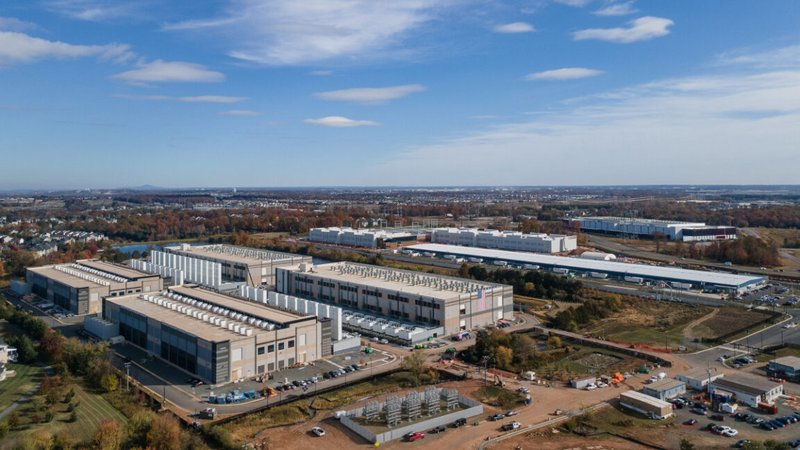
This massive water consumption is closely linked to the skyrocketing energy demand of data centers. These complex infrastructures, true engines of the digital age, require vast amounts of energy not only to power servers and GPUs but also to maintain operating temperatures within acceptable limits. Cooling, in particular, is a water-intensive process, making water a critical resource for the continuous operation and efficiency of AI systems.
The Link Between Computational Power and Water Consumption
The core of the problem lies in the inherently computationally intensive nature of AI workloads. Both the training phase, which involves instructing models on massive datasets, and the inference phase, which is the application of trained models to generate responses or predictions, require enormous computing power. Latest-generation GPUs, while extremely efficient, generate a significant amount of heat that must be dissipated to prevent failures and ensure optimal performance.
Data centers employ various cooling strategies, many of which depend on water. Evaporative cooling systems, for example, use water evaporation to lower the temperature of the air circulating among servers. Even liquid cooling systems, which use fluids to directly transfer heat from components, often rely on external cooling towers that use water to dissipate heat into the environment. This reliance on water not only increases operational costs but also poses significant challenges in regions with limited water resources.
Implications for On-Premise Deployments and TCO
For CTOs, DevOps leads, and infrastructure architects evaluating on-premise LLM deployments, the implications of this energy and water consumption are direct and significant. While a self-hosted approach offers advantages in terms of data sovereignty, control, and compliance, it also transfers full responsibility for infrastructure management to the organization. This includes planning and optimizing energy and water consumption.
An accurate Total Cost of Ownership (TCO) analysis for on-premise AI workloads must necessarily include operational costs related to energy and water, in addition to the initial investment in hardware and infrastructure. The trade-offs between performance, sustainability, and cost become central to deployment decisions. For those seeking analytical frameworks to evaluate these complex choices, AI-RADAR offers resources and insights on /llm-onpremise, helping to navigate the challenges of local deployments.
Towards More Sustainable AI: Challenges and Opportunities
Addressing AI's water and energy footprint requires a multifaceted approach. Hardware innovation, with the development of more efficient silicon and optimized computing architectures, can reduce energy requirements per unit of computation. In parallel, model optimization, through techniques like Quantization and the development of more compact LLMs, can decrease the computational power needed for Inference and training.
Furthermore, the adoption of renewable energy sources to power data centers and the implementation of more efficient, low-water-consumption cooling systems are crucial steps. Sustainability is no longer just an option but a strategic imperative that will influence future investment decisions and architectural choices in the AI sector. Companies that integrate these considerations into their AI adoption journey will be better positioned to address the environmental and operational challenges of the next decade.









💬 Comments (0)
🔒 Log in or register to comment on articles.
No comments yet. Be the first to comment!