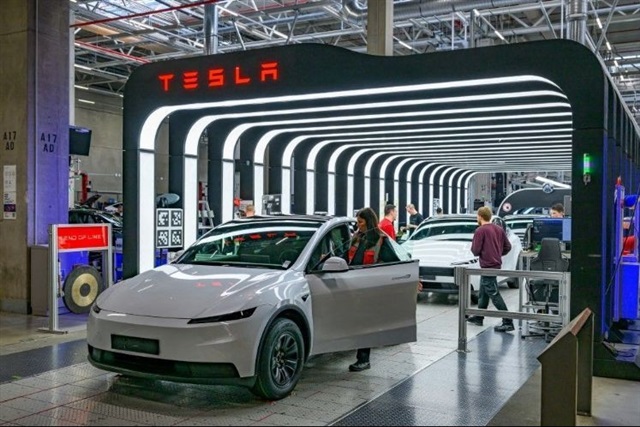
Tesla's Order to Aleees and the Shift in the LFP Supply Chain
The news that Aleees, a Taiwanese cathode material manufacturer, has reportedly secured a long-term order from Tesla for its Lithium Iron Phosphate (LFP) batteries marks a significant evolution in the global supply chain. While this announcement directly concerns the electric vehicle sector, the implications of such a shift resonate deeply within the artificial intelligence landscape, particularly for companies evaluating on-premise Large Language Model (LLM) deployments. The ability to secure stable and strategic supplies of critical components is a decisive factor for technological control and TCO management.
For technical decision-makers involved in AI infrastructure, the lesson is clear: reliance on complex and potentially volatile supply chains can introduce significant risks. The procurement of specialized hardware, such as high-performance GPUs and the VRAM required for LLM inference and training, is a constant challenge. The Aleees and Tesla news underscores how sourcing strategies can influence not only direct costs but also long-term operational resilience and technological sovereignty.
The Supply Chain Context and the AI Ecosystem
LFP batteries have become a popular choice for electric vehicles due to their lower cost, enhanced safety, and longer cycle life compared to nickel and cobalt-based counterparts, despite offering slightly lower energy density. This has prompted many manufacturers, including Tesla, to integrate LFP into their models, leading to a redefinition of priorities within the global supply chain. The search for reliable suppliers and the diversification of sources have become crucial to mitigate geopolitical risks and disruptions.
Similarly, in the AI world, the silicon supply chain is a strategically critical element. The limited availability of advanced chips, market dynamics, and geopolitical tensions can directly impact companies' ability to build and scale their AI infrastructures. For those planning an on-premise LLM deployment, hardware selection is not just a matter of performance (tokens/sec, throughput, latency) but also of accessibility, acquisition costs, and long-term support. Supply chain stability directly influences CapEx and OpEx planning.
Implications for On-Premise LLM Deployments
Adopting a self-hosted approach for LLMs offers advantages in terms of data sovereignty, compliance, and complete control over the environment, including air-gapped scenarios. However, these benefits are closely tied to the ability to manage the underlying infrastructure, starting with the hardware. A long-term order, like Tesla's to Aleees, ensures stability and predictability, essential factors for strategic planning. For companies investing in bare metal servers or Kubernetes clusters for their AI workloads, guaranteed access to GPUs with adequate VRAM and high-speed connectivity is fundamental.
The Total Cost of Ownership (TCO) of an on-premise AI infrastructure is not limited to the initial hardware cost. It also includes energy, cooling, maintenance costs, and, not least, the risk associated with the future availability of components. Fluctuations in the supply chain can significantly alter TCO projections, making investments less predictable. For those evaluating on-premise deployments, complex trade-offs exist, which AI-RADAR explores with analytical frameworks on /llm-onpremise, providing tools to assess alternatives and specific constraints.
Future Perspectives and Strategic Control
The Aleees-Tesla case highlights a broader trend: the increasing importance of strategic control over the supply chains of enabling technologies. Whether for EV batteries or artificial intelligence silicon, companies are seeking to reduce dependence and increase resilience. This translates into investments in internal R&D, strategic partnerships, and supplier diversification. For the LLM sector, this means greater attention to hardware provenance, supplier production capabilities, and the sustainability of commercial relationships.
In an era where AI is becoming a fundamental pillar for innovation and competitiveness, the ability to build and maintain a robust and controlled infrastructure is a key differentiator. Understanding supply chain dynamics, proactive planning, and careful evaluation of trade-offs between costs, performance, and autonomy are essential for CTOs and infrastructure architects leading the transition to self-hosted AI deployments.








💬 Comments (0)
🔒 Log in or register to comment on articles.
No comments yet. Be the first to comment!