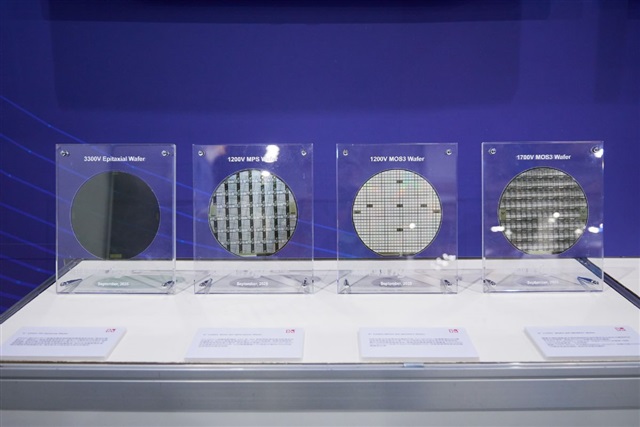
The Growing Competition in the Semiconductor Market
The global technology landscape is increasingly defined by fierce competition within the semiconductor industry. This "battle," as highlighted by DIGITIMES, is not merely about technological supremacy; it touches the core of two rapidly expanding sectors: AI-dedicated data centers and the electric vehicle industry. The ability to produce increasingly powerful and efficient chips has become a critical factor for innovation and economic growth worldwide.
For organizations operating with AI workloads, particularly Large Language Models (LLM), the availability and specifications of these semiconductors are fundamental. Hardware decisions, from GPU VRAM to compute capability, directly depend on the evolution of this competition. The stakes are high, as chips are not just components but the very engines powering the training and inference capabilities of the most advanced AI models.
The Strategic Role in On-Premise AI
For companies evaluating or already implementing self-hosted AI solutions, the semiconductor "battle" takes on an even deeper meaning. On-premise LLM deployments require robust and optimized hardware infrastructures, where chip selection can determine performance, scalability, and ultimately, the Total Cost of Ownership (TCO). The availability of GPUs with high VRAM and throughput is essential to manage complex models and high volumes of inference requests while maintaining low latency.
Reliance on a limited number of semiconductor suppliers can create supply chain vulnerabilities, impacting delivery times and costs. For CTOs and infrastructure architects, this translates into the need for careful planning, evaluating not only immediate technical specifications but also supply chain resilience and long-term strategies for hardware acquisition. An organization's ability to maintain data sovereignty and control over its AI operations is intrinsically linked to its capacity to procure and manage the necessary hardware independently.
Implications for Supply Chain and Data Sovereignty
The competition among semiconductor giants has direct repercussions on the global supply chain. Disruptions or fluctuations in production can significantly impact companies' ability to expand or maintain their AI infrastructures. This is particularly relevant for those opting for air-gapped or self-hosted environments, where reliance on external suppliers for critical components must be managed with extreme caution to ensure operational continuity and regulatory compliance.
While the original article also mentions electric vehicles, the focus for AI-RADAR remains on the impact of these dynamics on AI data centers. An organization's ability to freely choose its hardware and software stack, without constraints imposed by cloud providers or component shortages, is a pillar of data sovereignty. The semiconductor "battle," therefore, is not just a market issue but an enabling factor for technological autonomy and information security.
Future Prospects and Architectural Choices
Looking ahead, the pressure to innovate in semiconductors will only increase. The demands of Large Language Models, with their growing complexity and memory/compute requirements, push chip manufacturers to develop increasingly performant and specialized solutions. This scenario compels companies to adopt a strategic approach to hardware selection, considering not only current performance but also the ability to scale and adapt to future technological evolutions.
Choosing between different GPU architectures, interconnection options (like NVLink), and quantization strategies to optimize VRAM utilization are critical decisions that depend on the semiconductor market's offerings. For those evaluating on-premise deployments, AI-RADAR provides analytical frameworks on /llm-onpremise to assess the trade-offs between various hardware and software solutions, helping to navigate this complex landscape and make informed decisions that balance cost, performance, and control.










💬 Comments (0)
🔒 Log in or register to comment on articles.
No comments yet. Be the first to comment!