
A New Chapter for Brain-Computer Interfaces
What was once considered pure science fiction – the ability to control a machine with one's mind – is rapidly becoming a tangible reality and, in some contexts, a regulated medical product. China has recently taken a significant step in this direction with the approval by its National Medical Products Administration of NEO, the world's first commercial brain implant.
This decision transforms the global competition in the field of brain-computer interfaces (BCIs) from a theoretical hypothesis into a concrete race, with profound implications for the future of medicine and human-machine interaction. China's approval positions the country as a key player in an emerging, high-potential technological sector.
NEO: Technical Details and Medical Implications
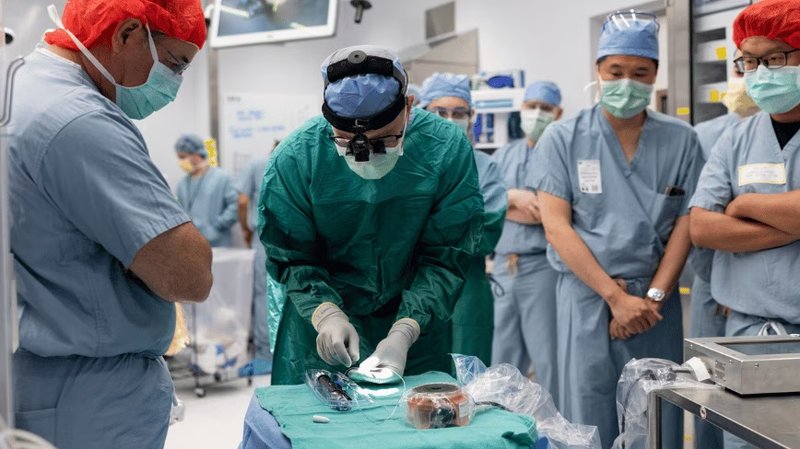
NEO is a coin-sized brain-computer interface, jointly developed by Shanghai-based NeuraMatrix and a team of researchers from Tsinghua University. The device has received approval for commercial use in patients suffering from spinal cord injuries, offering new hope for the restoration of motor or communication functions.
BCIs work by decoding electrical signals generated by the brain and translating them into commands that can control external devices, such as robotic limbs, computer cursors, or communication systems. The effectiveness of such systems largely depends on the precision of neural signal acquisition and the sophistication of processing algorithms, which often leverage advanced artificial intelligence techniques to interpret complex patterns in real-time.
The Global Competition and Regulatory Challenges
The approval of NEO in China intensifies the global competition in neurotechnologies, a sector that already sees prominent players like Neuralink engaged in developing similar solutions. Achieving regulatory approval for commercial use is a crucial milestone, as it moves the technology from the research and development phase to large-scale clinical application.
This scenario also raises important questions regarding data sovereignty and privacy. Neural data is among the most sensitive information an individual can generate. Its processing, storage, and analysis require extremely secure and compliant infrastructures. For organizations evaluating AI workload deployments, especially with such critical data, self-hosted or on-premise options can offer a superior level of control and security compared to public cloud solutions, ensuring full adherence to compliance requirements and patient privacy protection.
Future Prospects and the Role of AI
The advent of commercial brain implants like NEO opens new frontiers for rehabilitative medicine and the augmentation of human capabilities. The role of artificial intelligence in this context is set to grow, not only in interpreting neural signals but also in optimizing interfaces, adapting to individual users, and managing complex systems that integrate the human brain with technology.
Future challenges include not only further technological refinement but also ethical considerations, the long-term safety of implants, and the scalability of deployments. For those evaluating on-premise deployments for AI workloads, managing sensitive data like neural information imposes stringent requirements on infrastructure and control, making the choice of solutions that prioritize data sovereignty and security crucial. AI-RADAR offers analytical frameworks on /llm-onpremise to evaluate trade-offs between different deployment architectures in highly sensitive contexts.








💬 Comments (0)
🔒 Log in or register to comment on articles.
No comments yet. Be the first to comment!