
Science Corp. and the Future of Neural Interfaces
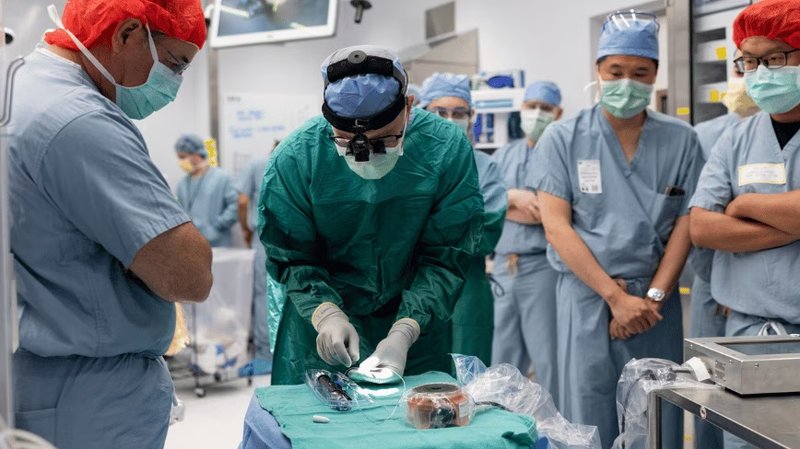
Science Corp., the company founded by Max Hodak, co-founder of Neuralink, is preparing for a significant step in the field of brain-computer interfaces (BCI). The goal is the deployment of its first sensor intended for implantation in the human brain. This initiative, although still in its early stages, promises to open new frontiers in understanding and interacting with the central nervous system.
Human trials for this hybrid sensor are expected in the years ahead. The announcement positions Science Corp. among the most ambitious entities in the neurotechnology sector, a field that is rapidly evolving thanks to advancements in electronics, material science, and artificial intelligence.
Technical Details and Infrastructure Implications
The concept of a "hybrid sensor" suggests a device capable of acquiring various types of neural signals, perhaps combining electrical and optical methods or integrating stimulation functionalities. The complexity of such a system lies not only in the miniaturization and biocompatibility of the sensor itself but also in the ability to process the massive volumes of data generated in real-time. Inference and analysis of this data require considerable computing power and advanced algorithms, often based on Large Language Models (LLM) or specialized neural networks.
For organizations considering the deployment of such sensitive technologies, infrastructure choice is crucial. The need for low latency for real-time interaction and the management of high-fidelity data imposes stringent requirements on hardware, such as GPU VRAM and memory bandwidth. These constraints often push towards self-hosted or bare metal solutions, where direct control over hardware and the execution environment can guarantee the required performance and security.
Context and On-Premise Deployment Challenges
The deployment of a human brain sensor raises fundamental questions that go beyond mere technical feasibility. Data sovereignty becomes a primary concern: where is such intimate and personal information stored, processed, and who has access to it? Compliance with regulations like GDPR is just the beginning, as neural data requires unprecedented levels of protection and anonymization.
The infrastructural architecture to support such systems must be robust, secure, and, in many cases, air-gapped to prevent unauthorized access. The TCO (Total Cost of Ownership) of an on-premise infrastructure for AI/LLM workloads of this magnitude must consider not only the initial hardware investment but also operational costs related to security, maintenance, and continuous upgrades. For those evaluating on-premise deployment for highly sensitive AI/LLM workloads, AI-RADAR offers analytical frameworks on /llm-onpremise to assess the trade-offs between cost, performance, and control.
Future Perspectives and Ethical Considerations
The advancement of brain-computer interfaces, such as those proposed by Science Corp., promises to radically transform fields like medicine, rehabilitation, and even human-machine interaction. However, the path is fraught with technical, ethical, and regulatory challenges. The ability to securely and efficiently manage and process neural data will be a decisive factor for the success and acceptance of these technologies.
Collaboration between hardware developers, AI experts, and cybersecurity specialists will be essential to build robust and reliable ecosystems. As Science Corp. approaches its first human trials, the tech industry is called upon to reflect on the long-term implications of such innovations, ensuring that technological progress is accompanied by constant attention to privacy, security, and data control.






💬 Comments (0)
🔒 Log in or register to comment on articles.
No comments yet. Be the first to comment!