
A New Landscape for Chinese Tech Exports
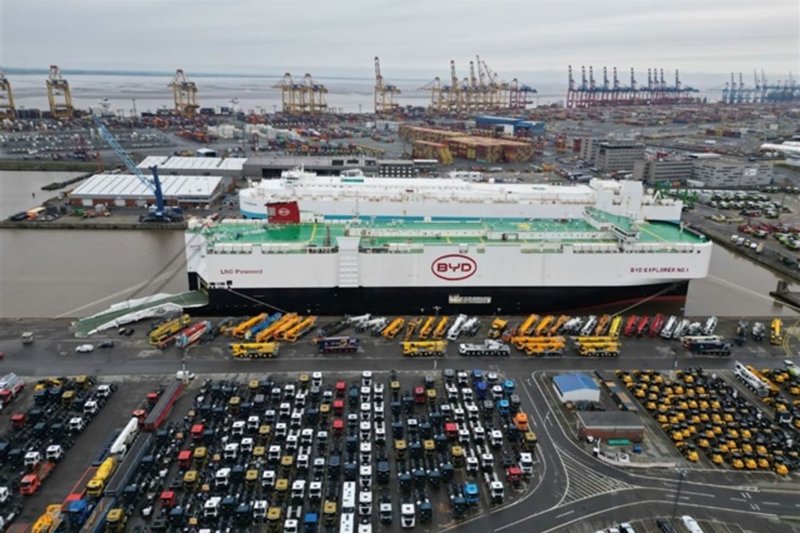
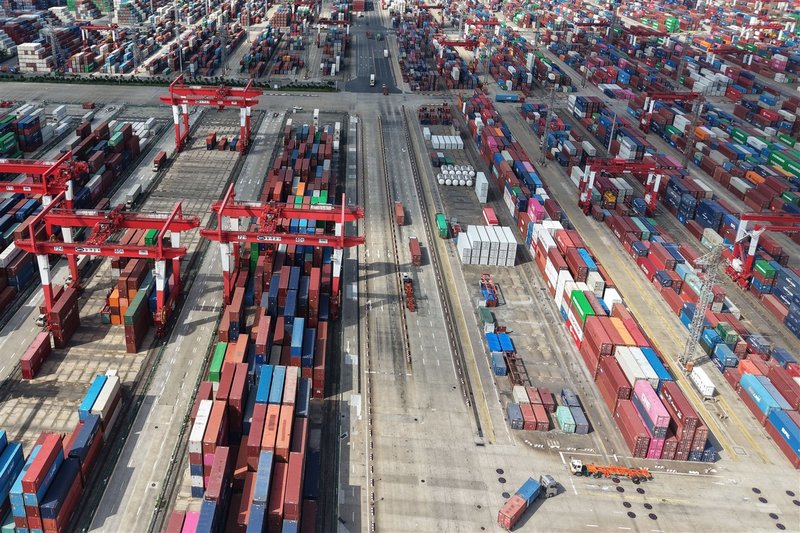
Geopolitical dynamics and increasing trade pressures from the United States are compelling China to recalibrate its export strategy. The focus is progressively shifting towards higher-value technological products, an evolution poised to significantly reshape global supply chains. This strategic reorientation is not merely a response to current challenges but also an assertion of Beijing's intent to solidify its position in the technological innovation sector.
Such a shift has profound repercussions for the entire tech ecosystem, influencing the availability and competitiveness of key components. For companies operating in the artificial intelligence and Large Language Models sector, in particular, understanding these new directions is crucial for long-term planning.
The Impact on Critical Component Supply Chains
China's transition towards exporting advanced technology introduces new variables into global supply chains. Essential components for AI infrastructure, such as specialized silicon for LLM Inference and training acceleration, high-density VRAM, and high-speed interconnects, could experience alterations in their availability and costs. This scenario demands increased attention from CTOs and infrastructure architects.
Diversifying sourcing channels and evaluating technological alternatives become crucial strategies. Reliance on a single supplier or a specific geographical region can expose organizations to significant risks, ranging from price volatility and delivery delays to complete supply chain disruptions.
Implications for On-Premise LLM Deployments
For organizations prioritizing on-premise deployments of Large Language Models, the changing dynamics of supply chains present a strategic challenge. The choice to host AI infrastructure locally is often driven by needs for data sovereignty, regulatory compliance, and greater control over the Total Cost of Ownership (TCO). However, the availability and cost of necessary hardware, such as high-performance GPUs (e.g., NVIDIA A100 or H100), are directly influenced by these macroeconomic and geopolitical shifts.
A thorough TCO analysis must now include not only direct acquisition and operational costs but also risks associated with supply chain stability. Planning hardware procurement for AI workloads, which often require specific configurations in terms of VRAM and Throughput, must account for potentially longer lead times or unexpected price increases. For those evaluating on-premise deployments, AI-RADAR offers analytical frameworks on /llm-onpremise to assess these trade-offs in an evolving market context.
Future Outlook and Mitigation Strategies
In this transformative context, adaptability becomes a critical success factor. Companies will need to closely monitor the evolution of trade policies and emerging technological innovations to anticipate future market scenarios. Exploring alternative hardware architectures, investing in Open Source solutions, and building robust relationships with multiple suppliers can help mitigate risks.
The deployment strategy for Large Language Models, whether on-premise, cloud, or hybrid, cannot disregard a deep understanding of the forces shaping global supply chains. Ensuring the resilience and scalability of AI infrastructure will require informed decisions and a strategic vision that accounts for a constantly evolving technological and geopolitical landscape.






💬 Comments (0)
🔒 Log in or register to comment on articles.
No comments yet. Be the first to comment!