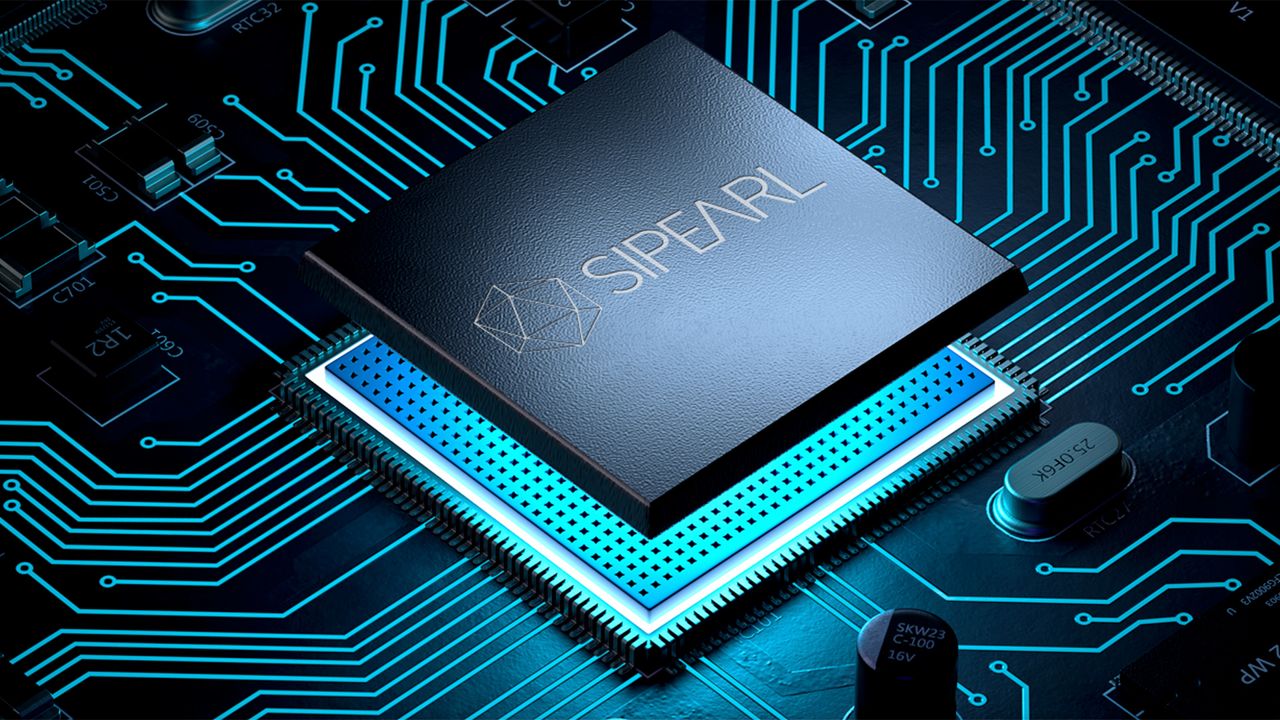
SiPearl's Rhea1 processor has moved from design to the test lab, a turning point for the first entirely European-conceived high-performance computing CPU. According to a company vice president, commercial availability is planned for the end of 2026, after a long and complex development process.
The news comes as digital sovereignty has become a priority for the European Union. With the Chips Act and growing investments in semiconductor manufacturing, the goal is to reduce dependency on external suppliers, particularly US and Asian, for critical components. An HPC CPU designed by an independent European entity is not just an engineering achievement: it’s a key piece to ensure that sensitive data and strategic workloads — from climate simulations to artificial intelligence — can be processed on trusted hardware under the control of European entities.
For those managing on-premise infrastructures or evaluating self-hosted deployment models, the arrival of Rhea1 introduces a concrete alternative in a landscape dominated by x86 architectures, and in the AI space by NVIDIA GPUs. While it’s not a specific accelerator for LLM inference or training, a high-performance CPU forms the foundation for building complete compute nodes. In data centers that require GDPR compliance and absolute data control, being able to choose European silicon reduces the risk of geopolitical constraints or restricted access to technologies subject to export controls.
Of course, the path to volume production and real adoption is still long. End of 2026 is a horizon that, in the semiconductor industry, can slip. Moreover, competition from Intel and AMD with established roadmaps, and the growing momentum of Arm-based processors, make the race highly competitive. But the structural signal is clear: Europe is building its own hardware foundations for HPC and, by extension, for AI. Second-order implications affect the entire ecosystem: sovereign cloud providers, public research centers, and companies handling regulated data will be able to plan entirely European architectures, influencing total cost of ownership criteria that go beyond chip price to include regulatory security and strategic autonomy.
Ultimately, Rhea1 entering the lab is not just a milestone for SiPearl, but a test for the entire European industrial policy in semiconductors. If the project delivers on its promises, it could reshape the supply balance for supercomputer components, with ripple effects across the data processing chain, including on-premise AI platforms.




💬 Comments (0)
🔒 Log in or register to comment on articles.
No comments yet. Be the first to comment!