
ODMs' Recovery Driven by AI and Notebooks
March marked a significant turnaround for Original Design Manufacturers (ODMs), who experienced a surge in demand, overcoming the usual seasonal slump. This unexpected growth was primarily fueled by two key sectors: notebooks and, notably, servers dedicated to artificial intelligence. The trend suggests a strengthening of investments in technological infrastructure, with increasing attention to advanced computing capabilities.
This dynamic highlights how companies continue to invest in strategic hardware, despite macroeconomic fluctuations. The demand for AI servers, in particular, reflects a broader trend towards the adoption of artificial intelligence solutions, both for intensive training workloads and for Large Language Model (LLM) inference in enterprise environments.
The Strategic Role of AI Servers in On-Premise Deployment
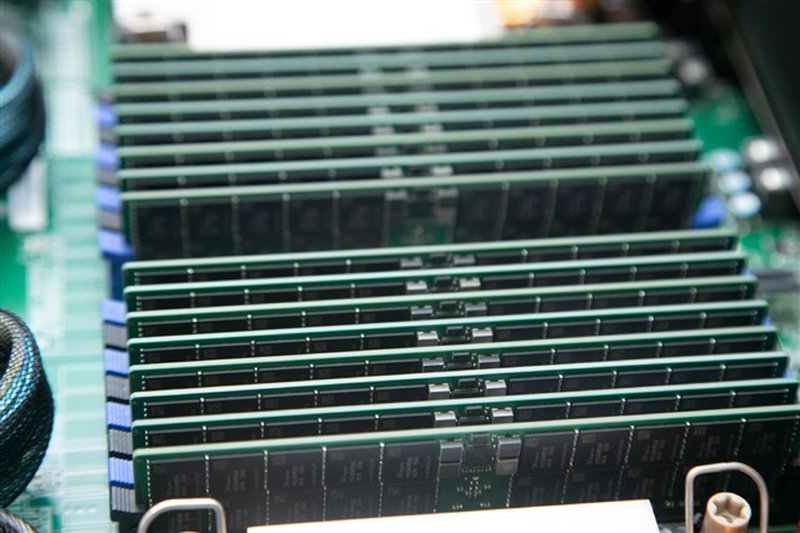
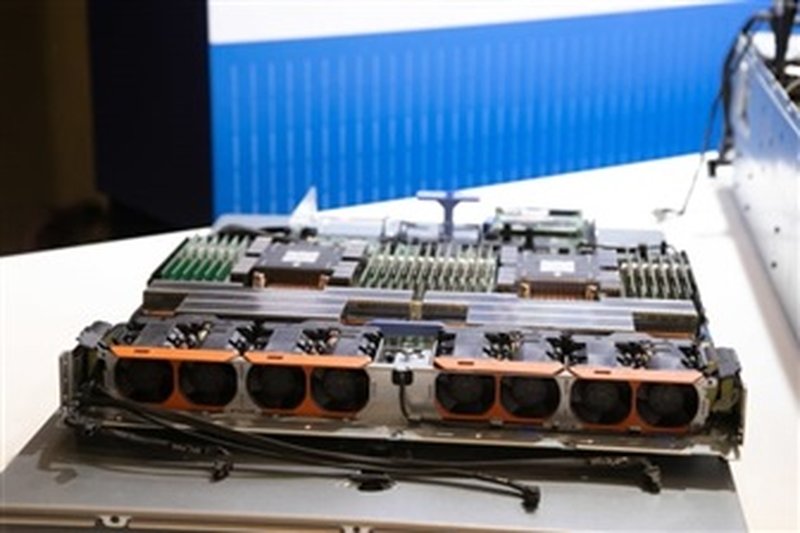
The increased demand for AI servers is not an isolated phenomenon but is part of a context where organizations are increasingly evaluating their deployment strategies for artificial intelligence workloads. AI servers are typically configured with high-performance GPUs, essential for handling the complex mathematical operations required by LLM training and inference. Specifications such as GPU VRAM, memory bandwidth, and throughput capacity become critical factors in hardware selection.
For many companies, the option of on-premise or self-hosted deployment for AI servers offers significant advantages in terms of data sovereignty, regulatory compliance, and direct control over the infrastructure. Air-gapped environments, for example, are often an indispensable requirement for highly regulated sectors. While the initial investment (CapEx) can be high, a thorough Total Cost of Ownership (TCO) analysis may reveal that on-premise solutions become more cost-effective in the long run, especially for consistent and predictable workloads, reducing reliance on variable cloud operational costs (OpEx).
Market Dynamics and Infrastructure Choices
The ODM surge driven by AI servers is a clear indicator that the market is moving towards greater maturity in AI adoption. Companies are no longer just exploring the potential of LLMs but are actively building the necessary infrastructure to integrate them into their operational processes. This includes evaluating bare metal architectures, implementing local MLOps pipelines, and managing specific requirements for model fine-tuning and quantization.
Deployment decisions, whether cloud, on-premise, or a hybrid approach, involve a series of trade-offs. Latency, tokens per second throughput, scalability, and security are all elements that CTOs, DevOps leads, and infrastructure architects must consider. For those evaluating on-premise deployments, AI-RADAR offers analytical frameworks on /llm-onpremise to better understand these trade-offs and optimize infrastructure choices, without recommending specific solutions but providing tools for informed evaluation.
Future Outlook for the AI Ecosystem
The ODM recovery in March, driven by AI servers, underscores the resilience and continuous growth of the artificial intelligence sector. This trend suggests that investments in dedicated AI hardware are not a passing fad but a fundamental component of the long-term technological strategy for many organizations. The ability to manage LLMs efficiently and securely, often in controlled environments, is becoming a crucial competitive factor.
Looking ahead, we are likely to see further diversification of hardware and software solutions, with an increasing emphasis on optimization for low-power inference and modular architectures that allow for greater flexibility. The demand for AI servers will continue to be an important barometer for measuring enterprise confidence in the transformative capabilities of artificial intelligence and their willingness to invest in robust, controlled infrastructures.






💬 Comments (0)
🔒 Log in or register to comment on articles.
No comments yet. Be the first to comment!