AI Servers' Pressure on the MLCC Supply Chain
The explosion of artificial intelligence, particularly with the widespread adoption of Large Language Models (LLMs), is generating unprecedented demand for dedicated hardware infrastructure. This phenomenon is not limited to the latest generation of GPUs but extends to less visible yet equally critical components, such as high-end Multi-Layer Ceramic Capacitors (MLCCs). The increasing requirement for AI servers is placing significant strain on their global supply chain.
This tension manifests as growing difficulty in procuring specific MLCCs, which are essential for ensuring the stability and power efficiency of advanced AI systems. Consequently, Taiwanese companies, key players in the electronics sector, are beginning to look towards China as an alternative source for these components. This move underscores the complex geopolitical and economic dynamics influencing the construction of AI infrastructure worldwide.
The Crucial Role of MLCCs in AI Infrastructure
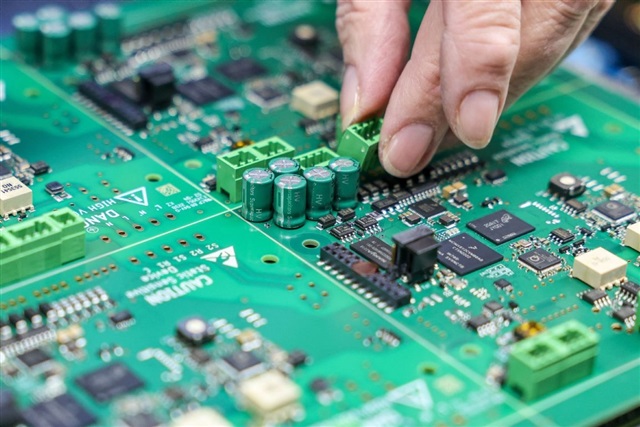
MLCCs are multi-layer ceramic capacitors, fundamental passive components found in almost every electronic device. In the context of AI servers, and particularly accelerator cards like GPUs, high-end MLCCs play a vital role. They are responsible for voltage stabilization, noise filtering, and managing current spikes, ensuring that processors can operate at maximum efficiency and reliability.
Modern GPUs and AI accelerators demand a higher quantity and quality of MLCCs compared to traditional components. This is due to high power consumption, increasingly higher operating frequencies, and the need to rapidly deliver large amounts of current to computing cores. A shortage of these specific MLCCs can therefore directly impact server manufacturers' ability to meet demand, affecting availability and TCO for companies considering on-premise or self-hosted deployments.
Supply Chain Dynamics and Deployment Implications
The pressure on the MLCC supply chain is not an isolated phenomenon but reflects a broader trend in the AI hardware sector. The production of high-end MLCCs requires complex processes and specific materials, with a limited number of qualified global suppliers. The exponential increase in demand from AI server manufacturers has quickly outstripped existing production capacity, creating bottlenecks.
The decision by Taiwanese firms to seek alternatives in China introduces new variables into the supply chain. While it may offer diversification and potentially alleviate shortages, it also raises questions about overall resilience and long-term geopolitical implications. For CTOs, DevOps leads, and infrastructure architects, understanding these dynamics is crucial. The availability and cost of hardware components directly influence deployment planning, CapEx and OpEx budgets, and the ability to scale AI solutions, whether for bare metal infrastructures or air-gapped environments.
Future Outlook and Mitigation Strategies
The market for AI electronic components is constantly evolving, and the pressure on MLCCs is a clear indicator of how rapidly AI demand is reshaping entire industrial sectors. In the short term, companies will need to navigate an uncertain procurement landscape, potentially facing longer lead times and higher costs for critical components.
In the long term, investments in new production capacities and greater geographical diversification of suppliers are likely. However, for organizations planning their AI strategies today, it is essential to consider supply chain resilience as a key factor. For those evaluating on-premise deployments, AI-RADAR offers analytical frameworks on /llm-onpremise to assess the trade-offs between control, data sovereignty, and operational costs, providing tools to navigate this complex scenario.





💬 Comments (0)
🔒 Log in or register to comment on articles.
No comments yet. Be the first to comment!